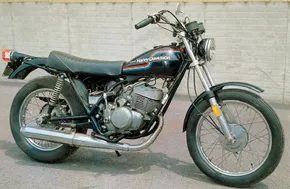
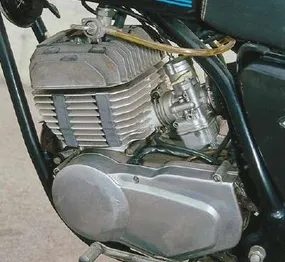
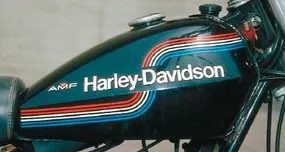
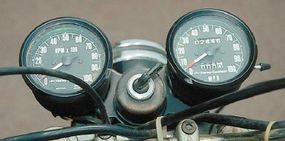
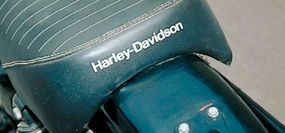
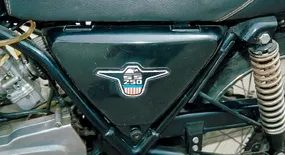
Harley-Davidson wasn’t always just about V-twins. In the mid-1970s, they tried to compete in the lightweight market with a surprising twist. The 1975 Harley-Davidson SS-250 was a mid-size motorcycle based directly on a Yamaha design. It featured a two-stroke single engine. This bike was part of a brief but interesting era where Milwaukee built bikes that shared DNA with Japanese engineering.
Roots in Partnership
Harley’s shift toward smaller engines didn’t happen overnight. The brand formed a partnership with Italy’s Aermacchi in the early 1960s. The goal was to sell mid-size four-stroke singles under the Harley-Davidson badge. These models found some success. Soon, the lineup expanded to include smaller two-stroke models. We are talking about displacements as low as 65 cc. They even dipped into the minibike market.
The larger four-stroke singles held their own. But the automotive landscape was changing. The market demanded something more modern.
Enter the SS Series
Harley introduced a quartet of new mid-size two-stroke singles in the mid-1970s. These were all based on Yamaha designs. The SS-250 appeared in 1975. It stood as the largest street version in that lineup.
For those looking for dirt or dual-purpose capability, Harley offered models with the SX prefix. Both the SS and SX series eventually came in 175-cc and 250-cc sizes. The SS-250 was the flagship of this new street-focused effort.
The Two-Stroke Problem
The timing was unfortunate. As these bikes hit the streets, regulatory pressure was mounting. The Environmental Protection Agency began cracking down on pollution sources. Two-stroke engines were high on the hit list. They were seen as major contributors to air pollution due to their oil-burning design.
Looking back, the switch to two-strokes was a strategic misstep for Harley-Davidson. The brand faced a growing stigma attached to the technology.
The End of an Era
The regulatory headwinds proved too strong. Harley-Davidson quit offering single-cylinder motorcycles of any type after 1978. The SS-250 and its siblings became a footnote. They represent a unique moment where Harley borrowed heavily from Japanese engineering to stay relevant. It was a bold move that ultimately didn’t last.






The Two-Stroke Gamble That Fizzled
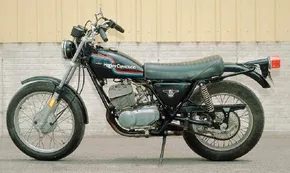
Harley-Davidson tried to pivot to two-stroke engines when the writing was on the wall. The 1975 SS-250 was their flagship attempt, but it failed to catch on. The reason isn’t complex. It’s environmental.
Pollution regulations started tightening in the 1970s. Two-stroke engines burn oil with the fuel. They puff out smoke. This became a liability fast.
Why the SS-250 Didn’t Last
The SS-250 looked like a sportster. It wasn’t. It was a lightweight commuter bike. Harley hoped to compete with Japanese imports. They missed.
The engine design was simple. But simplicity doesn’t beat emissions standards. The bike couldn’t pass the new rules without major changes.
The Regulatory Hammer
Governments in the US and Europe were cracking down. Emissions limits became stricter. Two-stroke engines struggle to meet these limits. They lack the combustion efficiency of four-strokes.
Harley realized two strokes were a dead end. They couldn’t innovate enough to stay legal. The SS-250 was their last real try.
Legacy of the Experiment
The SS-250 is a footnote now. It shows Harley’s struggle to adapt. They stuck to what they knew. V-twins. Four-strokes.
The experiment ended quickly. Harley didn’t build another two-stroke successor. The market moved on. So did they.
For more great motorcycle articles and pictures, check out:
-
Classic Motorcycles
-
How Motorcycles Work
-
Harley-Davidson Motorcycles