It looks like a lever. It feels like a stick. There is absolutely nothing under there connecting it to the transmission.
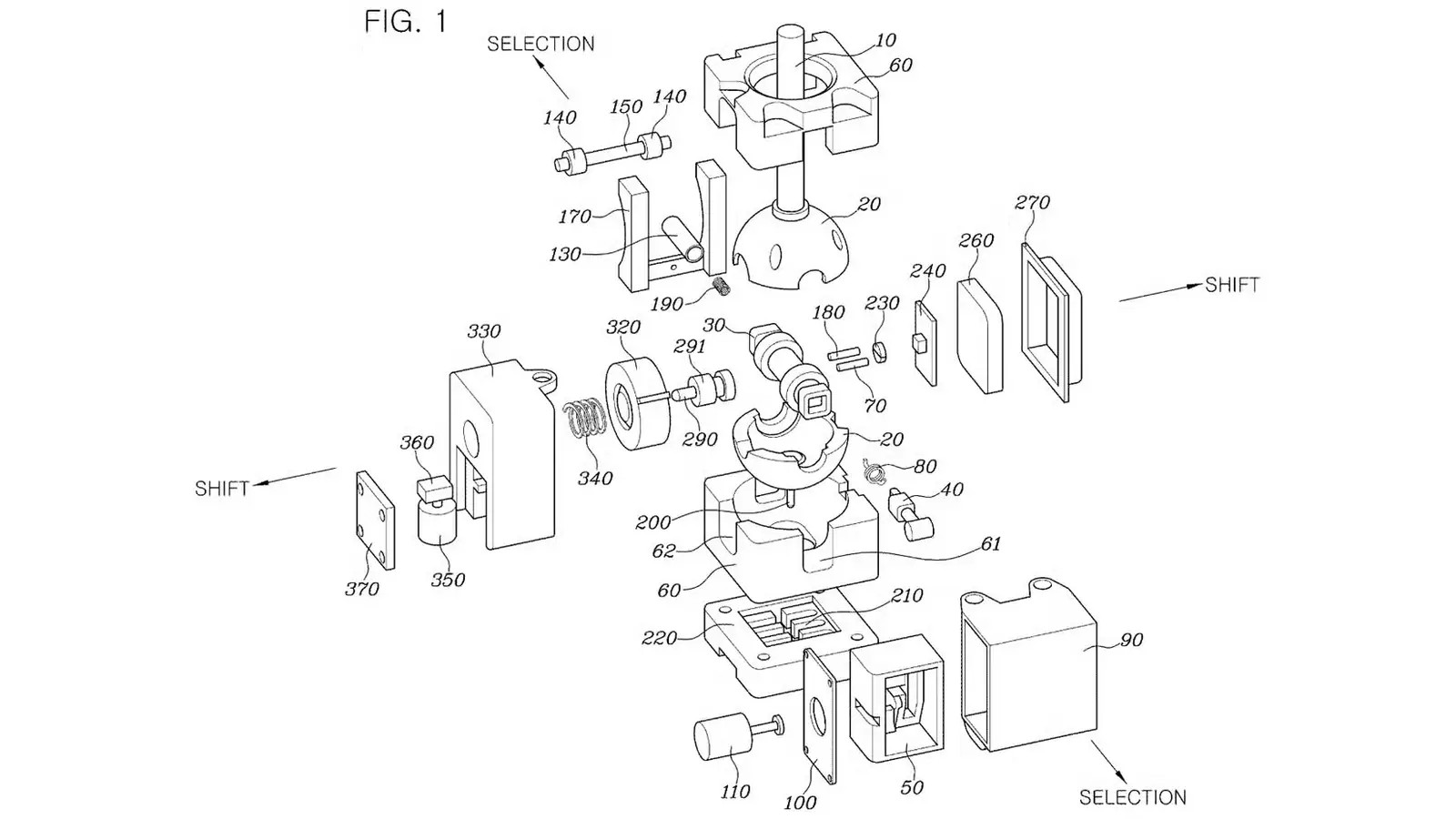
Hyundai filed a patent this week for an electronic gear shifter that mimics the manual experience without any mechanical linkage. CarBuzz spotted the filing. It’s fully electronic. No hydraulic circuits. No physical rods. Just signals traveling from your hand to a computer.
This hits right when the industry is screaming about whether “drive-by-wire” shifts can actually keep the soul of driving alive. Hyundai has its N-performance brand. Genesis is chasing performance prestige too. They are now the first major automaker on record with this specific zero-linkage approach.
For manual fans, it’s a provocation. Or maybe a lifeline? Who knows.
Signals, Not Cables
The patent claim is stark. The shifter talks to the transmission via electronics alone. You move the stick. Sensors read that motion. They tell the control unit to execute—or simulate—the shift. That’s it. No cable to snap. No rod to bend.
But here is the twist. The system flips between manual and automatic behavior entirely through software. In manual mode you sequence through gears like it is 1999. In auto mode it acts like a normal selector.
This dual nature sets it apart. Most paddle-shifter setups force you into one lane. Hyundai wants the switchable soul.
Manufacturing The Feel
How do you fix the “joystick problem”? A disconnected lever feels empty. Cold. Dead.
The filing addresses this directly. Clutch simulation is baked into the system. Since there is no real clutch pedal to bite and scream, the sensation has to be fabricated electronically. Maybe it uses haptics in the lever. Maybe it tweaks the resistance curves. The details are blurry but the intent is sharp.
They are not trying to build a button. They are trying to build a memory of a gearbox.
This matters. Resistance and feedback separate a convincing shifter from a cheap plastic toy. Porsche simulates shifts with paddles. Ford simulates rev-matching. Neither tries to replicate the full clutch-and-stick weight via a zero-linkage lever until now.
Where Do We Put It?
Likely candidates exist. The Ioniq 5N already plays tricks. It mimics shift points. It pretends to have an eight-speed dual-clutch when it has motors and math. It uses paddles though.
A physical lever changes the game.
It opens the door for Genesis performance models. The G80 or G70 might use a stick that presents as manual when you want the engagement but fades to auto for the commute. It fits the brand strategy. Clean. Configurable.
Don’t expect it tomorrow. Patents often sit on shelves gathering digital dust. But Hyundai has a history of making simulated engagement feel earned.
Is It Theater?
Purists say yes. Mechanical connection is the point. The weight. The imprecision. The direct coupling to the drivetrain. Remove the linkage and you are watching theater, not driving a car.
Or maybe feel is just feel? If the haptic feedback matches the resistance of a perfect short-throw throw, does the absence of a cable matter?
The patent doesn’t answer that. No legal filing ever resolves philosophy. But it confirms one thing: Hyundai thinks they can trick us. And more importantly, they think we might actually want to be tricked.
The filing is out there. We wait. The stick shift has a ghost in the machine now. It just hasn’t decided what it wants to become yet.