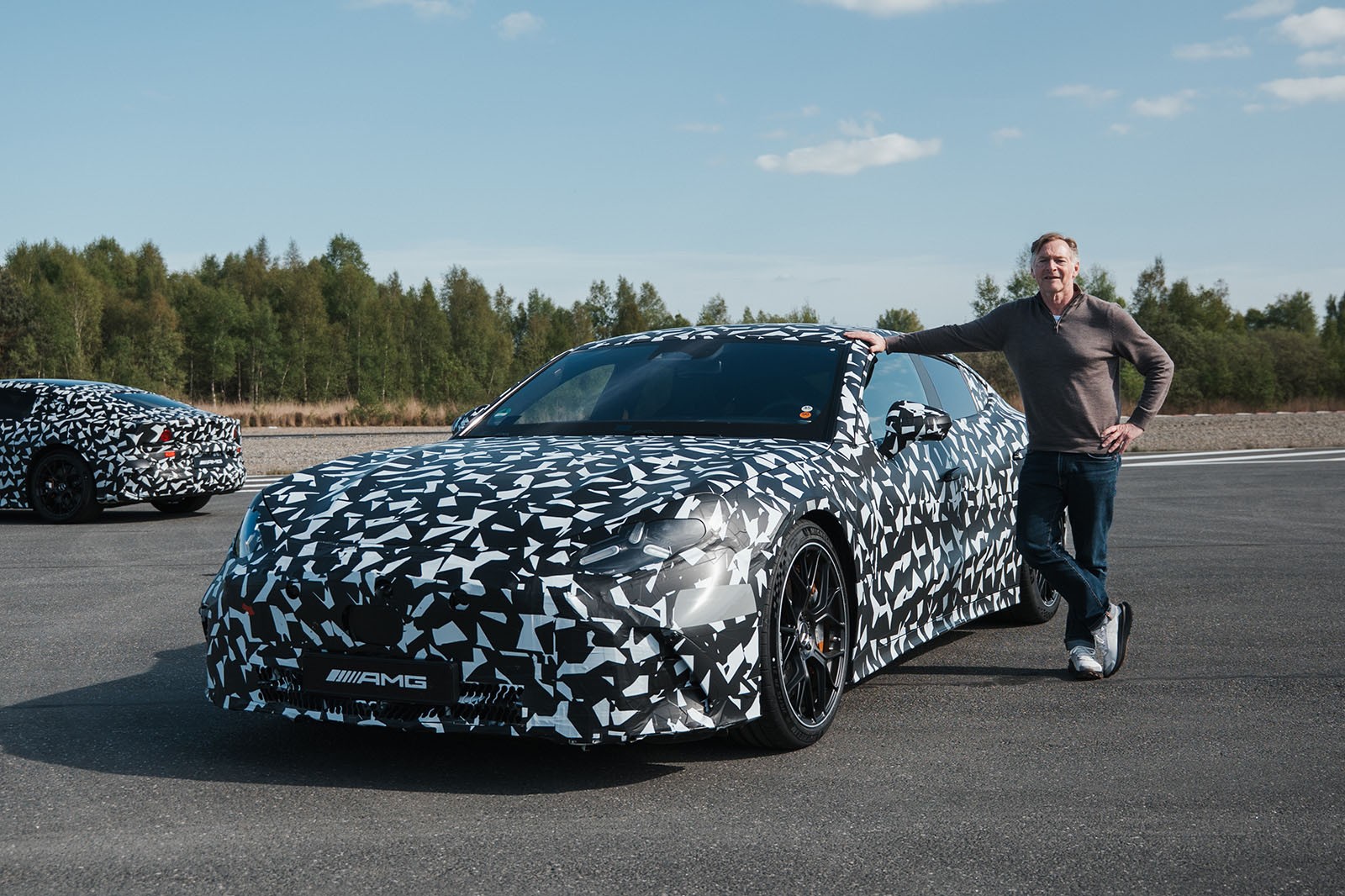
The new Mercedes-AMG GT 4-Door Coupe prototype challenges the stereotype that extreme power must be accompanied by chaotic handling. With well over 1,000 horsepower, the vehicle initially presents a demeanor of calm, measured composure. Rather than demanding aggressive driver input, it offers a deliberate margin of safety, utilizing strong front-end grip and sophisticated electronics to maintain neat, controlled dynamics.
This approachability is not a lack of capability, but a feature of its engineering. The steering is cleanly weighted and precise, building driver confidence quickly. Even at moderate speeds, the car feels fluid and encouragingly agile, proving that high performance can coexist with everyday usability.
From Design Study to Production Reality
The path to this electric saloon began in 2022, when AMG unveiled a full-sized design study signaling its intent to reinvent its bespoke four-door lineup with an electric successor. Since then, the engineering mule, known as the GT XX, has undergone rigorous validation.
The GT XX demonstrated not only raw power—peaking at up to 1,341 horsepower—but also exceptional endurance. In a notable test, the mule covered 24,901 miles in just over seven days, maintaining an average speed of more than 186 mph.
While the initial production version will offer slightly less power than the prototype mule, it retains the critical benchmark of exceeding 1,000 horsepower. This slight reduction suggests a focus on optimizing reliability and daily drivability without sacrificing the core identity of a high-performance machine.
Customizing the Drive: Sport+ and Race Modes
The car’s character shifts significantly depending on the selected drive mode. In Sport+ mode, the vehicle remains quick in a straight line, gathering speed in a single, uninterrupted surge. However, the most notable change is in responsiveness. The car feels less dictated by its substantial mass and more by the precise management of its systems.
For drivers seeking maximum engagement, the Race mode offers a deeper transformation. By easing back stability systems and utilizing AMG’s Race Engineer function—controlled via three rotary dials on the center tunnel—drivers can strip away the initial layer of restraint.
- Throttle Response: Sharpens immediately for instant acceleration.
- Rear Axle Activity: Becomes more active, allowing for dynamic weight transfer.
- Customization: The system offers nine settings for response, agility, and traction, creating 729 possible combinations.
This level of granularity allows the car to adapt to specific track conditions or driver preferences, emphasizing the delivery of power rather than just its outright capability.
Engineering for Performance: The AMG.EA Platform
The underlying dynamics of the GT 4-Door Coupe are rooted in its architecture. The second-generation model (C590) represents a fresh start for AMG. It is not merely an adaptation of an existing platform; it is the first vehicle built on the AMG.EA platform, developed from scratch specifically for high-performance electric vehicles.
This dedicated architecture contributes to the car’s impressive body control. A low center of gravity, combined with well-judged suspension tuning, allows the vehicle to stay flat through corners. Where one might expect significant body roll given the car’s size and weight, it instead settles quickly into a composed stance. This precision belies its physical dimensions, offering a driving experience that feels surprisingly nimble.
The transition to the AMG.EA platform marks a strategic shift for the brand, prioritizing electric-specific performance characteristics over traditional ICE adaptations.
Conclusion
The Mercedes-AMG GT 4-Door Coupe prototype demonstrates that electric performance need not sacrifice control or refinement. By leveraging a dedicated platform and highly customizable software, AMG has created a vehicle that balances over 1,000 horsepower with composed, accessible handling, setting a new standard for its four-door lineup ahead of its May 20 unveiling in Los Angeles.