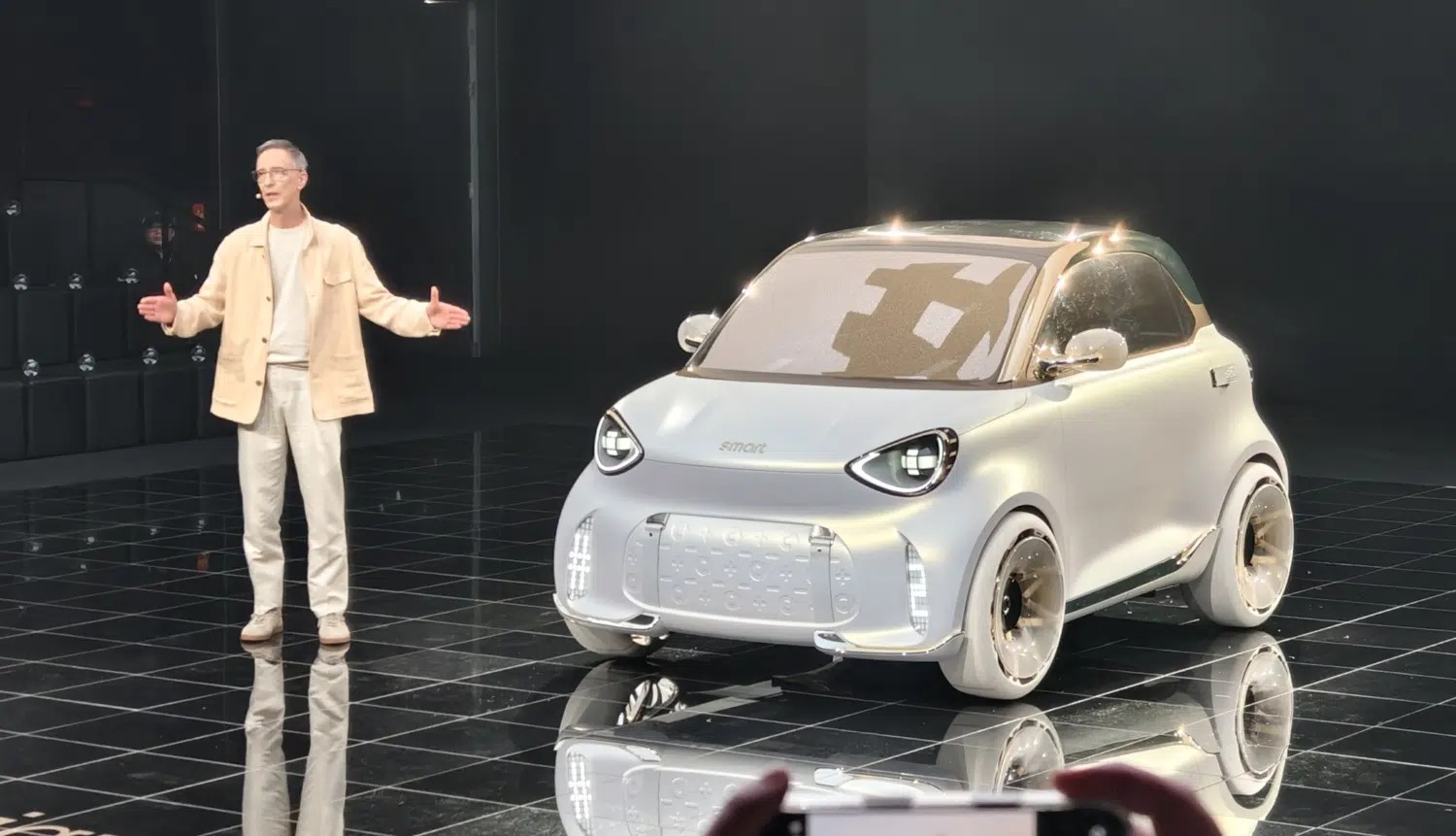
The evolution of the electric micro-car segment is reaching a turning point. After the recent world premiere of the Smart #2 concept in Beijing, Smart leadership has made it clear: they are not interested in competing with the wave of budget “mini EVs” currently flooding the market. Instead, they are aiming to redefine what a compact urban vehicle can be.
A “Real Car” vs. Urban Gadgets
During an exclusive media roundtable, Smart CEO Xiangbei Tong offered a provocative critique of the current micro-EV landscape. Having personally benchmarked nearly every competitor in the segment, Tong argued that most existing models lack the structural integrity and driving dynamics required to be considered “true” automobiles.
“I have driven almost all the micro-cars currently on the market,” Tong asserted. “The Smart #2 is a real car; the others are not.”
This distinction is crucial. While many budget EVs function as low-cost urban mobility tools—often sacrificing safety, range, and handling to keep prices down—Smart is positioning the #2 as a premium performance vehicle that happens to be small.
Engineering the Urban Icon
The Smart #2 is built on the new Electric Compact Architecture (ECA), a move designed to solve the two biggest pain points of small electric cars: range anxiety and lackluster performance.
- Significant Range Boost: The #2 targets a 400 km CLTC range, a massive improvement over the 150 km range offered by the legendary (but aging) Smart ForTwo.
- Urban Agility: Designed for tight city streets, the vehicle maintains an ultra-compact footprint with a sub-7-meter turning radius.
- Unmatched Acceleration: Tong highlighted the car’s “unbeatable” acceleration in the 0–50 meter range, a feature vital for quick maneuvers in dense urban traffic.
- Premium Interior: Unlike the utilitarian interiors of many micro-EVs, the #2 will utilize a “material mix” similar to the larger Smart #1, aiming to feel like a luxury accessory rather than a basic utility tool.
Global Hardware, Local Tuning
One of the most interesting technical aspects of the Smart #2 is how the brand manages its German-Chinese identity. To maintain efficiency, Smart uses a single global hardware set but employs “market-specific” tuning to satisfy different driving cultures:
- China: The suspension is tuned to be softer, better absorbing the impact of bumpy urban roads.
- Europe: The suspension is tuned to be stiffer, catering to the high-speed, “Alpine” driving conditions preferred by European drivers.
This localized approach allows Smart to scale production globally while ensuring the car feels “right” to drivers in different regions. Additionally, the design team had to completely rethink the front-end geometry to meet modern, stringent pedestrian safety regulations without sacrificing the car’s signature “wheels-at-the-corners” stance.
Looking Ahead
While the event also saw the debut of the Smart #6 EHD —a larger, plug-in hybrid fastback designed for the Chinese executive market—the executives were quick to emphasize that the #2 remains the brand’s “spiritual icon.”
The production version of the Smart #2, featuring a finalized interior, is scheduled to make its official debut at the Paris Motor Show in October 2026.
Conclusion: By focusing on high-end engineering and localized driving dynamics, Smart is attempting to pivot the micro-EV segment away from “budget gadgets” and back toward premium, high-performance urban mobility.