Single overhead cam (SOHC) designs have their place, but if you are chasing horsepower, dual overhead camshafts (DOHC) are the undisputed king. They don’t just make more power; they keep the engine breathing efficiently when the tachometer climbs into the redline. It comes down to mechanics, physics, and a clever trick some manufacturers use to mimic forced induction.
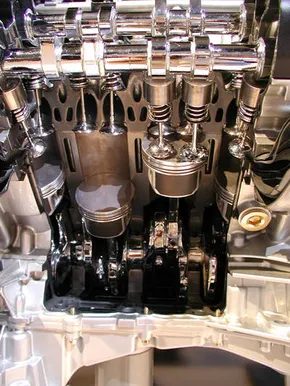
To understand why DOHC rules the high-RPM world, you have to look at the valve train. The camshaft’s job is brutal. It rotates lobes—called cams—that physically push against the valves to open them. Springs then snap the valves shut. This cycle happens thousands of times a minute. If this process isn’t optimized, the engine chokes on its own exhaust or starves for air.
The Four-Valve Advantage
The primary mechanical benefit of a dual overhead cam layout is simplicity in execution for high-flow designs. With two camshafts sitting atop the cylinder head, one bank controls the intake valves while the other handles the exhaust valves. This separation makes it significantly easier to fit four valves per cylinder rather than the traditional two.
Why does valve count matter? It is all about surface area.
With four valves, you can open a larger total cross-sectional area for gases to flow through. More air entering the cylinder means more fuel can be burned, resulting in higher power output. Simultaneously, easier exhaust evacuation means the engine wastes less energy pumping out the spent gases. At low speeds, this difference might be negligible. At high engine speeds, however, the engine is moving massive volumes of air. A two-valve setup simply cannot move enough air fast enough to sustain power. The four-valve configuration ensures the engine breathes deeply even at 7,000 RPM.
Tuned Intake Runners: Free Horsepower
Some manufacturers take the four-valve advantage a step further by utilizing the extra space to install separate intake runners for each of the two intake valves. This is where engineering gets interesting.
They typically design one runner to be wide and short for maximum raw airflow. The other runner is tuned to a specific length. Here is the physics at play:
When the intake valve opens, air rushes into the cylinder. When the valve slams shut, that moving column of air hits a wall and stops. It doesn’t just vanish; it stacks up, creating a high-pressure wave that travels back up the intake runner. When this wave hits the plenum or intake manifold, it bounces back down the tube.
If the runner is cut to the precise length, that pressure wave returns to the cylinder exactly as the intake valve opens for the next cycle. This boost of pressure forces more air-fuel mixture into the chamber. The result? More torque and power without adding a turbocharger or supercharger. It is effectively free induction.
“The unique design of a DOHC engine allows for four valves per cylinder and tuned intake runners, both of which significantly boost high-RPM performance.”
This combination of increased airflow and pressure wave tuning is why you see DOHC engines in sports cars and performance sedans. They are engineered to scream. The valve train stays stable, the airflow remains efficient, and the engine extracts every bit of potential from the fuel.
It is not just about having two camshafts. It is about what those camshafts enable. The ability to fit four valves changes the entire breathing profile of the engine. The tuned runners add a layer of sophistication that turns basic air intake into a pressure-fueling system.
So, when you hear an engine revving high and sounding sharp, it is likely a DOHC unit taking advantage of these principles. The valves open wider. The air moves faster. The pressure waves align. The engine makes power.