


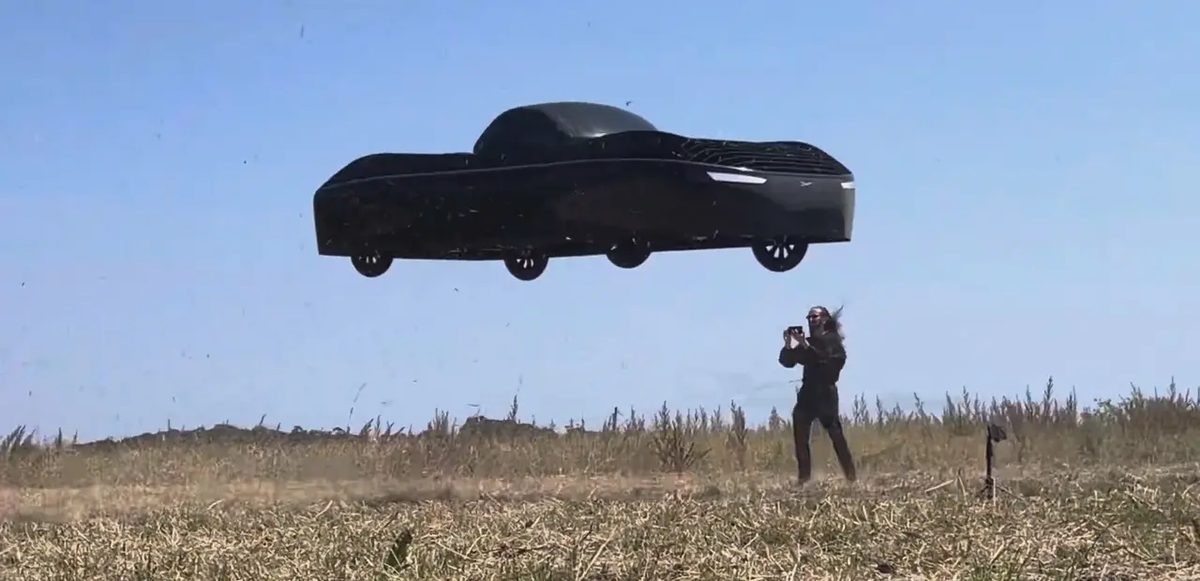
The skepticism was real. When Alef Aeronautics unveiled its prototype in 2022, the design looked less like a futuristic vehicle and more like a science fair project that might not actually fly. The aesthetic was jarring. The proportions felt wrong. Yet, despite the visual doubts, the company didn’t just talk about it—they flew it. Alef secured flight authorization in 2023, beating many rivals to the punch. Now, the theory is moving to the tarmac. Two California airports, Hollister and Half Moon Bay, are set to host the next phase of testing.
The aircraft in question is the Model Zero Ultralight. From a distance, it retains the silhouette of a standard sedan with four wheels. Look closer, though, and the deception vanishes. This is a fully electric vertical takeoff and landing (eVTOL) vehicle. The design prioritizes aerodynamics and airflow. The body features a mesh-like structure that allows air to pass through, reducing drag and weight. Inside sits a central passenger capsule that rotates independently. It stays upright regardless of how the outer frame tilts, ensuring comfort during those awkward hovering moments. The eight rotors are tucked away, hidden behind that distinctive mesh shell.
These initial flights are not just for show. They are the bridge between a prototype and a regulated aircraft. The Model Zero Ultralight is the first to take to the skies in this new environment. It serves as the testbed for the standard Model Zero and the eventual commercial Model A. Operating out of Hollister and Half Moon Bay provides a controlled, tower-free airspace. This setting allows Alef to evaluate how their vehicle integrates with other aircraft types without the complexity of busy commercial hubs.
“Working in safe, controlled, and uncontrolled airport environments will help Alef, the FAA, airport operators, and pilots see how this will work at scale in the future. Electric aviation is more environmentally friendly, quieter, and requires less space.”
— Jim Dukhovny, CEO of Alef Aeronautics
The goal here is integration. Alef envisions the Model A as a car first. It needs to fit into existing automotive infrastructure. It shouldn’t require a complete overhaul of our roads just to support flight. The specifications reflect this dual-life approach. The range is listed at 177 kilometers when flying and 320 kilometers when driving on the ground. This is a practical specification for a commuter vehicle that refuses to stay on the pavement.
Market interest seems to validate the risk. Alef has already secured over 3,300 pre-orders for the Model A. The price tag sits around $300,000. That is not cheap. But for a vehicle that replaces both a car and a helicopter ticket, the value proposition is clear. Deliveries are slated for next year. If the tests in Hollister and Half Moon Bay go smoothly, the mesh-shelled sedan might not be a novelty for long. It could simply be the next thing you drive, or rather, fly, to work.
The road ahead is still paved, but the sky is no longer out of reach.


