


American cars have gotten fat. It’s not just about the hulking SUVs or the extinct Hummers dominating the highways. The trend has seeped into everything. Even mid-size sedans have ballooned. Look at the numbers. A 2007 Honda Accord tips the scales at 3,197 pounds. The 1988 version? Almost 600 pounds lighter. We are dragging around hundreds of extra pounds of steel and plastic for no real reason other than inertia and outdated design philosophies.
Fuel prices spiked. Consumers panicked. Automakers scrambled.
But here’s the thing. Most efficiency efforts focused on the engine. Hybrid batteries. Turbochargers. Better transmissions. We tweaked the powertrain while leaving the heavy, inefficient body shell largely untouched. It’s a band-aid on a bullet hole.
There is a solution that researchers have been whispering about since the mid-1990s. It doesn’t require a new type of battery. It just requires dropping the dead weight. Enter the ultralight car.
The term really caught fire in 1993. That’s when Vice President Al Gore brokered a deal with the Big Three auto manufacturers: Ford, DaimlerChrysler, and General Motors. They formed the Partnership for a New Generation of Vehicles (PNGV). The goal was audacious. Build a car that gets 80 miles per gallon by 2003.
They didn’t hit the 80 mpg target for the public road. But they did pioneer something else. They pushed hard on materials. Carbon composites. Lighter steels. High-strength plastics. The logic was simple. If you reduce mass, you reduce the energy required to move it. Period.
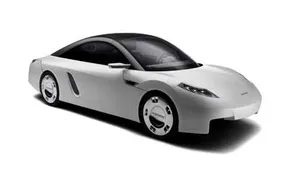
Now we have real-world examples proving this concept works. Take Loremo. It’s a German startup. The name stands for “low resistance mobile.” They aren’t just building prototypes anymore. They are preparing to put their first models on sale in Europe.
How light are we talking? The Loremo LS weighs around 1,200 pounds (544 kilograms).
Let’s put that in perspective. That 2007 Honda Accord weighs 3,197 pounds. The Loremo is less than half the weight. And it’s even lighter than the Smart Fortwo, which sits at a meager 1,800 pounds.
What’s the payoff for shedding all that metal? Efficiency. The Loremo LS delivers 120 miles to the gallon.
One hundred twenty. Miles. Per. Gallon.
That number sounds like a glitch in the matrix. But it’s the result of physics, not magic. Less mass means less rolling resistance. Less rolling resistance means less energy required to overcome inertia. The engine doesn’t have to work as hard. The wheels turn easier. The fuel lasts longer.
But here is the catch. Lighter cars raise questions. Serious ones. How safe are these fitter models? What happens in a collision with a full-size truck? Does shedding 2,000 pounds mean shedding safety?
We’ll dive into the ultralight science and the safety implications next. For now, just remember: weight is the enemy of efficiency. And Loremo


Most cars waste energy. The average vehicle uses only 15 percent of its energy to actually move forward. The rest? Gone. It disappears into braking heat, internal friction, idle time, and the sheer drag of hauling a ton of unnecessary accessories. You can fix that. You just need to change the design. Prioritize function over luxury. Use lighter materials. The math is simple: the U.S. Department of Energy says every 10 percent weight reduction equals a 7 percent boost in fuel economy.
Redefining the Ultralight Car
That exchange is massive. It was the driving force behind the Partnership for a New Generation of Vehicles goal to cut car weight by 40 percent. That’s roughly 1,200 pounds (554 kilograms). But here is where people get confused. They think “light” means “small.” It doesn’t. Mass and weight are different things. The ultralight prototypes don’t shrink the cabin. They shrink the material density. You keep the size. You drop the mass.
Traditional cars are heavy because of steel frames and massive engines. The future cars ditch that. They use plastics, aluminum, metal composites, and hybrid materials. Adjust the weight of the parts, and you don’t have to sacrifice interior space. You can also downsize the engine. Smaller engine. Lighter chassis. Less energy needed to push it down the highway.
Safety Through Engineering, Not Mass
But what about safety? If an ultralight car hits a wall, doesn’t it crumple like a soda can? Yes, it might crumple. But crumpling isn’t failure. It’s energy management. According to the State Department, carbon-fiber composites absorb 12 times the energy per kilogram compared to steel. That’s not flimsy. That’s high-performance.
Researchers at MIT have even found clay nanotech particles that reinforce materials. Add those tiny particles to your composites, and you get a strengthened network. Incredible durability. No compromise.
Take the Loremo. It didn’t just swap materials. It reinvented the frame. Most cars spread impact energy around the passenger cell. The Loremo sends it under them. It uses a long chassis that runs the full length of the car. The force spreads linearly. Think of it like hitting a nail. The nail doesn’t break because the force travels along its length, not across it. The Loremo keeps the body low to the ground. It adds air shafts that funnel air through the undercarriage. Stability. Just like a featherweight racecar.
When Will We See Them?
The Loremo was slated for production in 2010. Its reception would dictate whether this technology hits the mainstream or stays in the lab. If consumers bite, it starts a domino effect. The rest of the industry follows. Or it doesn’t. The road ahead is still being paved.


