Turin, 1952. The city was buzzing. Fiat had just released the 8V, a rare breed of car that paired a sleek, swooping sports coupe body with a 2.0-liter V-8 under the hood. It was a massive departure for the brand. Fiat usually churned out utilitarian runabouts for the masses. This was something else entirely.
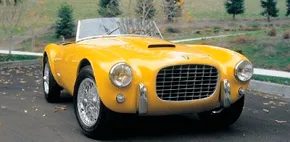
But the most interesting thing about the Fiat 8V wasn’t the chassis. It was the heart. That V-8 engine started showing up in cars from a tiny, scrappy Italian maker called Siata. Specifically, the 1952 Siata 208S Spyder.
This wasn’t a random crossover. It was the result of a deep, historical entanglement between the two companies.
The Origins of Siata and the Fiat Connection
Siata stands for Societa Instrumentazione e Applicazioni Tecniche Auto. Founded in 1926 by amateur racing driver Giorgio Ambrosini, the company started with a simple mission: sell performance parts and tune existing cars for speed. It was a niche business in a niche city.
Both Fiat and Siata called Turin home. Geography dictated their relationship. When you share a city, you share suppliers, engineers, and sometimes, engines. Siata looked at Fiat’s machinery and saw potential. Fiat, in turn, likely saw Siata as a clever outlet for its more exotic components.
Why the Fiat 8V Engine Mattered
The Fiat 8V’s engine was a standout. A 2.0-liter V-8 in the early 1950s was serious business. It offered power and refinement that most Italian sports cars of the era simply couldn’t match. By putting this engine in the Siata 208S Spyder, Siata created a monster.
The 208S Spyder wasn’t just a Siata. It was a Fiat 8V in disguise, wearing a Siata badge. This practice—taking a reliable, powerful engine from a larger manufacturer and dropping it into a lightweight, hand-built chassis—was common in the early days of Italian automotive engineering. But the Siata/Fiat partnership was particularly tight.
Siata’s Role in the Post-War Speed Scene
Giorgio Ambrosini wasn’t just a businessman. He was a racer. He understood what drivers wanted: power, reliability, and a competitive edge. Siata provided the parts to get there. They tuned Fiat engines, modified suspensions, and crafted bodies that turned ordinary cars into track-ready machines.
The Siata 208S Spyder is a prime example. It took the Fiat 8V’s architecture and stripped it down. Less weight. More road. The result was a car that handled the spirit of competition while leveraging Fiat’s industrial might.
This shared history between a mass-market giant and a boutique tuner defined an era. It wasn’t about one company beating the other. It was about collaboration. Turin’s automotive ecosystem thrived on these kinds of synergies.
The Siata 208S Spyder remains a testament to that era. A Fiat engine. A Siata body. One singular purpose
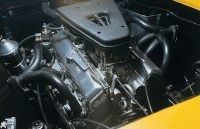

The Siata 208S and the Fiat V8 Heart
By the late 1940s, Siata was no longer just a tuner. The Turin-based firm started badging its own cars, a move that usually meant taking a reliable Fiat base and punching up its performance. The result was the Siata 208S, a machine that didn’t just use a Fiat engine—it likely helped create it.
The heart of the 208S was the Fiat 8V. It was an OHV V-8 that Siata reportedly had a hand in designing. The architecture was modern for a budget Italian car. An aluminum block and cylinder heads housed wedge-shaped combustion chambers, with inserts for the cylinder liners. This wasn’t a cast-iron heavyweights. It was light. It was oversquare.
Breathing was handled by twin two-barrel Weber carburetors. The short-stroke layout encouraged high RPMs. The compression ratio sat at a modest 7.5:1 for the base configuration. In stock form, it pushed 110 horsepower. That was decent. But Siata didn’t leave things alone.
They installed custom camshafts. They redesigned the heads for better flow. The result was a significant bump. Depending on the setup, you could expect an extra 30 to 50 horsepower. That’s a massive gain from simple internal tweaks. All that power went to the rear wheels through a five-speed manual gearbox. It wasn’t just a quick fix. It was a carefully engineered evolution of Fiat’s engineering, pushed to the limit by Siata’s racing instincts.
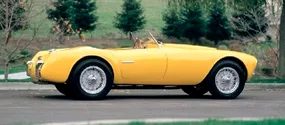

The 208S Chassis and Performance Secrets
Underneath that aluminum skin, the Alfa Romeo 208S was built on a sturdy 106-inch wheelbase. The engineers didn’t skimp on the hardware. They used a box-section frame paired with four-wheel independent suspension, sourcing the components directly from Fiat to keep things reliable if not revolutionary. Stoppage was handled by hydraulic drum brakes at all four corners—a setup that required firm pedal pressure but did the job.
Rolling on 6.50×15 tires, the Spyder roadster version hit a top speed of roughly 110 mph. But if you wanted more, there was a faster option. The Vignale-bodied 208S America fastback coupe featured hidden headlights and a lighter tube frame. That aerodynamic efficiency pushed its top speed up to about 120 mph.
Practicality? Don’t expect much. The Spyder came with a soft top and side curtains to keep the rain out. That was it. You were either driving in the weather or waiting for it to pass. Which is exactly how many enthusiasts preferred it anyway.
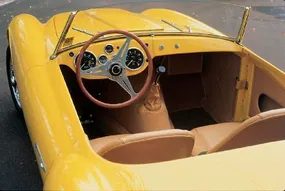

The Siata 208S: An Undervalued Weapon
The numbers tell a story that most histories skip over. Weighing in at a featherweight 2,500 pounds and carrying a price tag of just $5,500 in the US market, the V-8 Siata was an absolute anomaly. It was lighter and significantly cheaper than the 2.0-liter sports cars coming out of Maranello and Modena at the time. You could buy a Ferrari or a Maserati, but you’d pay a premium for the badge and the heritage. The Siata offered raw performance for a fraction of the cost.
Predictably, this value proposition didn’t go unnoticed. Sports car racers saw an open door. Jack McAfee, the West Coast importer who brought these Italian machines to American shores, decided to turn one into a race car. The target was the 1953 Carrera Panamericana.
Reducing Displacement for Class Honors
To compete effectively, McAfee needed to fit into a different classification. He didn’t just bolt on a roll cage and hit the road. He resleeved the cylinders, reducing the engine displacement to 1.6 liters. This mechanical tweak was a calculated move to slide the 208S into a more favorable competitive bracket. It was a smart play. The car had the power and the lightness to dominate.
But the Carrera Panamericana is not a race where mechanics and strategy guarantee victory. It’s a brutal road rally through Mexico. And in 1953, the 208S met its fate on those unforgiving streets. McAfee crashed the car during the event.
The Siata offered raw performance for a fraction of the cost.
The crash ended the car’s racing hopes. But it didn’t erase the fact that this V-8-powered micro-sports car was technically competitive with Italian giants. It just lacked the protection money buys. McAfee’s attempt proved the concept. The Siata could hang with the best, if it stayed upright.
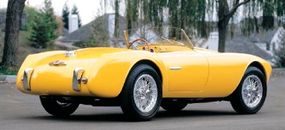

The 208S lingered in production until 1955. Then Siata pivoted.
The company didn’t quit immediately. It chased smaller, stranger ideas. There was the Mitzi. A two-cylinder minicar. Tiny and utilitarian. Then came the Spring. A rear-engine sportster. It looked like a ghost of an old MG TD. Rear-wheel drive. Lightweight. Italian flair with British bones.
Siata kept tinkering through the 60s. The market shifted. Giants like Fiat and Alfa Romeo dominated the affordable sports scene. Niche players got squeezed. In 1970, the lights went out. The doors closed. No final parade. Just silence.
For more on these machines, check out guides on classic cars, muscle cars, and sports cars.