Car trouble is a lot like getting a sudden stomach ache. When pain strikes, you don’t just guess. You think back. What did you eat? How was it cooked? Did you ignore a minor twinge yesterday? Cars work the same way. If you understand the signs of transmission problems, you can catch issues early. You save cash. You save your sanity.
Mechanical issues present distinct sounds and sensations. These are the body language of your vehicle. Transmissions take a beating over years of use. They need repair eventually. Repairs are expensive. Pay attention to the weird stuff now. Fix it before it becomes a catastrophe.
How Transmissions Work
The transmission changes gears. That’s its only real job. It translates engine power into wheel rotation. There are two main types. Automatic. Manual. There is a third type. Dual-clutch. You’ll find those in race cars. High performance. High cost.
Manual transmissions are rare now. About 3 percent of cars sold in the US are stick shifts. If you drive one, you know the drill. You use a clutch pedal. You move a lever. You change gears by hand. Most cars today have automatic transmissions. You put it in “drive.” The computer does the rest. It shifts gears automatically. It’s convenient. It’s reliable. Until it isn’t.
Warning Signs to Watch For
Your transmission will tell you when it’s dying. You just need to listen. Here are the top indicators.
- The car refuses to go into gear.
- There is a smell of burning.
- Whining, clucking, or humming during shifts or in neutral.
- Gears are slipping.
- The clutch drags.
- Fluid leaks on the ground.
- Check engine light illuminates.
- Grinding or shaking sensation.
- Lack of response when changing gears.
1. Car Won’t Go Into Gear
This is the big one.
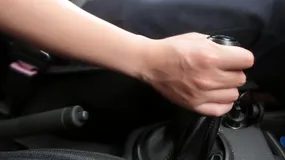

Shift feel is everything in a manual car. If you press the clutch and the lever just sits there like a rock, you have a problem. It happens when you’re trying to lock into first gear from a standstill. Or maybe you’re mid-drive and the stick won’t engage. Don’t ignore it.
Low fluid is a quick fix. Wrong viscosity is also easy to correct. But it could be worse. Shift cables might be frayed. Clutch linkage could be misaligned. In the worst case scenario, you’re looking at a full rebuild. Check the basics first.
The Smell of Trouble
Burning transmission fluid smells distinct. It’s not sweet success. It’s sweet despair. That scent means your unit is overheating. The fluid lubricates moving parts. Without it, metal grinds against metal until things melt.
Low fluid levels often point to a leak. Dirty fluid loses its protective properties. It breaks down under heat. But don’t assume the transmission is the only culprit. If the fluid looks fine, look elsewhere. A blown fuse? Possible. Worn brake pads? Likely. Burning oil? Also possible. The smell travels. Trace it back.
Decoding Transmission Noises
Every car has a voice. Some scream. Some whisper. But if your automatic starts whining, humming, or buzzing, listen up. That’s not the sound of efficiency. That’s distress.
Manuals are different. They clunk. They grind. If you hear a clunk when you shift, get it checked. Immediately. But keep your ears open. A clunk from underneath doesn’t always mean the gearbox is failing. Constant velocity (CV) joints are notorious for this. So is the differential. These parts wear out. They knock loose. They mimic transmission failure.
Noise in neutral is the real red flag. If you’re sitting still and hear chatter, mechanical wear is happening. Parts are loose. The reverse idler gear might be stripped. Bearings could be shot. Gear teeth may be worn down. This isn’t a “wait and see” situation. Parts are going to break if you don’t replace them.
Slipping Gears and Lost Power
Slipping is the silent killer of performance. You press the gas. The engine revs. The car doesn’t accelerate. That’s slippage. The connection between the engine and the wheels is broken.
In an automatic, this feels like the transmission is hunting for gears it can’t find. It shifts into neutral and stays there. Power delivery cuts out. It’s dangerous. You lose momentum on a highway merge. You stall at an intersection.
For manuals, slipping feels like the clutch is disengaged when it shouldn’t be. You’re in gear. The engine spins. The wheels don’t turn. This usually points to a worn clutch disc. Or maybe the hydraulic system is failing. Master cylinder issues can mimic this. Brake fluid leaks into the clutch system. Contamination ruins the friction material.
Why does this happen? Heat. Friction. Age. Transmission fluid breaks down. It loses its ability to transmit force. Hydraulic pressure drops. The clutch plates slip. You feel it in your foot. You see it on the tachometer. The numbers go up. The speed stays flat.
If you notice any of these symptoms, don’t drive it home. Tow it. Fix it. Because the next time you slip, you might not be able to move at all.
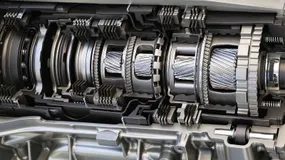
In a healthy drivetrain, the car holds the selected gear. You tell it where to go. The computer tells it where to go. It stays there until you change your mind. But slip? That’s different.
With slipping gears, the car abandons its post. It pops out of gear while you’re moving. In a manual, the stick might slam into neutral on its own. It’s jarring. It’s disorienting.
Think about the scenario. You’re merging onto a highway. Traffic is heavy. You press the pedal to pass. The engine revs. The speed doesn’t follow. Why? Because power isn’t reaching the wheels. The connection is broken.
This isn’t a glitch to ignore. It’s unsafe. Period. If you feel the power drop when you need it most, stop driving. Have the system inspected immediately. Don’t guess. Don’t wait.
5. The Slipping Clutch
If you drive a stick shift, slipping doesn’t just mean the car falls out of gear. It means the clutch itself is failing to engage properly. You might notice the RPMs flare up without a corresponding increase in speed. The engine screams while the car crawls.
It’s the same principle as transmission slippage but localized to the friction disc. The clutch plate wears down. It can’t grip the flywheel hard enough. Power gets lost between the engine and the transmission input shaft.
Symptoms are specific.
– The car struggles to accelerate.
– You smell burning when climbing hills.
– The pedal feels spongy or stays low.
Fix it before you’re stranded on an on-ramp. Or worse, in the middle of an intersection.

You’re waiting at a light. You’ve got your foot buried on the clutch pedal. You try to slip it into first, and crunch. That sound is the gear teeth fighting each other because the engine is still married to the transmission.
It’s called a dragging clutch, and it’s the manual driver’s nightmare. The pedal goes down, but the clutch disc stays pressed against the flywheel. The engine keeps spinning. The transmission input shaft keeps spinning. You’re trying to force a stop into a moving machine.
Most people panic. They think they need a new gearbox. They shouldn’t. The most common culprit isn’t a broken internal component. It’s slack.
The Slack Problem
Clutch systems rely on precise geometry. When you push the pedal, a cable or hydraulic piston pulls on a lever. That lever compresses the pressure plate springs, pulling the clutch disc away from the flywheel.
If there’s too much free play at the pedal, that leverage is lost. You might be pressing three inches of pedal travel that does absolutely nothing. By the time the clutch actually starts to disengage, you’re already in the shift.
This is why you hear that grinding. The synchronizers can’t match the speeds because the engine is still driving the input shaft. The solution is often simple. Check your pedal height. Adjust the free play. If it’s cable-actuated, turn the adjuster nut. If it’s hydraulic, bleed the lines and check for leaks or air pockets.
“A dragging clutch fails to disengage the clutch disk from the flywheel when you push in the clutch pedal.”
It’s annoying. It’s hard on your gears. But it’s not always catastrophic.
When Slack Isn’t the Issue
Sometimes the pedal feels fine. The adjustment is right in the sweet spot. But you still get that grind. Now you’re looking deeper.
The hydraulic master or slave cylinder might be leaking internally. Air in the line compresses. The pedal feels spongy. The disc doesn’t fully separate.
Or the release bearing is failing. It’s the part that actually pushes on the pressure plate fingers. If it’s seized or worn, it won’t travel far enough to release the clutch, even if the pedal moves correctly.
Diagnosis requires lifting the car. Check the hydraulic lines. Inspect the linkage. Listen for noise when the pedal is depressed with the engine running. A bad bearing will whine. A slack cable will feel loose.
6. Transmission Leak
If the clutch isn’t dragging, but the car still won’t hold gear or feels like it’s slipping under load, look below. A transmission leak is often the next thing on the checklist.
Seals fail. Gaskets dry out. Oil drips onto the hot exhaust or pools under the car. If you see dark, slick fluid near the bellhousing or the tail of the transmission, you have a problem. Low fluid levels cause overheating. Overheating destroys synchronizers. Synchronizers failing leads to the same grinding you get from a dragging clutch.
Check the dipstick if your car has one for the transmission (some do, most don’t). If it’s low, top it up with the exact spec manufacturer fluid. If it’s empty, you
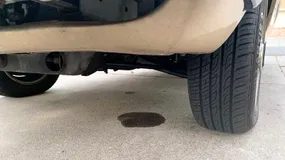
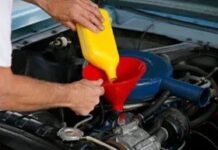
Spotted a puddle on the pavement? That’s your first clue. Leaking transmission fluid is the most straightforward red flag that your gearbox needs help. Automatic transmission fluid (ATF) is the lifeblood of smooth shifting. Let it drop too low, and you’re looking at a catastrophic repair bill instead of a simple top-up.
When everything is healthy, ATF is bright red. It’s translucent. And yes, it has a distinctively sweet smell. If you catch that scent near your exhaust or under the car, pay attention.
Inspect Fluid Color and Smell
Pulling the dipstick tells you more than just the level. You’re looking for clarity and color. Dark, murky fluid? That’s a sign of contamination or excessive heat. A burnt odor? That’s worse. It means the fluid is breaking down from overheating or that clutch packs are burning.
Unlike engine oil, your transmission shouldn’t consume fluid. There’s no dipstick in a manual to check “consumption” because it shouldn’t be consuming any. If you’re low, it’s leaking. Period.
For manual transmissions, don’t look for a dipstick. It doesn’t exist. You’ll need to crawl under the car or look at the side of the case. There’s a fill plug. Remove it. If fluid doesn’t drip out when you tilt it, you’re low. It’s that simple.
7. Check Engine Light
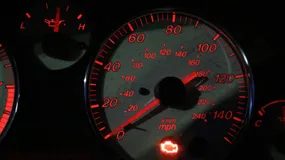
The check engine light isn’t just noise. It’s a warning. Specifically, it can signal transmission trouble before the gears start grinding metal. Modern sensors catch vibrations you’d never feel in the seat. But the light blinks for a thousand reasons. A bad oxygen sensor? Maybe. Dead spark plug? Likely. To know if your transmission is dying, you need a code reader.
Plug it into the OBD-II port under the dash. Look for codes pointing to solenoids, pressure switches, or range sensors. If you see P0700 or similar transmission-specific codes, don’t ignore it.
8. Grinding or Shaking
Shaking on acceleration is a red flag. Grinding sounds? Even worse. Start with the dipstick. Low fluid causes cavitation. The pump sucks air instead of oil. Pressure drops. Clutches slip. You shake.
If the fluid level looks fine, stop driving. Head to a pro. Worn synchros or a fried clutch plate won’t fix themselves. Ignoring it turns a $400 repair into a $4,000 rebuild.
9. Transmission Won’t Respond
Hesitation is the enemy. A healthy transmission shifts instantly. If your car feels like it’s thinking about moving, something’s broken.
Manual drivers know this feeling: rev the engine, shift, and the car lags. The engine screams while the wheels crawl. That’s usually clutch slip. Or worse, a broken synchronizer ring.
Automatics are subtler. You move the lever from Park to Drive. Nothing happens. Or it takes three seconds. That delay signals a pressure loss, a bad valve body, or a failing torque converter. Don’t wait for the car to refuse to move entirely.
Why Is My Car Shaking?
Shaking on launch points to fluid starvation. Low ATF means no hydraulic pressure. No pressure means no engagement. Check the level. Check the condition. Dark, burnt fluid? It’s time for a change. Or a flush. Depending on the manufacturer’s specs.
If you hear grinding when you engage the clutch, the synchros are shot. They’re the small brass rings inside a manual gearbox that match gear speeds. Worn out? You’ll hear metal-on-metal. Fix it fast.
Automatics shouldn’t shudder. Not at 30 mph. Not at 60. Smooth transitions are the goal. Any jolt means a problem.
More Diagnostics
Sometimes the light stays off. But the car feels wrong. That’s why you need to listen. And feel. The transmission is the second most complex part of your car. Treat it like the heart. If it skips a beat, you have minutes to react. Not days.