Gas prices are climbing. The geopolitical tension over foreign oil dependence is palpable. The environmental headlines are relentless. All of this is pushing drivers toward the hybrid aisle. But there is a catch. Hybrids carry a premium. The sticker price is higher than the gas-guzzling equivalent. So, does it actually save you money?
The answer isn’t a simple yes or no. It depends on your commute. It depends on your location. It depends on the specific model you choose.
To figure out if the math works for your wallet, you first need to know what you’re buying.
How Hybrid Systems Actually Work
Not all hybrids are created equal. The technology varies significantly between models, which directly impacts both performance and price.
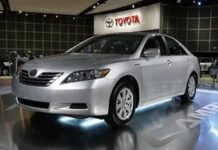
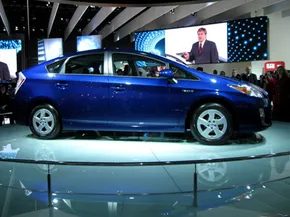
A full hybrid combines an internal combustion engine with an electric motor and a battery pack. This setup allows the car to drive on electric power alone for short distances. Typically, this works at city speeds up to about 40 miles per hour (64 km/h). Once you push past that threshold or demand more power, the gasoline engine takes over. The Toyota Prius and the Ford Escape Hybrid are prime examples of this system.
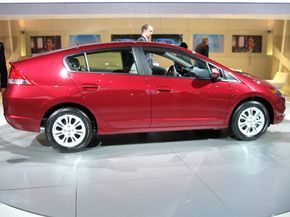
Then you have mild hybrids (also called assist hybrids). These vehicles also have a combustion engine and an electric motor. Here’s the difference: they cannot drive on electric power alone. The electric motor simply assists the engine. It helps during acceleration or handles start-stop technology, shaving off fuel usage without taking over the wheel. The Chevy Malibu Hybrid and the Honda Insight (specifically the hybrid variants) fit into this category.
The cost disparity is real. A full-hybrid luxury sedan from Lexus will demand a heavy price tag. A mild-hybrid system in an economy car like the Insight will be far more affordable. You are paying for the complexity and the independence of the electric drivetrain.
The Fuel Efficiency Gap
The main selling point is obvious: better mileage. Always.
Let’s look at hard data. Consider the 2009 Ford Escape. The standard V6 model earns 20 miles per gallon (mpg) in the city and 28 mpg on the highway, according to EPA estimates.
Now look at the hybrid version of that same SUV.
- City driving: 34 mpg
- Highway driving: 31 mpg
That is a massive jump in city driving. The electric motor makes up for the inefficiencies of stop-and-go traffic. Even large trucks with poor baseline fuel economy see a noticeable boost in efficiency by integrating mild hybrid systems with electric assist and start-stop technology.
But better mileage is only half the equation. You have to offset the initial purchase price.
The Break-Even Point
So, when do the gas savings actually cover the higher sticker price?
This is where the “it depends” factor kicks in heavily. If you drive 15,000 miles a year in heavy city traffic, your savings will mount quickly. The full hybrid shines here because it can shut off the gas engine frequently. If you mostly drive long highway stretches, the difference between a full hybrid and a mild hybrid narrows, and the benefit of a full hybrid diminishes.
Will the high cost of these vehicles cool the green driving trend? Unlikely. But will your hybrid pay for itself?
We need to break down the economics. We have to look at incentives. We have to look at maintenance. And we have to look at the depreciation curve.
Hybrid Incentives

Buying a hybrid means you’re burning less gas and polluting less. It’s good for the planet. It’s also bad for your wallet upfront. The tech that enables that efficiency costs money to build. The government knows this. They want you to buy cleaner cars, but they don’t want to bankrupt you in the process.
So, they offer a hand up. Federal and state agencies have created incentives to ease the sting of a high sticker price.
Tax Credits That Phase Out
The most direct way to lower that initial cost is through tax incentives. The U.S. federal government offers tax credits of up to approximately $3,000. This figure isn’t fixed for every car forever. It depends heavily on the specific vehicle model and the date you buy it.
Here’s the catch. The program was designed to spark interest in this new, gas-sipping technology. As hybrids become more popular and mainstream, the credits are designed to phase out. You’re racing against time and market saturation.
State-Level Rebates and Perks
The federal credit is just the tip of the iceberg. Individual states offer their own incentives on top of the federal ones. Geography matters.
- Oregon offers its own credits, totaling up to $1,500 for certain eligible vehicles.
- California goes bigger. They provide a rebate of up to $5,000 for the purchase of a hybrid.
- Georgia takes a different approach. They offer non-monetary perks. Specifically, free use of high-occupancy vehicle (HOV) lanes. In Georgia, you get the express lane access regardless of how many passengers you have in the car.
These aren’t just feel-good gestures. They’re financial tools.
Maintenance Savings and Regenerative Braking
Fuel economy offers significant savings. This is especially true when gasoline prices spike. Look at the summer of 2008. Prices were astronomical. Hybrids ate that pain better than traditional sedans.
But there’s another saving hiding in the mechanical design. Repair issues are minimized by how hybrids stop.
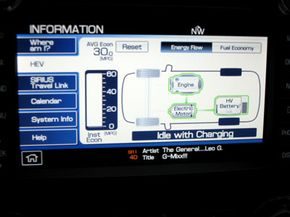
Regenerative braking reduces wear on brake pads. It’s a simple concept. The electric motor acts as a generator when you lift off the throttle. It slows the car down using electromagnetic resistance. The physical brake pads don’t touch the rotors until the electric system can’t slow you down enough.
In a traditional car, you replace brake pads every 10,000 miles (16,093 kilometers). In a hybrid, you might stretch that to 50,000 miles (80,467 kilometers). That’s a massive difference in long-term maintenance costs.
The Drawbacks
All these incentives add up. All that clean air is nice. But owning a hybrid isn’t purely positive. There are drawbacks. Hard truths.
We’ve covered the incentives. We’ve covered the savings. Now we need to look at the bad news. The parts that might make you regret your purchase five years down the line.
Hybrid Costs
The battery is the elephant in the room. These cars don’t just have a standard 12-volt battery for the starter. They have high-voltage traction batteries. Lithium-ion or nickel
The Real Cost of Going Green
Buying a hybrid isn’t cheap. The upfront premium still stings, often landing you several thousand dollars further behind the curve than a standard gas-powered sedan. Sure, the gap has narrowed since the early days of the Prius, but it remains a massive hurdle. Even with tax credits and state rebates, the sticker shock is real.
Fuel costs muddy the waters further. When gasoline is cheap, that initial investment drags on for years before you break even. When prices spike, you recoup the difference faster, but let’s be honest: everyone feels the pinch at the pump, regardless of whether you’re driving a V8 or a hybrid drivetrain.
Then there’s the battery anxiety. The myth persists that these packs are a ticking time bomb, destined to fail with a prohibitive repair bill. It’s part true. The tech—whether legacy nickel-metal hydride (NiMH) or modern lithium-ion—is expensive. But manufacturers aren’t leaving customers hanging. They’ve stress-tested these packs in labs and on actual streets.
Consider the original Honda Insight. Some units have clocked nearly 200,000 miles (321,869 km) on the original battery pack. Ford guarantees theirs for 10 years or 150,000 miles (241,402 km), though their fleet test vehicles have never needed a swap. The risk? Lower than you think. The price? High if it fails, but the durability is proven.
Pricing a 2009 Honda Civic Hybrid
Let’s look at the numbers. Specifically, the 2009 Honda Civic. We’re comparing the base conventional sedan against the hybrid version. The goal? Reduce carbon footprint. The constraint? The money tree isn’t exactly overflowing.
The base 2009 Civic sedan starts at $15,505. The hybrid version? $23,650. That’s a raw premium of $8,145. The federal incentive for this model had already been phased out by 2009, but geography matters. If you live in Oregon, you snag a $1,500 credit. That slashes the premium to $6,645.
Efficiency tells the rest of the story. The standard Civic pulls 25 mpg in the city (10.6 km/L) and 36 mpg on the highway (15.3 km/L). The hybrid steps up to 40 mpg city (17 km/L) and 45 mpg highway (19.1 km/L).
According to EPA estimates, that efficiency gap saves you about $300 annually in fuel. If you plan to keep the car for seven years, that’s $2,100 in your pocket. Subtract that from the discounted premium, and you’re looking at a net cost of $4,545 to go green.
But what if gas prices behave like they did in 2008? When crude hits the $4 range, fuel savings double to roughly $650 a year. Over those same seven years, that drops the effective premium to just $2,095.
Some hybrids are cheaper to buy. Some have smaller premiums. Some qualify for bigger incentives. Others are so expensive they may never break even on the purchase price. But they all reduce emissions. You’re paying for the planet as much as the mileage.
Individual driving habits play a huge role in that equation. Savvy drivers using full hybrids can squeeze out significantly higher mileage by managing the electric motor and braking regeneration. Many buyers are treating hybrids as a hedge against future gasoline hikes. It’s a move that only makes sense if you plan to keep the car for at least five years.
Hybrids are hitting every price tier now. We’re seeing models under $20,000. Most buyers will find a car they want to drive at a price they can afford. The math is messy, but the choice is clearer than ever.
Related Articles
- Top 10 Selling Hybrid Cars
- How the Honda Civic Hybrid Works
- How the Ford Fusion Hybrid Works
- How the Toyota Prius Works
- Are hybrid cars slower than regular cars?
- How Alternative Fuel Filling Stations Work
Sources
- American Honda Motor Company. “Honda Civic Family.” (April 9, 2009)
- Carty, Sharon Silke. “Hybrids recoup higher cost in less time.” USA Today. May 12, 2008.
- Center for a New American Dream. Responsible Purchasing Network.”Hybrid Calculator.”
- FuelEconomy.gov.
- FuelEconomy.gov. “New Energy Tax Credits for Hybrids.”
- Gioia, Nancy. Director of Sustainable Mobility Technologies and Hybrid Vehicle Programs at Ford Motor Company. Personal interview.
- Kaho, Todd. “Will a Hybrid Car Really Pay Off?” GreenCar.com. June 10, 2008.
- McCarthy, Kevin E. “State Incentives for Hybrid Vehicles.” National Conference of State Legislatures.
- Oregon Department of Energy “Hybrid Electric and Alternative Fuel Vehicles.”
- Patterson, Wade. Honda Insight owner. Email response.
- Toyota USA Newsroom. Toyota Open Road Blog. “Doing the Hybrid Numbers.” Jan. 30, 2009.