Front-engine layouts dominate the market. They are practical. You can work on them easily. The cabin feels spacious. But when you chase lap times, front-engine cars sit at a severe engineering disadvantage. High-performance manufacturers often skip them entirely. Or they reserve them for entry-level trims.
The debate isn’t just about where the block sits. It is about how the power reaches the pavement. Engine placement dictates drive configuration. Specifically, which wheels receive torque.
“Front-engine cars also lose a bit of braking capacity because the car’s weight shifts forward as the car decelerates.”
This connection holds true for most vehicles. All-wheel-drive and four-wheel-drive systems are notable exceptions. They complicate the rule. But for two-wheel-drive sports cars, physics is unforgiving.
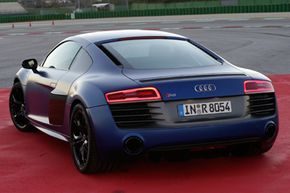
Car and Driver recently conducted a stark comparison. They pitted a rear-engined Porsche against a mid-engined one. The principles apply broadly. Even if you cannot afford a Stuttgart badge, the engineering logic remains identical.
Let us break down the three main configurations.
Front-engine dynamics
Front-engine, front-wheel-drive (FE-FWD) is the standard. It is common for a reason.
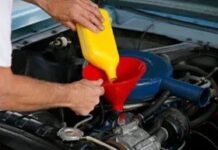
A front bay is accessible. Mechanics can reach the alternator, belts, and filters without crawling under the car. The packaging efficiency is high. You get more interior volume for passengers and cargo.
Spirited driving is possible. You can have fun in a front-engine car. But it lacks the raw handling edge of other layouts.
Power loss is the primary culprit. A front-mounted engine must transmit energy down the entire length of the vehicle to turn the rear wheels. This creates drivetrain loss. Torque is wasted.
Braking is also compromised. Deceleration shifts weight forward. This extra momentum pushes the nose down. It destabilizes the rear wheels. The car becomes less predictable under hard braking.
Rear-engine advantages and risks
Rear-engine designs place the powerplant behind the rear axle. Think of the trunk area in a classic Porsche 911.
This layout boosts acceleration and braking. It seems counterintuitive. You might think you need a push from the front to move. But weight distribution tells a different story.
The engine’s mass bears down on the rear tires. This increases mechanical grip. Better traction means better launch. It also improves braking stability. The rear wheels are loaded, providing more friction for stopping.
Size is another factor. Rear-engine cars tend to be compact. A shorter wheelbase improves agility. The car feels smaller and sharper through corners.
However, there is a catch. Oversteer.
Oversteer occurs when the rear end slides out. The car fishtails. It breaks traction in the rear while the front maintains grip. This is tricky to control. Rain and snow make it dangerous.
Track enthusiasts often embrace this behavior. They want the rear to step out. They want to rotate the car. But for daily driving, it is a liability.
Mid-engine precision
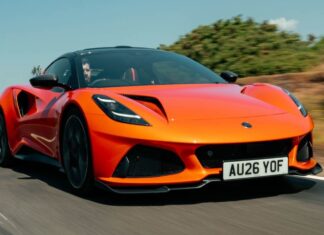
Mid-engine layouts are the rarest. The engine sits just ahead of the rear axle.
Car and Driver calls this the “optimum location.” It is not just hype. It is geometry.
Proximity to the rear wheels reduces drivetrain length. But more importantly, it centralizes mass.
Weight distribution becomes balanced. The center of gravity sits lower and more centrally. The wheels are not fighting uneven loads. This allows for precise steering input.
On a track, these factors are life-changing. Tight corners demand balanced handling. A mid-engine car can turn in sharply. It maintains stability through the apex. The average driver rarely considers weight transfer. But at the limit, it is everything.
How engine placement affects driving
Why does this matter to you?
If you commute, a front-engine car offers space and ease of maintenance. You will never know you are missing out.
If you track your car, rear or mid-engine layouts provide mechanical advantages. The rear-engine car offers raw, aggressive handling. The mid-engine car offers precision.
Which layout suits your driving style?
Front-engine cars are practical. Rear-engine cars are thrilling but unpredictable. Mid-engine cars are the engineering sweet spot.
The choice defines the car’s personality. It dictates how the machine interacts with the road. You can tune a front-engine car. You can learn to manage oversteer. But the physics will always have the final say.
So, when you next see a low-slung sports car, look where the engine sits. It tells you more than just specs. It tells you how the car thinks. And how it will feel at 100 mph.