The exhaust plume from your tailpipe isn’t just invisible vapor. It’s a cocktail of carbon monoxide, nitrogen oxides, sulfur oxides, hydrocarbons, and greenhouse gases. Burning fossil fuels in an internal combustion engine is messy business. These substances don’t just vanish. They hang in the air. They enter our lungs. They warm the planet.
Carbon monoxide reduces the oxygen your blood can carry. Sulfur dioxide creates acid rain. Nitrogen oxides are responsible for the brown smog hovering over major metropolitan areas. Carbon dioxide drives the greenhouse effect by trapping heat in the atmosphere. Hydrocarbons contribute to cancer risks. We are literally driving machines that degrade our health and environment. Many scientists argue these vehicles are the primary accelerators of global warming.
We aren’t quite there yet. Affordable zero-emission cars like hydrogen fuel cell or all-electric models are still a few years away from mass adoption for the average buyer. Until then, we’re stuck with combustion. But we can cut consumption. We can drive cleaner. We can buy low-emissions vehicles. We can ensure our cars pass annual inspections. Those tests check safety, mechanical health, and pollution levels. Older cars without modern emission-control tech are the worst offenders here.
Because the air quality above our roads is so fragile, governments monitor vehicle output closely. Smog is a real threat. The federal government and individual states have established emission certification standards. These regulations dictate exactly how much pollution a vehicle can legally release.
Establishing Emission Certification Standards
The post-World War II era changed everything. Americans fled cities for suburbs. They needed cars for daily commutes. Car usage skyrocketed. Fuel consumption followed. So did air pollution.
California noticed first. The state’s heat and natural bowl-shaped topography trap smog over Los Angeles. Residents suffered watery eyes and respiratory issues by the 1940s. California became the first to set clean air standards. By the 1960s, despite automaker objections, the state mandated emissions control devices. This push invented the catalytic converter. It also killed leaded gasoline.
In 1970, President Richard Nixon signed the Clean Air Act. This law gave the Environmental Protection Agency (EPA) authority to protect national air quality. The results were immediate. Carbon monoxide, hydrocarbon, and nitrogen oxide emissions dropped significantly. The act has been revised since. Major updates came in 1990. Minor tweaks followed.
The 1990 revision created two national tiers. Tier 1 standards took effect in the mid-1990s. They are currently being phased out. They are being replaced by stricter Tier 2 standards. Under Tier 2, SUVs, pickups, vans, and large passenger vehicles face the same national standards as sedans. Diesel engines must meet the same limits as gasoline engines. The rules also mandate low-sulfur gasoline. This allows cars to run cleaner.
California’s standards are stricter than federal ones. Other states can choose to follow California’s rules. Several do. Vehicles are classified by specific acronyms that define their cleanliness:
- Low Emission Vehicle (LEV): Releases fewer emissions than the average new car.
- Ultra Low Emission Vehicle (ULEV): Releases 50 percent fewer emissions than the average new car.
- Super-Ultra Low Emission Vehicle (SULEV): Releases 90 percent fewer emissions than the average new car.
- Zero Emission Vehicle (ZEV): Releases no emissions at all. This category includes electric cars and fuel-cell vehicles.
How do automakers actually prove they meet these numbers? And what does green driving look like in practice? The next section breaks down compliance and the technology behind cleaner miles.
How Tier 2 Bins Define Your Car’s Cleanliness
Under Tier 2 standards, the EPA doesn’t just look at a single number for pollution. They use a system of emissions bins to grade vehicles. There are 11 distinct bins, numbered 1 through 11. The lower the number, the cleaner the ride. A bin 1 vehicle is essentially a zero-emission machine. Most modern sedans hover around bin 5, which is considered the average new car. That 5 is actually the mandated standard for nitrous oxide in new vehicles. If you see a bin 11, you’re likely looking at a massive truck.
The rules tightened up for light-duty trucks too. SUVs used to get a free pass based on weight. No longer. Under Tier 2, SUV emissions standards are identical to those for passenger cars. Size doesn’t exempt you anymore.
How to Check Your Emissions Rating
You don’t need a degree in chemistry to figure out what your car is spewing. Start by checking the classification. Automaker websites list this data. Look for a sticker in the window when you buy. Newer models? There’s a mandatory label under the hood. It tells you exactly which bin you’re in.
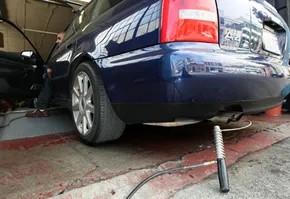
But buying green is only half the battle. Keeping it green requires annual inspections. Every state has different rules, but the core test is usually the same. A mechanic puts your car on a dynamometer. Think of it as a treadmill for your tires. The car stays put while the rollers spin it at different speeds. A probe hooks into the tailpipe.
The machine measures three things: hydrocarbons, carbon monoxide, and nitrogen oxides. Too much of any of these? You fail. The law in many states mandates this yearly check. It’s not just about the smog. The shop will also check brakes and electrical components. It’s a chance to catch a failing part before it leaves you stranded.
Why Annual Inspections Matter
There’s a practical benefit here that goes beyond avoiding fines. A car that passes emissions is usually running tight. It’s not wasting fuel. A poorly tuned engine burns more gas. It also releases more pollutants. Keeping your car in this compliant state improves fuel economy. You spend less at the pump. You pollute less. It’s a simple trade-off.
Don’t drive a clunker. It hurts your wallet and the air.
Which Hybrid and Eco-Friendly Cars Lead the Pack
If you’re in the market for a new ride, the options have expanded. The Toyota Prius sits at bin 3. Solid. But the Honda Civic Hybrid drops to bin 2. That’s a significant step up in cleanliness. Then there’s the Ford Escape Hybrid. It’s an SUV. Yet it achieves bin 3. That’s impressive for a vehicle of that size.
Even non-hybrids have improved. In California, which enforces the toughest standards, the Toyota Yaris and Honda Fit are rated as Ultra-Low Emissions Vehicles. You don’t need a hybrid badge to be green anymore.
The Future of Green Driving
Electric cars. Hydrogen fuel cells. They’re the endgame. Zero tailpipe emissions. No chemicals hitting our lungs or the atmosphere. But we aren’t there yet. Until the grid is fully charged and the infrastructure catches up, we have to make do.
Maximize fuel efficiency. Learn how to drive smoother. Keep your older cars maintained. The technology is shifting, but the responsibility remains with the driver.
Check the links below for more on certification and eco-driving tips.
Lots More Information
Related Articles
- Are hybrid cars slower than regular cars?
- Can owning a hybrid car get me an HOV decal?
- Do hybrid cars cause pollution?
- How Electric Car Conversion Kits Work
- How Exhaust Heat Recovery and Recirculation Works
- How Hybrid System Indicators Work
- How Instant MPG Readout Works
Sources
-
Electric Auto Association. “The Truth About Auto Emissions.” (Accessed May 5, 2009)http://www.eaaev.org/Flyers/#Emissions
-
Environmental Protection Agency. “Clean Air Act.” (Accessed May 5, 2009)http://epa.gov/air/caa/
-
Environmental Protection Agency. “Tier 2 Vehicle & Gasoline Sulfur Program.” (Accessed May 5, 2009)http://epa.gov/tier2/
-
GreenerCars.org. “Sorting out Standards.” (Accessed May 4, 2009)http://greenercars.org/guide_standards.htm
-
Melosi, Martin. “The Automobile and the Environment in American History.” Automobile in American Life and Society. 2004. (Accessed May 3, 2009)http://www.autolife.umd.umich.edu/Environment/E_Overview/E_Overview4.htm
-
Texas Department of Public Safety. “FAQs: ASM/TSI Emissions Testing.” (Accessed May 5, 2009)http://www.txdps.state.tx.us/vi/Misc/faq/faq_asm.htm