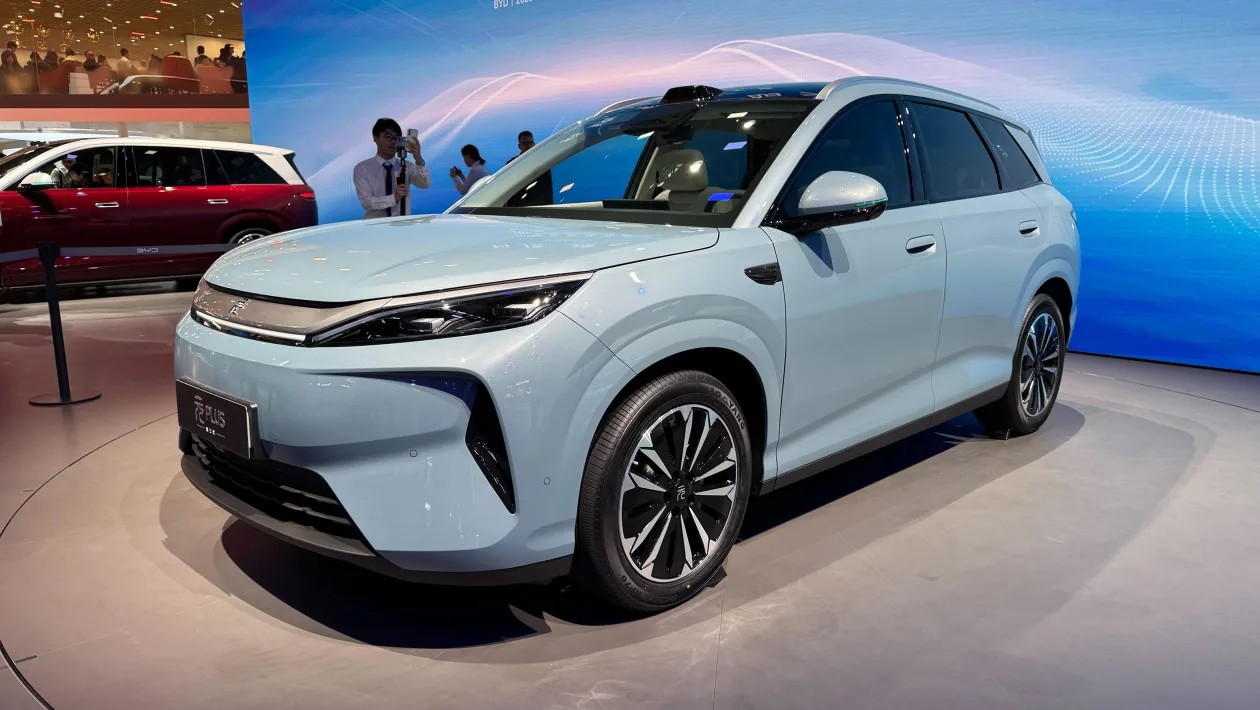
BYD has officially pulled the curtain back on the third-generation Atto 3 at the 2026 Beijing Auto Show. The reveal comes at an unusual time: just one month after the “Evo” facelift—the second-generation model—was launched in the UK.
This rapid succession suggests that BYD is moving away from minor iterative updates and is instead pivoting toward a completely new platform designed to compete with the industry’s heavyweights.
A Shift in Scale: Targeting the Tesla Model Y
The most significant change in the new Atto 3 is its physical footprint. While previous iterations were compact family SUVs, the third generation has grown substantially:
– Length: Increased by nearly 200mm
– Height: Increased by 60mm
– Width: Increased by 20mm
– Wheelbase: Stretched by 50mm
By increasing these dimensions, BYD is moving the Atto 3 out of the small SUV segment and directly into the territory of the Tesla Model Y. This growth is a strategic move to capture a larger share of the mid-sized electric SUV market, which is currently the most competitive segment in the EV industry.
Design and Technology: From “Blobby” to Premium
The aesthetic direction of the vehicle has undergone a complete overhaul. The soft, rounded lines of the previous generation have been replaced by a more purposeful, aggressive design.
Exterior Enhancements
- Sophisticated Styling: The new model features a more imposing front end with large air intakes, flush door handles, and sleeker headlights, moving away from the plastic-heavy look of older models.
- Advanced Sensing: A LiDAR sensor mounted at the top of the windscreen will power the “God’s Eye” autonomous driving system, signaling BYD’s intent to compete in the high-level driver assistance market.
- Signature Lighting: The rear features an illuminated BYD logo integrated into a distinctive intertwined knot light pattern.
Interior and Utility
The cabin has shifted toward a minimalist, high-tech aesthetic similar to competitors like XPeng and Leapmotor.
* Premium Feel: The interior utilizes metal-effect trims, 256-color ambient lighting, and a single-piece glass roof.
* Smart Storage: BYD has prioritized practicality, offering 39 storage areas throughout the cabin, including dual wireless charging pads and a dashboard tray.
* Massive Cargo Capacity: The increased wheelbase translates to a dramatic jump in utility. The boot capacity has risen to 750 liters, a significant leap from the 490 liters found in the recently released Evo model.
Next-Gen Battery and Charging Capabilities
Under the hood, the Atto 3 utilizes BYD’s second-generation Blade Battery. This technology is not just about capacity; it is designed to work in tandem with the company’s new 1,500kW Flash Chargers.
While specific charging times for the Atto 3 have not been released, the technology is transformative. For context, BYD’s high-end Denza Z9GT can charge from 10% to 97% in just 9 minutes. This represents a massive leap over the current Atto 3, which requires roughly 25 minutes for a standard top-up.
Performance and Market Availability
In the Chinese market, the Atto 3 will offer two distinct powertrain options based on the CLTC testing cycle:
1. Standard Range: 57.5kWh battery, 268bhp, with a range of approximately 336 miles.
2. Long Range: 68.5kWh battery, 322bhp, with a range of approximately 392 miles.
Note: These range figures are based on the Chinese CLTC cycle; European buyers should expect lower figures once converted to the stricter WLTP standard.
When will it arrive in Europe?
Because the second-generation “Evo” model has only just hit UK showrooms, the third-generation Atto 3 is not an immediate prospect for Western markets. Industry experts anticipate its arrival in late 2026 or potentially early 2027.
Conclusion: The new BYD Atto 3 represents a fundamental evolution from a budget-friendly EV to a larger, more technologically advanced competitor. By scaling up its size and charging speed, BYD is positioning itself to challenge the dominance of established players like Tesla.