The word isn’t pickup. It’s ute.
You have to get the terminology right if you’re talking to an Australian crowd, especially when you’re a Chinese EV giant trying to figure out if there’s a market for rugged vehicles. That’s exactly the conversation Xpeng vice chairman Brian Gu had in Melbourne. He admitted the company is actively considering building its first-ever utility vehicle.
It’s a bold pivot. Xpeng is known for sleek, tech-heavy cars, not workhorses. But the data doesn’t lie. The ute segment still holds about 16.6 percent of new-vehicle sales in Australia. Yes, it’s down slightly from last year, but it’s still massive. Ford Ranger just dethroned the Tesla Model Y as the top seller for two months running. Toyota HiLux ruled the roost from 2016 to 2022.
So, what is Xpeng’s angle?
Why Xpeng is eyeing the ute market
Here’s the thing. China doesn’t really do utes. You don’t see them driving around Shanghai. But look at Latin America, Africa, the Middle East. Look at Australia. Those places love the format.
“We are thinking about whether it’s a format we wants to develop.”
It’s not a casual thought. Xpeng wants to create new segments. Right now, there’s no luxury, ladder-frame, dual-cab ute in Australia. It’s a gap in the market.
But there’s a huge technical hurdle. Xpeng’s current lineup, like the G9L and the massive GX (which is longer than a LandCruiser), uses monocoque construction. Car bodies. Not truck frames.
Utes need body-on-frame construction. Ladder frames. They’re built for towing, for durability, for beating the hell out of them. The GX is big, sure, but it’s not a Ranger.
The chassis problem and the Volkswagen wildcard
Can Xpeng just slap a truck bed on an existing platform? No. Gu admitted the chassis requirements are completely different. It needs a different development process entirely.
Could they borrow tech? Volkswagen is an investor in Xpeng. The VW Amarok shares a ladder-frame platform with the Ford Ranger. That’s a proven system.
But here’s the catch. That platform is part of a commercial sharing deal between Ford and VW. It’s unlikely VW would hand those blueprints to Xpeng, even though Ford CEO Jim Farley once praised Xpeng for “getting it right.”
So they’re on their own. Or they’re looking at weird alternatives.
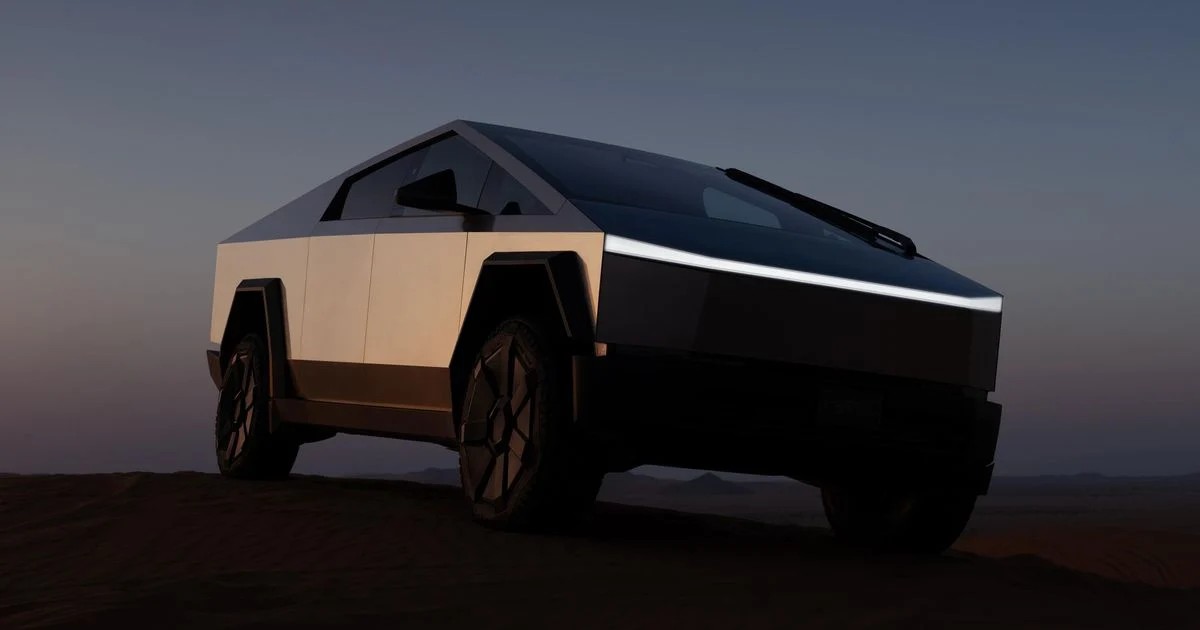
Is the Tesla Cybertruck the real rival?
Tesla’s Cybertruck isn’t built on a ladder frame either. It uses exoskeleton construction. Stainless steel skin doing the heavy lifting.
If Xpeng builds a ute, it won’t necessarily look like a traditional truck. It might look more like a Cybertruck. Or like their Land Aircraft Carrier, the bespoke platform they use for their flying car project. That’s a far cry from a HiLux.
Gu didn’t confirm the powertrain. Will it be fully electric? Or will it use their ‘Kunpeng’ extended-range technology? Both are coming to Australia. The range anxiety of pure EVs is still a thing for remote work, after all.
Where does this leave us?
Lexus said flat-out at the Tokyo Auto Show that they aren’t making a HiLux equivalent. Toyota is sticking to the ladder frame, offering hybrid, EV, and soon hydrogen variants from 2028. They know their audience.
Xpeng is guessing. But if they do it right, they don’t just get a ute. They unlock an off-road capable SUV architecture, too. Ford uses the Ranger’s bones for the Everest SUV. A rugged platform opens up multiple lanes of traffic.
Gu said they want vehicles that can handle the highway and limited off-road bits. Not just urban cruising.
And the ambition goes further than Australia. Xpeng CEO He Xiaopeng said the US is a must-enter market. America loves body-on-frame trucks. If US policy shifts, Xpeng is ready to open factories there.
So, will we see a Chinese EV ute? Probably.
The question is whether it’ll be a rugged tool for work or just another shiny lifestyle statement. We’ll see.