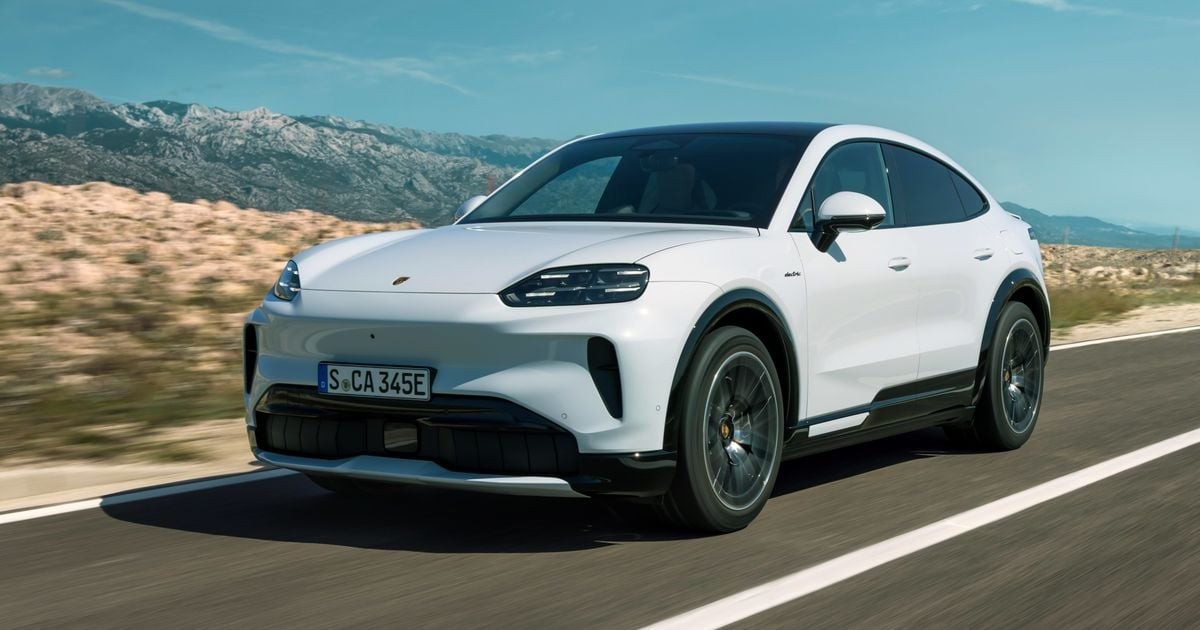
Coupe SUVs.
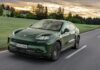
People love to hate them. And then they buy them anyway. Porsche knows this. So, naturally, they’ve slapped a sloping roof on the fourth-generation Cayenne Electric and called it a day. Or maybe they didn’t call it a day, because there’s a lot of tech to unpack here.
This isn’t the third-gen combustion model we already knew. This is brand new. Battery powered. Four generations in the making.
We drove to Germany to see if the 2026 Cayenne Coupe Electric is just another cash grab or if it’s actually good.
The answer is complicated. But mostly yes.
The Price Tag Will Hurt
It costs more than the standard Cayenne. Obviously.
Here is what you are paying in Australia, before on-road costs eat you alive:
- Base Cayenne Coupe: $173,60
- S Coupe: $194,,0
- Turbo Coupe: $2721,0
That jump to the Turbo is steep. For twelve grand over the standard Turbo SUV, you get the sloped roof and presumably some extra style points. Whether those points are worth it is entirely up to you.
“Style has a tax. Usually it’s called ‘extra cost’.”
Screens Everywhere
Inside, it’s a glass box.
The OLED Flow Display is the centerpiece. Curved, responsive, and annoyingly impressive. When you interact with the lower half of the screen, pixels literally flow up into the upper vertical section. It looks like magic. It is just good coding, but magic.
There’s more screen here than in the combustion version—50% more, apparently. The instrument cluster is huge at 14.2 inches. The passenger gets their own 14.9-screen that blanks out from the driver’s perspective so they can’t see the content. Clever.
Best feature?
A wrist rest.
Operating a massive touchscreen while driving is hard on the joints. Porsche remembered this. They put a rest there. Use it.
Physical buttons exist too. For the climate and volume at least. The haptics are great—clicky and satisfying. Early builds had some quality issues. Those seem fixed. Hopefully for real this time.
Space? It’s tighter. The sloping roof eats headroom in the back. It’s not a five-seater anyway—the middle spot is a tray unless you pay for a full bench. Cargo is decent, though. 534 liters up front. Expandable to 1,347 liters. The Turbo loses a bit due to extra batteries. It gains a 90-liter frunk, too, because EVs always have that.
The Turbo Is Illegal-Sounding Fast
There are three versions. But let’s talk about the Turbo.
It is the most powerful production car Porsche has ever built.
- Standard Power: 630 kW / 1,080 Nm
- Launch Control: 850 kW / 1500 Nm
- 0-100 km/h: 2.5 seconds
That’s supercar territory. In an SUV that weighs nearly three tonnes.
The regular base model does 4.8 seconds, which feels fast in a grocery getter. The S does 3.8. But the Turbo? It launches with violence. Smooth, but violent.
The battery is 108 kWh usable. 800-volt architecture means fast charging. You can add 300km of range in 10 minutes at a 400kW charger. A full 10-80% takes under 16 minutes. Range hits 661 km for the S Coupe, 637 for the Turbo.
The Turbo is heavier. So it drives slightly shorter distances.
Driving The Monster
We only drove the Turbo.
Why? Because it has Porsche Active Ride. This is not air suspension. It’s active hydraulics. It stops the body from pitching and rolling before you feel it.
It changes everything.
This thing shouldn’t handle this well. It’s heavy. It’s tall. But the PAR system keeps the chassis flat through corners. It feels organic. Not sterile. There’s just enough “squidge” to let you know where the limits are.
The steering?
Porsche still does this best. The feedback is perfect. Precise. You point it there, and it goes.
And the regenerative braking is brutal. Up to 600 kW of recovery. That’s Formula E level stuff. You barely use the brakes in daily driving. One pedal mode is almost mandatory with this setup.
There’s an electric engine noise too. Porsche Electric Sport Sound. It’s tuned. It doesn’t sound like a vacuum cleaner. It sounds vaguely like a V8, but tasteful. You can turn it off if it annoys you.
Ride quality?
Better than a Bentley. On bad roads, the POR system eats bumps. It’s glass smooth. No noise. No shake. Just silent, expensive progress.
Yes, it’s an SUV. Yes, it prioritizes speed over comfort in its design ethos. But you can dial it back. It can be dignified. Quiet. Comfortable.
What Else?
Safety ratings are pending from ANCAP. Euro NCAP gave it five stars in 2025. Should be safe.
Warranty is… meh.
Three years, unlimited kilometers.
The battery gets eight years or 160.000 km coverage. You can extend the car warranty in two-year chunks, but you have to pay, and the car can’t be older than 15 years or over 200.000km.
Service intervals are long. Every two years. EVs need less maintenance, mostly just tires and brakes. Although, if you hit the Turbo’s brakes hard enough, you’ll go through pads in a week.
So, should you buy it?
If you have $272.100 to throw at a wall, this is probably the nicest wall you’ll ever see. It handles like a sports car. It rides like a luxury limousine. And it launches like a rocket.
The roof slope is a bit aggressive for some. The tech is dense. It’s loud when you want it to be. It’s silent when you want that.
Porsche did a lot right here. They didn’t just electrify a past model. They rebuilt it from the wheels up.
The question isn’t if it’s good.
The question is whether you’re okay paying the price for a car that knows exactly how fast it is.
It probably thinks you can afford it.
Does that bother you?