Long-distance touring isn’t a luxury hobby anymore. Or rather, it shouldn’t be. We’ve been told that to ride hundreds of miles in comfort, you need to spend upwards of $20,000 on a flagship bike. Sure, those machines are impressive. They are also overkill for most of us. The truth is simpler than marketing brochures would have you believe. You don’t need cutting-edge tech to enjoy a sunset-to-sunrise ride. You need relaxed ergonomics. You need an engine that doesn’t quit. You need reliability.
This is where the traditional cruiser still holds the crown. While other segments chase horsepower figures and digital displays, cruisers stick to what works. They prioritize the journey. There is one Japanese bike in this category that understands this philosophy better than nearly any of its peers. It isn’t the fastest. It isn’t the most advanced. It is simply the right tool for the job.
Why Comfort Beats Power on the Open Road
Stereotypes persist because they are easy to sell. Cruisers are seen as highway hogs. Straight-line leisure machines for Sunday afternoon cruises. And sure, they are good at that. But the real skill of a well-sorted cruiser is adaptability. The upright posture saves your lower back in traffic. The low seat height makes stopping less of a physical ordeal. The low-end torque means you aren’t constantly hunting for gears.
These aren’t just specs on a webpage. They are the difference between arriving at your destination feeling energized versus arriving with a stiff neck and tired legs.
The Case for Relaxed Performance
There is a delicate line between an engine that is boring and one that is fatiguing. Too much vibration? Tiring. Too smooth? Boring. Most riders assume more horsepower equals a better tourer. Reality disagrees. A motorcycle that delivers torque exactly when you need it—usually in the low-to-mid range—is far more useful than a scream-rocket that needs revving to get anywhere.
Stability at highway speeds matters more than 0-60 times. You want to cover distance easily. You want to feel in control without fighting the machine. That is the sweet spot. And that brings us to the machine in question.
How the Kawasaki Vulcan 900 Classic Redefines Value
MSRP: $10,599
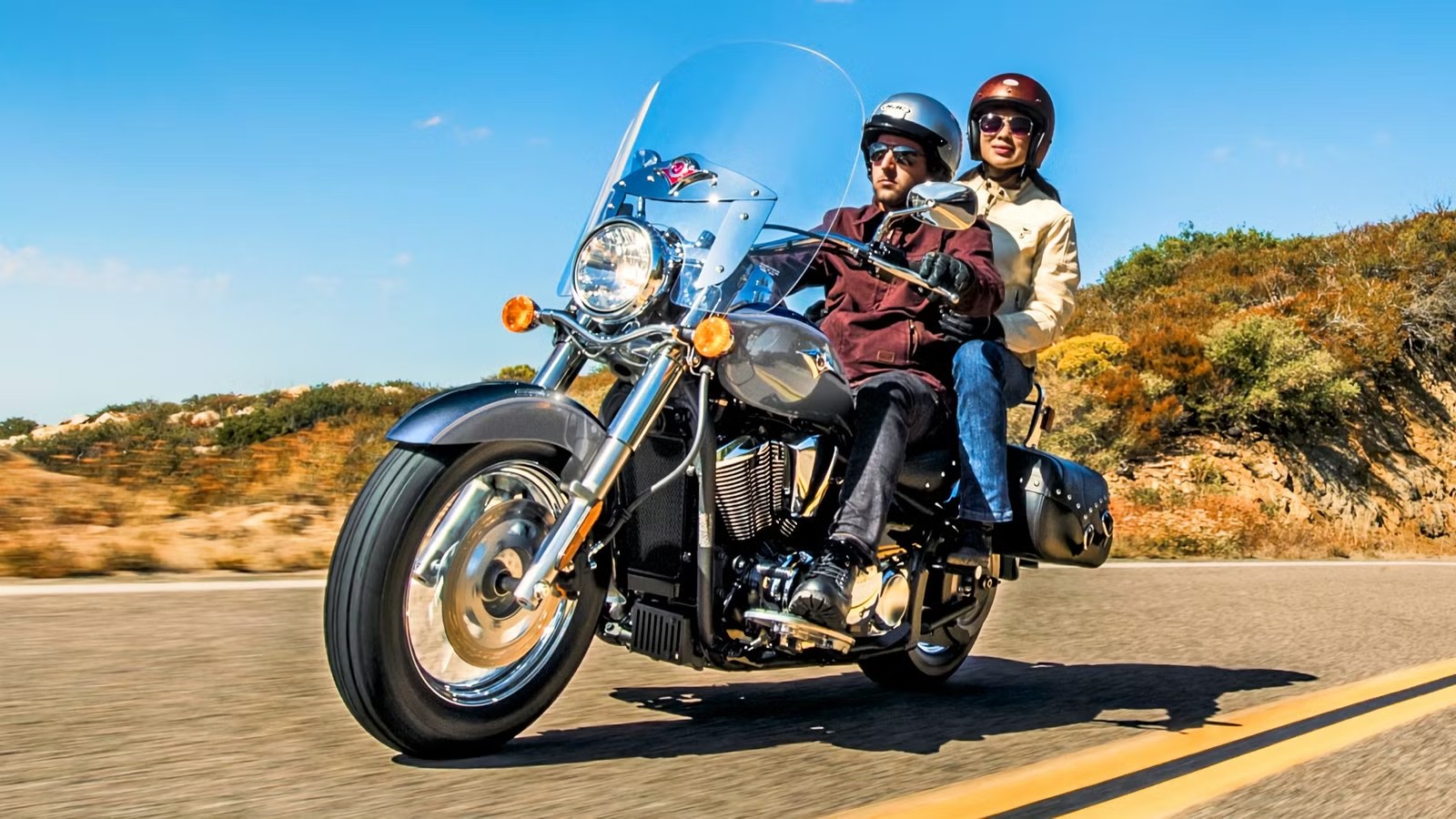
The Kawasaki Vulcan 900 Classic “LT” stands for Light Touring. It arrived in 2006 and has been quietly proving a point for nearly two decades. Premium road-trip comfort does not require a second mortgage. Unlike many bikes that demand aftermarket mods to become road-ready, the Vulcan comes equipped straight from the factory. Leather saddlebags. Adjustable windshield. Passenger backrest. All included.
Priced at $10,599 on a starting MSRP, this bike is part of the old guard. The mid-weight cruiser segment is crowded, but this one has stood the test of time. It doesn’t try to compete with heavyweights on flashiness. It competes on comfort, and it does so at a fraction of the cost.
Engine Specs: Tuned for Torque, Not Speed
The engine is the heart of this thing. And Kawasaki tuned it with longevity and usability in mind. Under the tank sits a 903cc, liquid-cooled, 55-degree v-twin. The numbers are modest by modern performance standards. 51 horsepower at 5,250 RPM. 58.2 pound-feet of torque at 3,500 RPM.
That’s it. It’s not trying to be a sportbike. It’s trying to be a friend. Power moves to the rear wheel via a five-speed transmission. The personality here isn’t excitement; it’s confidence. For a day that might stretch to 500 miles, predictability is a luxury.
Crucially, this is one of the most affordable belt-driven v-twin cruisers from a legacy maker. The final drive is a Kevlar-reinforced belt. It stays smooth. It stays quiet. Maintenance is simpler than a chain setup. This makes sense for a bike meant to log miles with minimal fuss.
Classic Styling with Factory Touring Gear
You don’t have to build this bike into a road trip machine. It already is. The Vulcan features standard touring gear. A height-adjustable screen. A deeply padded seat. A passenger backrest. Leather bags on the sides. Kawasaki earned that “LT” badge.
The styling leans hard into the classic formula. Chrome accents. Broad fenders. Imposing presence. It tips the scales at a hefty 657 pounds wet. That weight helps it plow through crosswinds and settle down on the highway.
Proven Reliability Over Complex Electronics
Complexity breaks. The Vulcan is devoid of it. The frame is high-tensile steel. Conventional. Reliable. The front suspension uses 41mm Showa telescopicforks with 5.9 inches of travel. The rear hides a Uni-Trak mono-shock with 7-way adjustable preload. 4.1 inches of rear travel.
Ergonomics are approachable. A 26.8-inch seat height gets your feet flat on the ground. The 64.8-inch wheelbase gives it a calm, steady feel. Touring riders like steady. There are no rider aids here. No traction control. No ABS. Just a basic tank-mounted cluster showing what you need to know.
The Bottom Line: Why This Is the Budget Road Tripper to Beat
The market is full of capable mid-weight bikes. But swallowing highway miles without hurting your wallet is a specific skill. The Kawasaki Vulcan 900 Classic LT bridges the gap between entry-level bobbers and massive, expensive bags. It offers an honest touring experience.
Look at the competition. The Suzuki Boulevard C50T shares that nostalgic vibe. It’s similar in packaging. But its 805cc engine feels underpowered at interstate speeds. It also uses a outdated mechanical drum brake on the rear. Obsolete tech in 2024.
The Honda Shadow Phantom? Solid. Reliable. But its liquid-cooled 745cc engine is paired with bobber-style ergonomics that compromise long-haul comfort. Plus, it lacks factory touring accessories. You’ll spend hundreds more to add bags and wind protection.
The Vulcan comes ready to go. For under eleven thousand dollars, it delivers what most riders actually need: comfort, torque, and the freedom to go anywhere. Why overpay for features you don’t use? The road is calling. This bike answers.