We know the numbers. Horsepower. Torque. Zero-to-sixty times. Even interior cubic footage. These metrics are the shorthand of car culture, the data points that help you decide if a vehicle is fast enough or spacious enough for your life. They are straightforward. They tell you what you are getting for your money.
But there is one number that trips up even seasoned buyers. It doesn’t show up on the window sticker. You won’t find it in the magazine specs section. And ignoring it can end your day on the side of a highway with a broken axle or a blown tire.
That number is the gross combination weight rating, or GCWR.
If you plan to tow a trailer, you need to know what this limit is. You need to know how it is calculated. And you need to know why the manufacturer set it that high or that low.
The Definition of Gross Combination Weight Rating
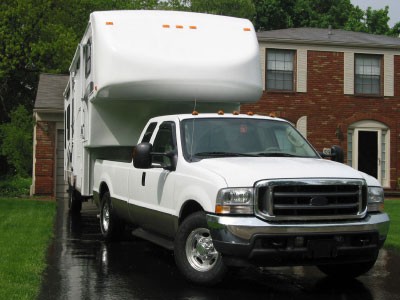
The gross combination weight rating is the maximum allowable weight of the entire rig. This includes the tow vehicle itself, plus the trailer, plus everything inside the trailer.
Think of it this way. The vehicle has its own limit, called the GVWR (gross vehicle weight rating). That covers the car, the fuel, the passengers, and the cargo inside the car. But once you attach a trailer, you are creating a new system. The GCWR is the hard cap for that entire system.
The total weight of the loaded tow vehicle and the loaded trailer must never exceed the manufacturer’s listed GCWR.
It is not a suggestion. It is a mechanical ceiling.
How GCWR Is Calculated
The definition sounds simple. The math behind it is slightly more granular.
According to Ford Motor Company, the GCWR is derived by summing four distinct weights:
- The vehicle’s curb weight.
- The allowable payload capacity.
- The weight of the driver and passengers.
- The weight of the trailer.
Notice what is missing. The GCWR is not a measurement of what your vehicle currently weighs. It is a limit. It is a boundary line drawn in the sand by engineers who have tested the suspension, the brakes, the transmission cooling, and the frame rails.
Compare this to the gross vehicle weight rating. The GVWR applies to a single unit. The GCWR applies to two units linked together. The trailer is not just dead weight hanging off the hitch. It exerts force on the tow vehicle’s suspension. It changes the center of gravity. It demands more from the braking system.
Why the Limit Exists
You might wonder why the GCWR is often lower than you expect. Why can’t you just keep adding weight until the tires scream?
Safety.
Overloading a trailer is dangerous. Overloading the tow vehicle is risky. Overloading the combination is catastrophic.
When you exceed the GCWR, you are pushing components beyond their design parameters. The braking system can overheat. If the brakes fade, you lose the ability to slow down, especially on a downgrade. The tires can overheat and blow out. The engine and transmission may overheat due to the sustained strain, leading to mechanical failure. The suspension components can bend or snap.
A snapped control arm or a collapsed leaf spring means you are losing control on the road. You are not just damaging your car. You are endangering everyone around you.
The primary reason for setting a GCWR for any vehicle is safety. Not only is a heavy load difficult to control on the road, but several other components could also be at risk.
There is no middle ground here. You should never surpass your vehicle’s GCWR.
Where to Find Your Vehicle’s Rating
So where do you find this number? It is not usually in the owner’s manual. It is not always on the door jamb sticker (that usually lists GVWR and tire pressure).
Check the label inside the driver’s side door frame. Look near the latch area. Some manufacturers print the GCWR there.
If it is not on the sticker, check the manufacturer’s website. Most OEMs publish detailed weight specifications for each model year online. You can also look for a sticker in the glove box or near the fuel filler door, though this is less common.
If you are buying a used truck or SUV, verifying the GCWR is part of due diligence. Different trim levels, engine options, and tow packages can result in different ratings for the same model name. A 2023 Ford F-150 with the Max Tow package has a significantly higher GCWR than the base model. The numbers change based on the configuration.
Acura GCWR Data
For Acura owners, the history of towing capacity varies by model year and platform. The MDX, for instance, saw significant changes in its towing infrastructure over the mid-2000s.
| Year | Model | GCWR (lbs) |
|---|---|---|
| 2006 | MDX | 8121 |
| 2006 | RL | 5162 |
| 2006 | RSX | 4384 |
| 2006 | TL | 4730 |
| 2006 | TSX | – |
| 2007 | MDX | 10053 |
| 2007 | RL | 5164 |
| 2007 | RDX | 6394 |
| 2007 | TL | 4773 |
| 2007 | TSX | 4407 |
| 2008 | MDX | 10053 |
| 2008 | RL | 5164 |
| 2008 | RSX | 6394 |
| 2008 | TL | 4773 |
| 2008 | TSX | 4407 |
| 2009 | MDX | 10053 |
| 2009 | RL | 5233 |
| 2009 | RSX | 5574 |
| 2009 | TSX | 4550 |
Note that the 2006 MDX had a much lower GCWR than the 2007-2009 models. If you are towing with a second-generation MDX, the jump in capacity is substantial. The TSX and RL, however, remained low, reflecting their front-wheel-drive platforms and lack of heavy-duty towing hardware.
More Acura Specs:
– Acura GVWR
– Acura GAWR
– Acura Cargo Carrying Capacity
– Acura Curb Weight
– Acura Payload
– Acura Towing Capacity
Audi GCWR Data
Audi’s lineup in this era was heavily skewed toward passenger cars, with the Q7 being the primary candidate for serious towing. The sedan and coupe lines had negligible towing utility, reflected by the missing data points.
| Year | Model | GCWR (lbs) |
|---|---|---|
| 2006 | A3 | – |
| 2006 | A4 | – |
| 2006 | A6 | – |
| 2006 | A8 | – |
| 2006 | S4 | – |
| 2006 | TT | – |
| 2007 | A3 | – |
| 2007 | A4 | – |
| 2007 | A6 | – |
| 2007 | A8 | – |
| 2007 | Q7 | 10665 |
| 2007 | RS4 | – |
| 2007 | S4 | – |
| 2007 | S6 | – |
| 2007 | S8 | – |
| 2008 | A3 | – |
| 2008 | A4 | – |
| 2008 | A5 | – |
| 2008 | A6 | – |
| 2008 | A8 | – |
| 2008 | Q7 | 10665 |
| 2008 | R8 | – |
| 2008 | RS4 | – |
BMW Gross Combined Weight Rating
If you’re lugging a boat or a camper behind a German sedan or SUV, the numbers matter. You don’t want to exceed the BMW GCWR just because the vehicle looks tough enough. The Gross Combined Weight Rating is the max weight of the car plus the trailer. It’s a hard limit. Break it, and you risk suspension collapse, brake fade, or legal trouble.
In 2006, BMW kept the sedan GCWRs vague in many catalogs, but the SUVs spoke up. The X3 sat at 7,673 lbs. The X5? A hefty 10,802 lbs. That’s enough for most small trailers. The Z4 and M3 didn’t have listed ratings, likely because towing them was never the plan.
By 2007, the X5 bumped to 11,132 lbs. The X3 held steady at 7,662 lbs. New models like the 328 and 335 appeared, but their towing specs remained absent from standard lists. The M5 and M6 still had no official GCWR listed. If you were towing with an M5, you were on your own or looking at specialized dealer quotes.
The 2008 model year brought the 128i and 135i, but again, no towing numbers. The X6 entered the chat with a 11,044 lb GCWR. The X5 stayed at 11,132 lbs. The M3 returned to the lineup, but without a specified GCWR. It’s clear BMW wasn’t pushing these cars as tow rigs.
2009 saw the X5 drop slightly to 11,066 lbs. The X6 remained at 11,044 lbs. The X3 held at 7,662 lbs. The M5 and M6 still lacked listed ratings. The 750i and 550i were heavy, but their towing limits weren’t standardized in public data.
If you need precise towing limits for a BMW, check the door jamb sticker. Factory data often omits GCWR for models not intended for towing.
Buick Gross Combined Weight Rating
Buick trucks and SUVs have always had more hauling DNA than sedans. The Buick GCWR reflects that. Sedans like the LaCrosse and Lucerne sat low, around 4,645 to 4,914 lbs. Not much room for a trailer.
The Rainier and Terraza were different. The Rainier handled up to 10,500 lbs. The Terraza managed 8,500 lbs. The Rendezvous was mid-pack at 7,746 lbs.
2007 kept the LaCrosse and Lucerne static. The Rainier and Rendezvous didn’t change their limits. The Terraza disappeared from the lineup.
2008 brought the Enclave. It carried a 9,500 lb GCWR. The LaCrosse and Lucerne stayed put. The Rainier was gone.
2009 saw the Enclave hold at 9,500 lbs. The LaCrosse and Lucerne remained unchanged. Buick didn’t add new towing-capable models, but the existing ones stayed consistent. If you’re towing with a Buick, stick to the SUVs. The sedans aren’t built for the job.
Cadillac Gross Combined Weight Rating
Cadillac pushes the envelope on weight. The Cadillac GCWR for Escalades is no joke. In 2006, the Escalade handled 12,902 lbs. The ESV version went up to 14,000 lbs. The EXT pickup sat at 13,464 lbs. The SRX managed 5,314 lbs. The STS and DTS were in the 5,000 to 5,159 lb range. The CTS-V hit 5,000 lbs. The CTS itself was 4,659 lbs. The XLR and XLR-V had no rating.
2007 saw the Escalade line stabilize at 14,000 lbs across the board. The SRX jumped to 6,314 lbs. The STS-V rose to 5,544 lbs. The STS dipped slightly to 5,079 lbs. The CTS and CTS-V held steady.
2008 kept the Escalade trio at 14,000 lbs. The SRX stayed at 6,314 lbs. The STS-V held at 5,544 lbs. The STS climbed to 5,123 lbs. The CTS increased to 5,011 lbs. The XLR models remained unlisted.
2009 added the Escalade Hybrid. It had a lower GCWR of 6,314 lbs. The SRX dropped back to 5,123 lbs. The STS and STS-V held at 5,123 and 5,544 lbs respectively. The CTS and DTS remained static. The Escalade ESV and EXT stayed at 14,000 lbs.
The Escalade is the king here. If you need to tow a large trailer, a Cadillac Escalade ESV is one of the few luxury SUVs that can handle it without breaking a sweat.
Chevrolet Gross Combined Weight Rating
Chevy offers the widest range of Chevrolet GCWR figures. From small crossovers to heavy-duty trucks.
In 2006, the Avalanche 1500 hit 12,863 lbs. The Avalanche 2500 went to 16,878 lbs. The Silverado 1500 HD managed 13,793 lbs. The 2500/3500 HD models topped out at 16,000 lbs. The Suburban 2500 sat at 13,822 lbs. The TrailBlazer was 11,000 lbs. Smaller cars like the Cobalt and Aveo had no rating. The Equinox handled 7,252 lbs.
2007 brought changes. The Avalanche 1500 rose to 13,000 lbs. The Silverado 1500 Classic hit 10,798 lbs. The 1500 Hybrid Classic stayed at 12,000 lbs. The 2500/3500 HD remained at 16,000 lbs. The Suburban 1500 hit 13,000 lbs. The 2500 version went to 14,000 lbs. The Tahoe appeared with a 10,000 lb rating. The TrailBlazer held at 10,000 lbs. The Colorado bumped to 5,772 lbs.
2008 saw the Colorado surge to 7,000 lbs. The Avalanche 1500 stayed at 13,000 lbs. The Silverado 1500 dropped to 10,000 lbs. The 2500/3500 HD remained at 16,000 lbs. The Suburban 1500 held at 13,000 lbs. The 2500 version jumped to 16,000 lbs. The Tahoe Hybrid entered with a 12,000 lb rating. The Uplander rose to 8,500 lbs.
2009 saw the Avalanche 1500 drop to 11,000 lbs. The Colorado held at 7,000 lbs. The Express 1500/3500 hit 12,000 lbs. The Express 2500 sat at 11,788 lbs. The Silverado 1500 remained at 10,000 lbs. The 2500/3500 HD stayed at 16,000 lbs. The Suburban 1500 dropped to 11,000 lbs. The 2500 version held at 16,000 lbs. The Tahoe Hybrid stayed at 12,000 lbs. The Traverse appeared with a 9,500 lb rating.
The Silverado 2500/3500 HD is the workhorse. 16,000 lbs GCWR is serious stuff. That’s enough for a heavy travel trailer and a full load of gear.
Chrysler Gross Combined Weight Rating
Chrysler’s lineup is narrower. The Chrysler GCWR centers on minivans and the 300 series.
In 2006, the 300 handled 4,862 lbs. The 300C hit 6,216 lbs. The PT Cruiser managed 8,132 lbs. The Town & Country sat at 6,600 lbs. The Sebring was 4,451 lbs. The Pacifica was 4,297 lbs.
Ford GCWR data breakdown
If you are hauling heavy gear in a Ford, the numbers shift depending on the year and the truck’s specific build. The 2006 Crown Victoria looks light on paper at 5592 lbs, but that is mostly because it was never rated for serious towing. The real workhorses are in the Super Duty lineup. The 2006 F-250 and F-350 share a 15,000 lb GCWR. By 2007, that cap jumped to 17,000 lbs for both. The E-Series vans sit comfortably in the 11,000 to 13,000 lb range, though the E-350 Super Duty holds steady at 13,000 lbs across 2006 through 2009.
The F-150 tells a different story. It started at 11,665 lbs in 2006, crept to 11,700 in 2007, hit 11,765 in 2008, and then saw a massive spike to 14,950 lbs in 2009. That last jump matters if you are comparing models. Smaller cars like the Focus and Fusion lack GCWR data entirely, likely due to their low payload limits. The Mustang sits at 4611 lbs from 2007 onward. The Ranger dropped significantly from 9,360 lbs in 2006 to 5,820 in 2007, then climbed back to 6,000 lbs by 2008 and 2009.
GMC GCWR numbers by model
GMC’s heavy hitters are the Sierra 2500 and 3500. The Sierra 2500 holds around 15,800 lbs from 2006 through 2009, peaking at 15,926 lbs in 2009. The Sierra 3500 is more volatile. It started at 15,792 lbs in 2006, dipped to 15,342 in 2007, then rose to 16,000 lbs in 2008 and 2009. This fluctuation suggests varying configurations or package options affected the rating.
The Yukon and Yukon XL offer middle-ground options. The Yukon stays flat at 10,000 lbs from 2006 to 2009. The Yukon XL starts at 13,000 lbs, holds that line through 2008, then drops to 11,000 lbs in 2009. The Savana 2500 and 3500 vans are consistent at 12,000 lbs across all four years. Smaller trucks like the Canyon range from 5,179 lbs in 2006 up to 5,887 lbs by 2009. The Acadia provides a solid 9,500 lb limit from 2007 forward.
Honda GCWR trends
Honda keeps its numbers simpler, but the gaps between years are telling. The Accord Hybrid and CR-V have no GCWR data, reflecting their design priorities. The Civic saw a drastic change in 2007, jumping from a non-rated status in 2006 to 6,060 lbs in 2007 and 2008, before dropping sharply to 3,738 lbs in 2009. This suggests a change in platform or towing capability that needs verification against specific trim levels.
The Ridgeline is the most capable Honda in this set. It sits at 9,653 lbs in 2006, rises to 10,085 lbs in 2007 and 2008, then disappears from the data by 2009. The Pilot starts at 7,914 lbs in 2006, jumps to 9,700 lbs in 2007 and 2008, then falls back to 8,466 lbs in 2009. The Odyssey hovers between 8,034 and 8,210 lbs, showing remarkable consistency. The Insight is strictly limited to 2,250 lbs in 2006, likely due to its hybrid battery weight and small frame.
HUMMER GCWR specifications
The HUMMER brand offers two distinct lines: the massive H2 and the more manageable H3. The H2 starts at 13,050 lbs in 2006, climbs to 13,150 in 2007, and stabilizes at 14,000 lbs from 2008 through 2009. This steady increase reflects chassis reinforcements over time.
The H3 remains static at 8,000 lbs from 2006 to 2009. That is a fixed limit regardless of year. The H3T pickup variant appears in 2009 with a slightly higher rating of 9,461 lbs. These numbers are high for their class but still trail the heavy-duty trucks from Ford and GMC.
Hyundai GCWR overview
Hyundai’s lineup is smaller, but the trends are clear. The Accent gets its first rating in 2008 at 4,779 lbs, having no data in prior years. The Sonata holds steady around 4,400 lbs, moving from 4,403 in 2006 to 4,442 in 2009. The Santa Fe drops slightly from 6,399 lbs in 2006 to 5,527 lbs in 2007 and 2008, then disappears from the 2009 list.
The Elantra shows significant variation. It starts at 4,434 lbs in 2006, drops to 3,623 lbs in 2007, jumps back to 5,550 lbs in 2008, and returns to 4,779 lbs for the Accent-like entry in 2008 (likely a data shift for the Accent model year confusion). The Tucson stays near 4,400 lbs until 2008, then drops to 4,390 lbs in 2009 and 2009 models show no entry. The Entourage peaks at 5,898 lbs in 2008.
Infiniti GCWR analysis
Infiniti offers luxury towing options, but the data is sparse in later years. The QX56 SUV is the strongest performer, starting at 14,510 lbs in 2006 and rising to 15,558 lbs in 2007. It has no data for 2008 and 2009, likely due to model year changes or reporting gaps. The FX45 holds at 8,020 lbs in 2006, jumps to 14,520 lbs in 2007, and maintains that 14,520 lb rating in 2008. The new FX50 appears in 2009 at 9,109 lbs.
The G35 starts at 4,655 lbs in 2006, doubles to 9,155 lbs in 2007, and rises to 9,647 lbs in 2008. The G37 takes over in 2008 with a 13,266 lb rating. The M35 starts strong at 12,982 lbs in 2007 but has no data for 2008 or 2009. The M45 drops to 5,098 lbs in 2006 and has no further data. The EX35 appears in 2008 with a 12,902 lb rating.
Isuzu GCWR details
Isuzu’s capacity grows steadily over the three years covered. The Ascender maintains a constant 10,000 lb limit from 2006 through 2008. The i-series trucks show more variance. The i-280 and i-290 share a 5,500 lb rating in 2006 and 2007, then the i-290 rises to 6,000 lbs in 2008. The i-350 and i-370 start at 9,000 lbs in 2006 and 2007, then increase to 9,500 lbs in 2008.
Jaguar GCWR data gaps
Jaguar provides no GCWR data for any model from 2006 through 2009. The S-Type, X-Type, XJ8, XJR, XK8, XKR, XF, and XK Coupe all show empty fields. This absence
Kia Gross Combined Weight Rating Breakdown
The numbers for Kia’s lineup between 2006 and 2009 are… sparse. At least for the sedans. If you were looking for towing specs for a 2009 Spectra 5, you’re out of luck. The data simply isn’t there. Most passenger cars in this era didn’t publish GCWRs unless they had a specific towing package or heavy-duty variant.
However, the SUVs and vans tell a different story. The Kia Sorento was the heavy lifter. It started at 9,299 lbs in 2007 and held that line through 2008. Not a huge jump, but consistent for a midsize SUV of that generation.
The Sedona minivan was a bit more volatile. 2007 saw it rated at 8,015 lbs. Then? Nothing for 2008. By 2009, the Borreo (what we’d call the Sorento in later years, or the Mohave elsewhere) entered the chart with a 9,398 lb GCWR.
Compact crossovers like the Sportage sat low on the list. 4,880 lbs. That’s barely enough to tow a small trailer full of gear, let alone a boat. The Rio, Spectra, and Amanti? Blank. Don’t bother checking the manual for those specific GCWR figures; they likely weren’t designed for it.
Land Rover Capability Limits
If you’re towing anything with a Land Rover from this era, you’re already in the heavy-weight class. These aren’t cars. They’re machines.
The Range Rover and LR3 dominated the charts. In 2006, the Range Rover hit 13,324 lbs. The LR3 was slightly lower at 13,165 lbs. By 2009, the LR3 had climbed to 13,662 lbs. That’s a meaningful increase. It suggests Land Rover tuned the powertrains or chassis components for heavier loads over those model years.
The Range Rover Sport was consistent. 13,318 lbs in 2006. 13,334 lbs from 2007 through 2009. A slight tweak in 2007, then a flat line.
Don’t look to the LR2 for serious towing. Its GCWR dropped significantly over time. It started at a modest 7,905 lbs in 2009 (the first year listed). It’s a subcompact luxury SUV. You can tow a jet ski, maybe. Don’t try to tow a house.
Lexus Gross Combined Weight Rating Analysis
Lexus played it safe. Or maybe just conservative. Look at the RX 350.
2007: 7,520 lbs.
2008: 6,020 lbs.
2009: 6,020 lbs.
Why the drop? The 2008 model year brought a redesign. Heavier body? Different powertrain? The GCWR took a nose dive of over 1,500 lbs. If you owned a 2007 RX and swapped to a 2008, your towing capacity vanished almost overnight.
The LX 470 and later the LX 570 were the real workhorses. The LX 470 sat steady at 12,240 lbs in 2006 and 2007. The LX 570 replaced it in 2008 with a massive 14,645 lbs GCWR. That’s over 2,000 lbs of additional capacity. The new V8 was clearly stronger, or the chassis was reinforced.
The RX 400h hybrid? 8,015 lbs in 2007. By 2008, it dropped to 6,340 lbs. Hybrids were heavier, but the electronics and cooling systems limited how much extra weight they could handle safely.
Lincoln Towing Specs
Lincoln was transitioning. The Town Car, a body-on-frame sedan based on the Crown Victoria, was a towing tank. 6,460 lbs in 2006. 6,502 lbs by 2009. Not a huge gain, but steady.
The Navigator was the flagship. 11,900 lbs in 2006. By 2007, it jumped to 15,000 lbs. And stayed there. 2007 through 2009. That’s a 3,100 lb increase in a single year. Ford updated the platform, likely strengthening the frame and transmission cooling for the heavy towing crowd.
The Mark LT was a pickup truck version of the Navigator. It held steady at 14,500 lbs from 2006 to 2008. Then vanished in 2009. Why? The Mark LT was discontinued. The data reflects reality.
The MKZ and MKS sedans? No GCWR listed. They’re cars. You don’t tow with them. Unless you’re very creative.
Mazda GCWR Data
Mazda’s numbers are… scattered. The B-Series trucks (badged as Ford Rangers in the US, but sold as Mazdas in some markets or internally) had varying ratings.
The B4000 was the big one. 6,973 lbs in 2006. 7,000 lbs in 2007 and 2008. 6,952 lbs in 2009. Fluctuations of a few hundred pounds. Likely due to curb weight changes or specific towing packages.
The CX-9 was a decent midsize SUV for towing. 6,826 lbs in 2007 and 2008. By 2009, it dropped to 6,484 lbs. Again, redesigns or weight increases affecting the limit.
Don’t look to the Mazda3 or Mazda6. No GCWR listed. They’re compact and midsize cars. You can tow a small trailer if you’re careful, but the manufacturer didn’t publish a limit. That’s a red flag.
Mercedes-Benz GCWR Guidelines
German engineering, conservative towing limits. Or maybe just very specific.
The ML-Class was the breadwinner. 2006: ML350 at 6,773 lbs. ML500 at 6,893 lbs. By 2007, everything jumped. The ML350 hit 12,056 lbs. More than double. Why? The 2007 ML was a new generation (W164). Heavier, stronger, and likely equipped with better cooling systems.
The GL-Class SUV was even more capable. GL320 at 12,946 lbs in 2007. GL550 at 13,084 lbs in 2008. Consistent. High numbers for a luxury SUV.
The R-Class? Only listed for 2009 at 8,590 lbs. A bit of an outlier. It’s a large wagon/SUV hybrid. Maybe the towing package was optional and not all models qualified.
The C-Class, E-Class, S-Class? Blank. Sedans don’t tow in this era’s Mercedes lineup. Unless you’re towing a small trailer with a specialized hitch kit, but even then, the GCWR isn’t published.
Mercury GCWR Overview
Mercury was fading. The numbers reflect a brand in decline.
The Grand Marquis was the last of the big body-on-frame sedans. 5,688 lbs in 2006. 6,600 lbs by 2009. A 900 lb increase. Maybe Ford tweaked the suspension or transmission for the final years of production.
The Mountaineer was steady. 8,111 lbs in 2006. 8,217 lbs from 2007 through 2009. A slight bump, then flat. Reliable, but not exciting.
The Monterey minivan? 7,990 lbs in 2006 and 2007. Then gone. Discontinued.
The Sable was a front-wheel-drive sedan. 4,793 lbs in 2008 and 2009. Low numbers. Not built for towing.
MINI GCWR Reality
The MINI Cooper. It’s a go-kart.
2006 through 2009. Cooper Hardtop. Cooper Convertible. John Cooper Works.
No GCWR listed. For any year. Any model.
Why? Because you don’t tow with a MINI. It
Nissan Gross Combined Weight Ratings
The numbers for Nissan’s lineup shift year over year, so if you’re trying to figure out which model year offers the best towing potential, the data tells a specific story. The 350Z doesn’t have a rated GCWR. It’s a sports car. You aren’t towing anything with it. The same goes for the Sentra, Maxima, and Versa in many configurations—their combined weights are too low to bother listing or they fall below typical towing thresholds.
Look at the trucks and SUVs. That’s where the real weight matters.
In 2006, the Nissan Armada sat at 11,818 lbs. The Frontier was heavy at 10,676 lbs. By 2007, the Armada jumped significantly to 12,800 lbs. The Frontier followed suit, climbing to 11,133 lbs. This wasn’t just a minor adjustment. It reflected a shift in chassis strength or perhaps a change in what counted toward the limit. The 2008 Armada saw the biggest leap in this segment, hitting 15,100 lbs. That is a massive number for that era. The Frontier, however, dipped back down to 10,676 lbs. Why? Maybe they optimized the curb weight, or maybe the towing capacity was adjusted for brake performance.
The Titan followed a similar trajectory. 2006 started at 11,465 lbs. 2007 moved to 11,600 lbs. By 2008, it reached 11,688 lbs. The 2009 data held steady at 11,688 lbs for the Titan but dropped slightly for the Pathfinder to 10,596 lbs from its 2007/2008 levels. The Xterra was consistent at 9,658 lbs for two years, then dropped to 9,300 lbs in 2008 and stayed there.
If you are looking for Nissan GCWR towing capacity specs, the Armada from 2008 to 2009 is the clear winner at 15,100 lbs. The Frontier offers a solid middle ground around 11,000 lbs. The crossover segment, represented by the Murano and Rogue, stays much lower. The Murano hovered around 7,505 to 8,100 lbs. The Rogue, introduced in 2008, was rated at a modest 4,430 lbs. These numbers suggest a strict limit on what these smaller SUVs can handle. You aren’t hauling a boat with a 2009 Rogue.
Pontiac Gross Combined Weight Ratings
Pontiac’s final years show a mix of small cars and the heavier G8. The G5, a compact sedan, saw its rating drop from 4,141 lbs in 2007-2008 to 3,902 lbs in 2009. The G6 remained stable around 4,530 lbs before settling at 4,455 lbs in the final two years. The Grand Prix was consistently just under 4,650 lbs.
The Solstice? No rating. It’s a roadster. You don’t tow.
The Torrent, sharing a platform with the GMC Acadia, offered decent utility. It started at 7,310 lbs in 2006, rose to 7,407 lbs in 2007, and returned to 7,310 lbs for 2008 and 2009. The Montana SV6 in 2006 was rated at 8,500 lbs, but that model disappeared quickly.
The G8 changed the game. Introduced in 2008, it carried a GCWR of 6,035 lbs. That number held firm into 2009. It’s not a truck. It’s a V8 sedan. But the fact that it had a rated combined weight suggests it could handle light loads. The Vibe, built with Toyota, stayed around 4,350 lbs, edging up to 4,506 lbs in 2009.
Porsche Gross Combined Weight Ratings
Porsche kept it simple. The Cayenne was the workhorse. In 2006, it was rated at 12,628 lbs. In 2008, it remained at 12,628 lbs. By 2009, it ticked up slightly to 12,650 lbs.
The 911, Boxster, and Cayman had no ratings. These are performance machines. Adding a trailer to a 911 Carrera is a conceptual error, not a logistical one. The Cayenne, however, was built to haul. A 12,600+ lb combined weight means you could tow a substantial trailer behind it. It wasn’t a heavy-duty truck, but for a luxury SUV of that era, it was capable.
Saab Gross Combined Weight Ratings
Saab’s lineup was smaller, but the numbers tell a tale of consistency and one outlier.
The 9-2X, based on the Subaru Impreza, was rated at 5,220 lbs in 2006. The 9-3, the bread and butter, started at 5,430 lbs. It dipped slightly to 5,380 lbs in 2007 and 2008, then jumped to 5,680 lbs in 2009. This fluctuation might reflect changes in curb weight or suspension tuning.
The 9-5 was rock solid. 7,120 lbs from 2006 through 2009. No changes.
The 9-7X, a rebadged Escalade, carried a heavy load. 10,500 lbs from 2006 to 2009. It didn’t change. This makes sense. It was a heavy vehicle from the start. The GCWR didn’t need to adjust because the platform and engine choices remained largely static throughout its short production run.
Saturn Gross Combined Weight Ratings
Saturn’s final years were a mix of new platforms and aging designs. The Ion was low, around 3,900 lbs. The Relay, a minivan, sat at 8,500 lbs in 2006, then dropped to 7,918 lbs in 2007.
The VUE was interesting. It started at 4,857 lbs in 2006 and 2007. In 2008, it jumped to 5,475 lbs. The Hybrid version was slightly lower at 5,439 lbs. This increase suggests a reinforcement of the chassis or a change in how the weight was calculated.
The Outlook, a Buick Enclave twin, started high at 9,500 lbs in 2007. It dropped significantly to 6,872 lbs in 2008 and held at 6,852 lbs in 2009. That drop is puzzling. It might indicate a correction in the rating or a change in the definition of what could be towed safely.
The Aura and Sky had no towing ratings. The Sky was a convertible roadster. The Aura, while larger, wasn’t rated for towing.
Scion Gross Combined Weight Ratings
Scion was a brand for youth. It wasn’t a brand for hauling.
The tC, xB, and xD all had no GCWR listed. These were small coupes, hatchbacks, and boxy crossovers. They weren’t designed to pull trailers. The absence of data here is as informative as a number. You don’t tow with a Scion.
smart Gross Combined Weight Ratings
The smart fortwo. 2008. No GCWR.
It’s a two-seater microcar. The idea of towing anything behind it is absurd. The lack of a rating confirms it.
Subaru Gross Combined Weight Ratings
Subaru is known for AWD and utility. The numbers reflect that.
The 2006 B9 Tribeca was rated at 7,805 lbs. The Baja, a truck-coupe hybrid, was lower at 6,035 lbs. The Forester started at 5,640 lbs and rose to 5,690 lbs in 2007. The Legacy Sedan was around 6,050 lbs, rising to 6,120 lbs by 2007. The Wagon variants were consistently higher than the sedans, often by 50-100 lbs.
The Outback was the star. 2006: 6,160 lbs
Volkswagen GCWR data by model and year
Tracking the Gross Combined Weight Rating for Volkswagen requires looking at the heavy hitters first. Most of the lineup simply lacks a defined GCWR because they aren’t built to tow anything substantial. The Touareg dominates this specific metric, carrying the weight for everyone else in practical terms.
2006 Volkswagen GCWR
In 2006, the Touareg sat at 12,952 lbs. That is a massive number for a unibody SUV. It can handle a loaded trailer and still have room to breathe. The rest of the 2006 roster—Golf, GTI, Jetta, Beetle (coupe and convertible), Passat Sedan, Phaeton, and Rabbit—show no GCWR listed. This means towing is either prohibited or limited only by the hitch and tongue weight ratings, not the chassis’s total combination limit.
2007 Volkswagen GCWR
The Touareg gained a bit of heft the following year. Its 2007 GCWR moved up to 13,034 lbs. The Eos, GTI, Jetta, Beetle (coupe and convertible), Passat Sedan, Passat Wagon, and Rabbit still did not have a specific GCWR value assigned in the standard tables. If you were towing a small camper with a Passat Wagon in ’07, you were likely flying by the seat of your pants and the manual’s tongue weight limits.
2008 Volkswagen GCWR
By 2008, the lineup expanded with the R32, GLI, and Eos. The Touareg 2 retained its rating, though specific numbers for this year are often grouped with the previous generation’s specs in legacy databases. The standard cars again lacked explicit GCWR figures. This absence is a data point in itself: if it’s not listed, assume the manufacturer did not certify it for heavy towing.
2009 Volkswagen GCWR
The final year in this dataset brings clearer, albeit lower, numbers for the smaller fleet. The Routan, Volkswagen’s minivan, has a GCWR of 6,771 lbs. The Tiguan, compact and agile, sits at 5,748 lbs. The Touareg 2 dropped back to 12,952 lbs. The Eos, GLI, GTI, Jetta (sedan and wagon), Beetle (coupe and convertible), Passat (sedan and wagon), and Rabbit still did not have a GCWR listed.
For owners of the non-towing-certified models, this gap matters. You can still tow, but you are strictly bound by the vehicle’s Gross Axle Weight Rating and the hitch’s capacity.
Note: The absence of a GCWR for most VW models suggests they are not intended for significant towing loads. Always check the door jamb sticker for the specific Gross Combined Weight Rating for your VIN.
More Volkswagen Specs:
- Volkswagen GVWR
- Volkswagen GAWR
- Volkswagen Cargo Carrying Capacity
- Volkswagen Curb Weight
- Volkswagen Payload
- Volkswagen Towing Capacity
Volvo GCWR data by model and year
Volvo’s approach to weight ratings is different. They listed GCWRs for almost their entire sedan and wagon lineup in these years. This makes them easier to compare against other manufacturers who hide these numbers.
2006 Volvo GCWR
The XC90 was the king here in 2006, with a GCWR of 8,694 lbs. The S80 followed closely at 7,184 lbs, and the XC70 at 7,125 lbs. The C70 coupe/convertible also had a rating of 7,222 lbs.
The smaller sedans and wagons were more modest. The S60 sat at 6,843 lbs, and the V70 at 6,746 lbs. The S40 and V50 were the lightest, at 5,375 lbs and **