You’ve seen the headlines, maybe even witnessed them yourself. A driver in the next lane is meticulously applying eyeliner. The guy in the pickup truck is shaving with an electric razor. Someone else is reading a paperback novel. We all do it. Talking. Texting. Eating a burger with one hand while the other grips the wheel. It’s a chaotic, distracted circus on the road.
But there is something else happening in cabins across America that feels significantly more dangerous. It isn’t the makeup. It isn the food. It’s the absence of footwear.
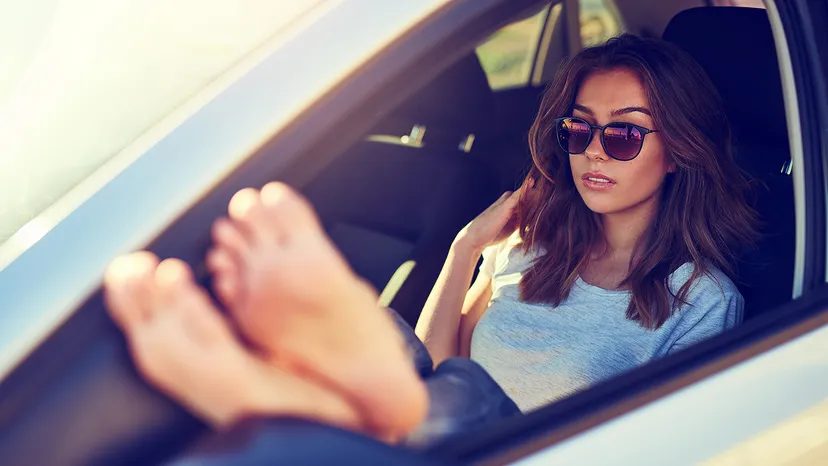
You’ve likely spotted the passenger with their bare feet propped on the dashboard, toes dangling out the window. But what about the driver? Driving barefoot has become a quiet, legal phenomenon. And despite how reckless it seems, it is completely lawful.
The legal reality of barefoot driving
Let’s get the big question out of the way first. Is driving barefoot illegal?
No. Not in a single state.
There is no federal law. There is no state statute. You will not get pulled over solely for having bare feet. In fact, the legality is so well-known that an entire website, Barefootislegal.org, exists to defend the practice. The activists there argue that driving barefoot is actually safer than wearing flip-flops, clogs, or other slippery footwear.
“It is advised to put clogs, high heels, sandals and other slippery shoes not only off your foot — but put them on the floor in another seat so they do not fall under the gas or brake pedals,” the site advises. “MANY accidents are caused by wearing flip flops — where driving barefoot would have saved an accident — and possibly their life.”
The logic is mechanical. A shoe can slip. A shoe can roll. A shoe can get wedged. Bare skin has grip. Bare skin has feedback.
The police double standard
Here is where it gets weird. Even though it’s 100% legal, police departments across the U.S. seem to frown on it. Why?
Because of the shoes themselves.
When you drive barefoot, your shoes are usually in the passenger seat or the back. If a collision occurs or sudden braking happens, those discarded shoes can slide under the pedals. They can jam the accelerator. They can prevent you from hitting the brake. That is a mechanical hazard caused by the absence of shoes, ironically creating a danger from the presence of other shoes.
Furthermore, if you get into an accident while barefoot, officers might cite you for reckless driving. They won’t cite you for being barefoot. They will cite you if they determine that your bare feet contributed to the loss of control. It’s a subjective call. Did your toes slip? Did you lack the leverage to brake hard enough? It becomes a matter of interpretation.
The motorcycle exception
The rules change entirely when you trade wheels for two.
There is a stark double standard for motorcyclists. In many states, riding barefoot on a motorcycle is explicitly illegal. Alabama, for instance, has laws requiring riders and passengers to wear shoes. The logic here is protective gear. Your feet are exposed to hot exhaust pipes, sharp metal, and the asphalt.
But California is different. You can ride a motorcycle barefoot in the Golden State.
“We obviously don’t recommend it, but there’s no law against it,” a Los Angeles police officer told the Los Angeles Times.
So, you’re banned from riding barefoot on a bike in Alabama, but you’re free to drive a sedan without socks in Los Angeles. The inconsistency is as confusing