Let’s kill the hype immediately. The Ferrari 12Cilindri “Manuale” isn’t manual.
It’s a trick.
Well. A very expensive. Highly engineered. Very specific kind of trick.
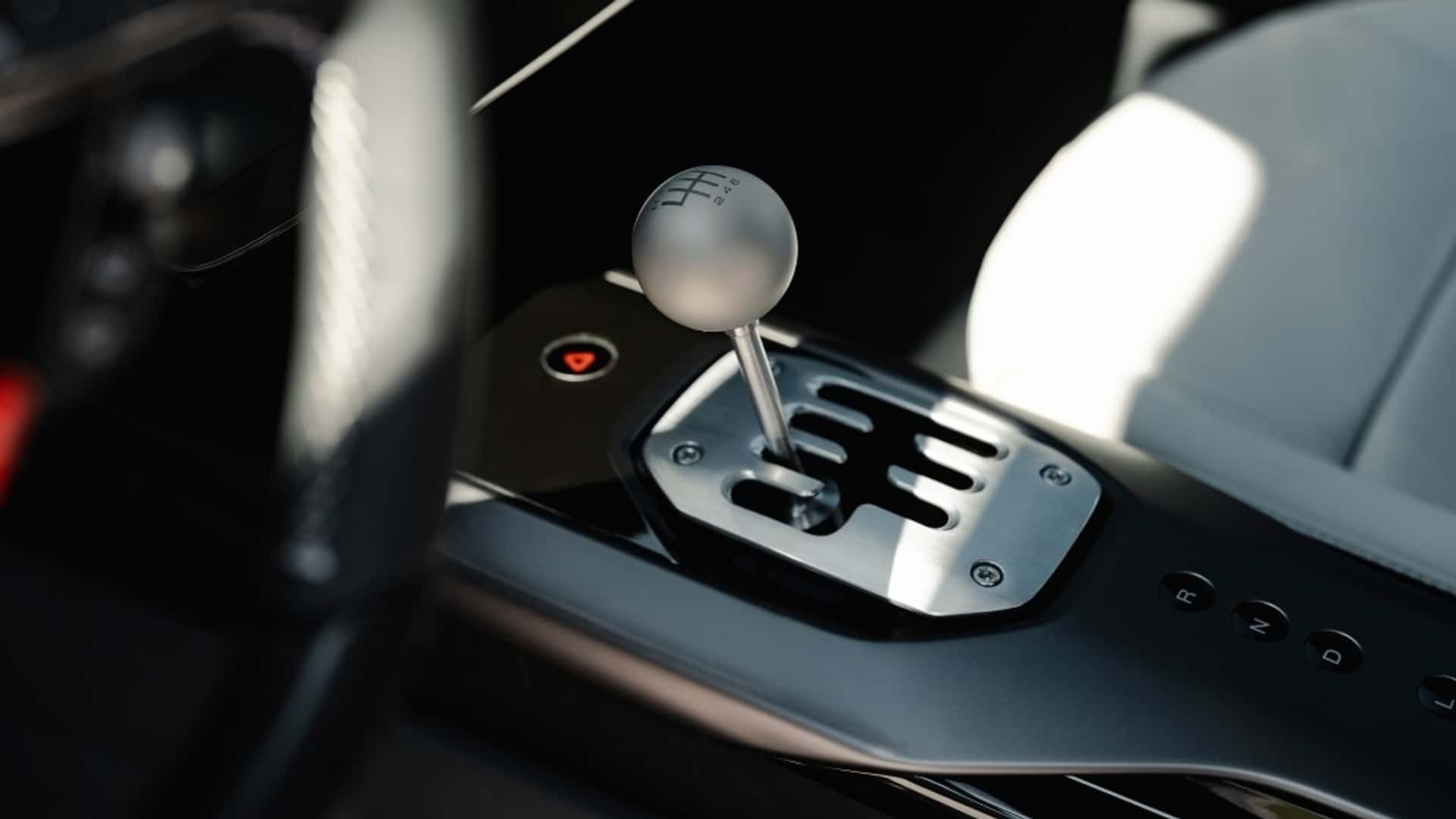
Ferrari calls it Manuale By-Wire. It was built entirely in Maranello so yes. The car has a gear stick. It has a clutch pedal. You push. You pull. You feel the clicks.
But nothing touches.
Neither your hand nor your foot is physically linked to the transmission. Everything is electronic. Signals fly around the chassis while the car’s standard eight-speed dual-clutch transmission (DCT) does the actual work.
Mechanically? Unchanged. That screaming 6.5-liter V12 still puts out 819 horsepower. It still redlines at 9,500 RPM. The noise is real. The power is real. Only the interface between you and the gearbox has been reinvented.
Is it a gimmick?
Maybe. But the engineering inside that fake shift knob is serious business.
The Shift Lever
It looks simple. Feels simple.
Don’t be fooled. The shift assembly weighs less than seven pounds but hides a ton of complexity. Ferrari machined the core block from solid high-strength steel to microscopic tolerances. Why?
To kill play. Even after years of abuse.
The mechanism rotates on two axes. One movement selects the gear. The other engages it. Eccentric rollers pull it back to center automatically. But here’s the secret sauce.
A rotating drum with a specific profile works against a preloaded spring. Resistance builds. Then. Suddenly. It releases.
Click.
That tactile snap you feel through your knuckles isn’t a gear slotting into place. It’s an electronic illusion. Ferrari treated the surface of that drum to ensure the friction feels identical over the life of the car.
Two Hall-effect sensors track your hand via magnetic fields. No physical contact needed. If the DCT says no, an electromagnetic solenoid locks the lever physically. You literally can’t force it.
Even the sound was engineered.
The acoustic feedback adds to the experience
Reverse works the same as the old days. Push the lever down. Go left. Up. It’s pure muscle memory.
The Clutch
Now for the foot.
They built a whole new pedal box to fit three pedals. The clutch pedal is also fully by-wire. An angular position sensor reads every millimeter of your foot’s travel. It converts that input into hydraulic commands for the DCT clutches.
The problem? Electronic clutches often feel floaty. Unconnected. Wrong.
Ferrari cheated again.
They used a passive mechanical setup. A cam. A roller. A preloaded spring.
It mimics the resistance curve of a real hydraulic clutch. Light at first. Heavier as you lift your foot. Then. A sudden drop at the engagement point.
Because the resistance is mechanical, your brain thinks it’s real. Your foot doesn’t know the computer is translating the data.
Drive it right and shifts are buttery.
Mess up? You jolt. You stall.
You can stall this thing.
Think about that. Ferrari hasn’t let you kill the engine by bad footwork in decades. There are no paddle shifters on the wheel. No digital shortcuts. To shift manually, you must press the clutch. Period.
Switch to automatic and the DCT drives itself. But you can still pre-select gears with the stick. The digital cluster warns you about rev matches before the shift happens.
You can heel-and-toe. Blending throttle and brake to match revs on downshifts. It’s allowed. It’s encouraged. It’s been missing.
Is this better than a true dog-leg H-pattern from 1965?
I don’t know yet. No one does until they sit behind the wheel.
Maranello might have pulled off a magic trick that feels more real than reality. Or they built an elaborate theme park ride.
We’ll know when the keys turn. 🏁