When you press the pedal and hear that high-pitched shriek, your heart probably drops a beat. Squeaky brakes are the automotive equivalent of a check engine light, but louder and more annoying. It is easy to assume your stopping power is compromised, but before you panic or dump cash into a repair shop, take a breath. Sometimes the noise is just part of the package. Other times, it is a cry for help from your calipers.
Understanding the difference between normal wear and mechanical failure is the only way to keep your car safe and your sanity intact. Let’s break down why your rotors are singing and how to shut them up.
Not Every Squeal Means Disaster
Cars are noisy machines. They rattle, hum, and whine. Some brake noise is simply a byproduct of physics and material science.
Modern vehicles largely use semi-metallic brake pads. These replaced asbestos years ago because they are safer and last longer. The trade-off? They are harder. Harder pads generate more noise, especially on compact cars where there is less mass to dampen vibrations. You might hear a high-pitched squeal during the first few stops of the morning, particularly if the brakes are cold or damp from humidity.
Some brands are just noisier than others. It is annoying, sure, but those harder pads with higher metal content generally outlast softer organic compounds. If the car stops when you want it to, and the noise is minor, you might just have to live with it.
The Usual Suspects: Why Brakes Squeak
If the noise is new, persistent, or getting louder, something specific is happening in the wheel well. Here is what is likely causing the friction.
Worn Brake Pads
This is the most common culprit. Most brake pads come with a small metal tab called a wear indicator. As the friction material wears down, that tab rubs against the rotor. The resulting squeal is a built-in alarm system telling you to replace the pads before they damage the rotor.
High Metal Content
We touched on this earlier, but it bears repeating. Pads with a high metal content are durable but noisy. The metal fibers vibrate against the cast iron rotor, creating resonance. If you recently replaced your pads with an economy set, this might be the source.
Glazed Pads and Rotors
Heat is the enemy of smooth braking. If you ride your brakes down a long hill or engage in heavy stop-and-go traffic, the intense friction can bake the surface of the pads and rotors. This creates a hard, shiny layer known as glazing. Glazed surfaces do not grip as well and tend to squeak because they slip and stick rather than bite.
Dust and Debris
Brake dust is inevitable. It is a mix of pad material and rotor wear. If this debris gets trapped between the pad and the rotor, it acts like sandpaper, causing erratic noise. A good cleaning usually solves this.
Lack of Lubrication
The brake system has moving parts. Caliper pins, slide pins, and the back of the brake pads need lubrication to move freely. If these points are dry, the metal grinds against metal in a way that produces squeaks, distinct from the friction noise of the pads themselves.
How to Stop Brakes Squeaking
You can often fix the issue without a trip to the shop. Start by identifying the cause, then address it directly.
Inspect Brake Pads
Look at your pads. If the friction material is less than a quarter-inch thick, replace them. If you are prone to noise, opt for ceramic pads or low-metal organic options. They are quieter, though they may wear faster than their semi-metallic cousins.
Clean the Brakes
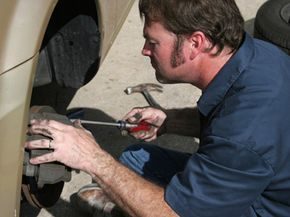
Spray down the assembly with a dedicated brake cleaner. Remove the caliper if you can, and clean behind the pads and around the rotor. Clearing out the dust and grime often eliminates the source of the rattle.
Check for Glazing
If the rotors look shiny and mirror-like, they are glazed. You can sometimes resurface them on a lathe, but if the wear is significant, replacement is safer. Glazed pads should also be replaced, as they cannot be “un-glazed” effectively.
Lubricate Moving Parts
Apply high-temperature brake lubricant to the caliper slide pins and the contact points on the back of the brake pads. Do not get lubricant on the friction surface of the pad or the face of the rotor. This is a common mistake that leads to poor braking performance.
Professional Inspection
If you have cleaned, lubricated, and checked the pads, and the noise persists, call a pro. You could have a stuck caliper, a warped rotor, or misalignment issues that require special tools to diagnose.
“Brakes are designed to make noises when they’re going bad to warn you. It’s better to hear a squeak than to jam on the pedal and not stop.”
Pinpoint the Source
Squeaky brakes are a nuisance, but they are rarely a mystery once you know where to look. The key is systematic inspection. Check the thickness. Check for shine. Check for dirt.
Regular maintenance prevents most of these issues. If you hear that familiar shriek, do not ignore it. But do not assume the worst immediately. Sometimes it is just the sound of your car telling you it is time for a little attention. If you are unsure, trust your gut and get a second opinion. Your safety depends on it.
This article was updated in conjunction with AI technology, then fact-checked and edited by a HowStuffWorks editor.
Lots More Information
Related HowStuffWorks Articles
- How Air Brakes Work
- How Disc Brakes Work
- How Drum Brakes Work
- How Brakes Work
- How Brake Controllers Work
- How Power Brakes Work
Sources
- Allen, Mike. “How to Fix Squeaky Brakes: Auto Clinic.” Popular Mechanics. Feb. 2007. http://www.popularmechanics.com/automotive/how_to/4212402.html (Accessed 11/5/08)
- Davis, Austin C. “Brakes – Disc Brake Noise Explained.” Trust My Mechanic. http://www.trustmymechanic.com/htmlmessage9.html (Accessed 11/5/08)
- Just Brakes. “FAQ.” http://www.justbrakes.com/xfaq.htm (Accessed 11/5/08)