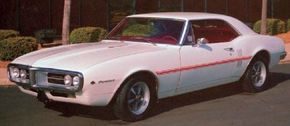
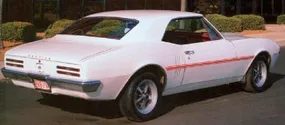
The 1967 Chevrolet Camaro arrived first. It was ready for the show. The 1967 Pontiac Firebird Sprint trailed behind. But when it finally showed up, it did not apologize. Pontiac launched its pony car contender with aggressive marketing and a lineup designed to satisfy every mood. They called the five available engines “The Magnificent Five.” You could get them in a hardtop coupe or a convertible. The temperaments ranged from mild to absolutely wild.
Starting With The Base Six
Not everyone wanted to race. If you just liked the silhouette, the base model was a safe bet. Pontiac installed an innovative overhead-cam six-cylinder engine. It pushed out a leisurely 165 horsepower. You shifted gears using a column shifter. It was smooth. It was easy. It was slow.
Adding The Sprint Package
The 1967 Pontiac Firebird Sprint package cost an extra $116. That price tag bought you a racier camshaft and a four-barrel carburetor. The base six was no longer a slumbering giant. You also got a floor-mounted three-speed manual transmission. The suspension was stiffer. The ride was firmer. It was still a six, but now it had a spine.
V-8 Options For The Brave
Money could buy speed. A 326-cubic-inch V-8 was available for an additional $95. If you wanted the high-output version of that same 326, you shelled out $180.58. That package included racing stripes. It was a significant step up in performance.
Going higher up the food chain required dropping $274 for the 400-cubic-inch V-8. This engine changed the car entirely. It came with a distinctive twin-scoop hood. Dual exhausts were standard. The suspension was extra-firm. Redline wide-oval tires wrapped the wheels. Pontiac’s ads claimed that when this engine talked, you listened. It was loud. It was substantial.
The King Of The Lineup
Topping the performance tree was the Ram 400. This wasn’t just a badge. It featured functional hood scoops. Air needed to get into those intakes. The Ram 400 was the ultimate expression of the 1967 Firebird’s aggressive intent.
Transmission choice mattered. Modestly motivated Firebirds could be ordered with a two-speed automatic. It was simple. It was reliable. But if you had the 400 V-8, you needed the three-speed Turbo Hydra-Matic. It handled the torque. It shifted the power. It was the correct choice for serious driving.
Why The Firebird Mattered
The Firebird Sprint was not just a copy of the Camaro. It had its own personality. The overhead-cam six was unique. The 400 V-8 was a beast. The options were specific. Pontiac knew what it was building. It was not just a pony car. It was a statement.
The base model was for cruising. The Sprint was for cornering. The 400 was for straight-line dominance. The Ram 40
Taming the Rear Suspension
The single-leaf rear springs in early models had a nasty habit of inducing wheel hop under hard acceleration. Pontiac fixed this by installing an adjustable track bar on the right side for mid-range models. High-performance editions got two bars for stability. This wasn’t just cosmetic. It kept the car planted when you slammed the gas.
Option Lists and Sales Numbers
Base-priced about $200 higher than the Camaro, Firebirds offered a long option list. Buyers could choose front disc brakes or a Cordova vinyl roof. Only 19,750 cars carried a V-8 and manual shift. That number feels small now. It was a significant slice of the market then.
The Tachometer Innovation
Firebird’s optional hood-mounted tachometer was an industry first. You could read engine speed without looking down at the dash. It changed how drivers shifted. It also looked aggressive. Few cars offered this. The Firebird did.
Search Queries Answered
Which Firebird had an adjustable track bar?
Mid-range models had the adjustable track bar. High-performance editions received two bars. This fixed wheel hop under hard acceleration.
Why did Firebirds cost $200 more than Camaros?
The Firebird had a long option list. Front disc brakes were available. A Cordova vinyl roof was an option. These features added cost.
How many Firebirds had V-8s and manual shifts?
Only 19,750 cars carried a V-8 and manual shift. That was the limit for that specific combo.
What was the industry first on the Firebird?
The optional hood-mounted tachometer was an industry first. Drivers could monitor engine speed from the hood. It was a bold move.
More Resources
For more information about muscle cars, see:
- Consumer Auto Guide to Pontiac Firebirds
- Muscle Cars