The 1962 model year marked the absolute zenith of the Chevrolet Corvair. Production hit a staggering 292,531 units, securing its place as the highest volume year in the compact’s ten-year lifecycle. This was the peak of Chevy’s direct answer to the Volkswagen Beetle.
It wasn’t just about volume. 1962 brought genuine improvements. The lineup received more power, critical chassis upgrades, and a sharper restyle. It was a year where General Motors corrected course on its controversial compact before the later years would bring doubt. For the Corvair Monza station wagon, specifically, the timing could not have been better.
The 700 Series Lakewood Introduction
The Corvair Monza station wagon arrived in 1961 as part of the mid-level 700 series. It was marketed as the Lakewood. This six-passenger wagon offered serious utility for its size.
Fold down the second-row seats and you gain 58 cubic feet of cargo space. The load floor stretches nearly 6.5 feet long. That is substantial for a rear-engine compact.
Access to that cargo hold was straightforward. A single-piece liftgate swings up for easy loading. It wasn’t the easiest process in the world, but the mechanism worked.
Engineering the Cargo Floor
There was a catch to that generous interior volume. The floor sits significantly above bumper height. You have to lift heavy items higher than you might expect.
This design choice was non-negotiable. It made room for the engine. The Corvair used an air-cooled, horizontally opposed six-cylinder with an aluminum block. You could not lower the floor without burying that engine.
The engineering trade-off defined the Corvair experience. You got rear-engine packaging quirks. You also got a unique driving dynamic that enthusiasts still debate today. The 1962 models refined this layout just enough to sell nearly 300,000 of them.
The Workhorse Variant
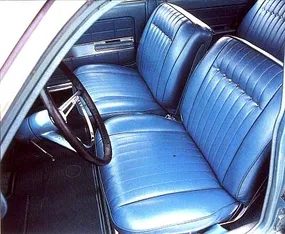
Prices for the 1962 Corvair Monza station wagon started at $2,569. GM didn’t strip this wagon down for utility. It kept the trim levels of the other Monza models. You could still spec bucket seats. That option gave the wagon a sportier identity despite its hauler status.
Powertrain Specs
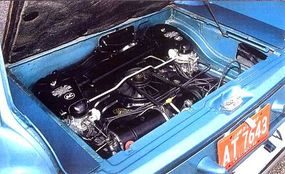
Under the rear deck sat a 145-cubic-inch flat-six. It pushed 80 horsepower with the standard three-speed manual transmission.
If you paid extra for the Powerglide automatic? You got 84 horsepower.
Two other paths existed for buyers seeking more shove:
– A four-speed stick shift
– The “Super Turbo-Air” engine option
That high-compression unit bumped output to 102 horsepower. More power came at the cost of simplicity. But for those needing torque, it was the move.
The Disappearing Act
Glamour is a volatile thing. It clings to coupes and convertibles, dripping off the curves of the 1962 Chevrolet Monza sedan like polish on fresh paint. It simply didn’t stick. Not to the wagon.
The numbers don’t lie. They never do.
Only 2,362 of the standard Monza wagons rolled off the line that year. Add in the 3,716 built in the less exclusive “700” trim, and you still end up with a footprint far smaller than the rest of the Corvair lineup. The body style vanished after 1962. No updates. No facelift. Just gone.
This makes surviving examples genuinely rare. Not just “rare” in the dusty, forgotten-barn sense. But actually rare. The kind you see once in a lifetime and then spend the rest of your career hoping to see again.
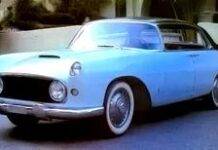
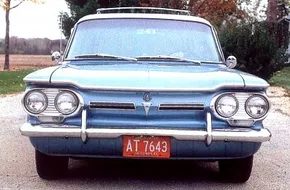
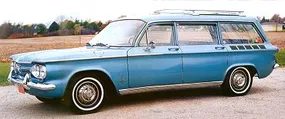
Douglas Englin’s Twilight Blue example is exactly that kind of unicorn.
It wasn’t a barn find. It wasn’t a project car buried under decades of Nebraska corn. In 1992, when Englin bought it in North Dakota, it was solid. Rust-free. A fact that feels almost impossible when we’re talking about 60-year-old sheetmetal from this era. Most Corvairs of this age are structural suggestions. This one was a commitment.
The Twilight Blue paint still holds up. Not perfectly. Nothing from 1962 does. But it holds. The rust is absent. The structure is intact. It’s a quiet testament to the fact that not every Corvair was a disaster waiting to happen. Some were just well-kept. Some were just lucky.
Englin’s wagon sits in that small intersection of luck and care. A 1962 Chevrolet Corvair Monza wagon. A car that should have been forgotten. Instead, it’s here. Blue. Solid. Uncompromisingly rare.
And you’ll never see another one like it.
The 102-Horsepower Reality Check
Englin didn’t just wash it. He didn’t just buff it. The North Aurora, Illinois resident spent five straight years breathing life back into this specific piece of automotive history. We are talking deep restoration. New paint that actually holds its gloss. Trim that snaps into place without creaking. Upholstery that doesn’t smell like a dusty attic from 1957.
The heart of the beast remains exactly where it should be. Under the hood sits the 102-horsepower Super Turbo-Air engine. It isn’t a V8. It isn’t a high-revving inline-six. It’s an air-cooled flat-four with a supercharger, a configuration that defined this era of GM engineering before the V8 dominance took over. Power routes through the Powerglide transmission. That two-speed automatic wasn’t built for racing. It was built for cruising down suburban streets with the windows down and the radio turned up. It’s simple. It’s reliable. It moves metal.
The Unseen Luxury
You can tell a lot about an owner by what they chose to pay extra for. Most buyers of this era skipped the bells and whistles to save a few dollars. Englin didn’t. His configuration list reads like a catalog of mid-century convenience.
Front bucket seats. Not the bench that swallowed the whole family. Separate seating for the driver and passenger, offering actual lateral support. A tissue dispenser mounted discreetly in the console or dash, because even in the 1950s, people needed to blow their noses without digging through glove boxes. Wire wheel covers that hide the steel spokes and give the car a cleaner, more expensive look from a distance. A roof rack for luggage that didn’t fit inside. Bumper guards to protect the paint from shopping carts and tight parking spots. Side-window “ventshades” to block the sun without blocking the view.
These weren’t just accessories. They were status symbols. They signaled that this car wasn’t just transportation. It was a statement.
Why This Matters Now
When you look at cars like this today, you aren’t just looking at metal and rubber. You are looking at a snapshot of a specific moment in American manufacturing. The 102-horsepower Super Turbo-Air engine represents a time when efficiency and simplicity were prized over raw power. The Powerglide transmission reflects an era where automatic cars were still a novelty, a luxury item that required patience and a light foot.
The extra-cost items on Englin’s car—the bucket seats, the tissue dispenser, the ventshades—highlight a shift in consumer expectations. People wanted comfort. They wanted convenience. They wanted their cars to reflect their personal style, even if that style was just a set of wire wheel covers.
This isn’t about nostalgia. It’s about understanding the evolution of the automobile. The Super Turbo-Air engine may lack the horsepower of modern cars, but it has a character that is hard to replicate. The Powerglide may lack the speed, but it has a smoothness that modern transmissions strive for. The extra-cost items may seem trivial, but they define the ownership experience.
For those interested in the broader landscape of classic vehicles, the ecosystem remains vast. The passion for Classic Cars continues to drive markets worldwide. The raw power of Muscle Cars