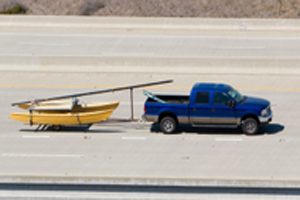
Towing capacity is a number you need to respect. It is the maximum weight your vehicle is engineered to pull. Manufacturers set these limits in the owner’s manual for a reason. Hitting that limit keeps your drivetrain safe. It also preserves handling. Exceeding it risks damage. You might blow a transmission. Or worse, lose control on the highway.
Some aftermarket hitches have higher ratings than the car itself. That is because a hitch is a universal part. It fits many vehicles. The car, however, has specific limits. Stick to the manufacturer’s designation.
Always check the math before you hook up. The limit is not just about the trailer. Passenger weight over 150 lbs counts. Optional equipment counts. Cargo in the rear counts. Everything adds up. If you exceed your vehicle’s towing capacity, you are playing with fire.
Here is the data for luxury brands from 2006 to 2009.
Acura Towing Capacity
Acura kept it simple. Most sedans barely tow anything. The MDX is the workhorse here. It pulls significantly more than the TL or TSX.
2006 Acura Models
– MDX: 3500 lbs
– RL: 1000 lbs
– RSX: 1500 lbs
– TL: 1000 lbs
– TSX: Not rated
2007 Acura Models
– MDX: 5000 lbs
– RL: 1000 lbs
– RDX: 1500 lbs
– TL: 1000 lbs
– TSX: 1000 lbs
2008 Acura Models
– MDX: 5000 lbs
– RL: 1000 lbs
– RSX: 1500 lbs
– TL: 1000 lbs
– TSX: 1000 lbs
2009 Acura Models
– MDX: 5000 lbs
– RL: 1000 lbs
– RSX: 1500 lbs
– TSX: 1000 lbs
The jump from 3500 to 5000 lbs for the MDX between 2006 and 2007 is massive. Check your build year carefully.
More Acura Specs
- Acura GVWR
- Acura GAWR
- Acura GCWR
- Acura Cargo Carrying Capacity
- Acura Curb Weight
- Acura Payload
Audi Towing Capacity
Audi was conservative. Most of their lineup cannot pull anything at all. The Q7 is the exception. It is built like a tank. Everything else in the 2006-2009 era gets a dash.
2006 Audi Models
– A3: Not rated
– A4: Not rated
– A6: Not rated
– A8: Not rated
– S4: Not rated
– TT: Not rated
2007 Audi Models
– A3: Not rated
– A4: Not rated
– A6: Not rated
– A8: Not rated
– Q7: 5500 lbs
– RS4: Not rated
– S4: Not rated
– S6: Not rated
– S8: Not rated
2008 Audi Models
– A3: Not rated
– A4: Not rated
– A5: Not rated
– A6: Not rated
– A8: Not rated
– Q7: 5500 lbs
– R8: Not rated
– RS4: Not rated
– S4: Not rated
– S5: Not rated
– S6: Not rated
– S8: Not rated
– TT: Not rated
2009 Audi Models
– A3: Not rated
– A4: Not rated
– A5: Not rated
– A8: Not rated
– Q7: 5500 lbs
– R8: Not rated
– S4: Not rated
– S5: Not rated
– S8: Not rated
– TT: Not rated
More Audi Specs
- Audi GVWR
- Audi GAWR
- Audi GCWR
- Audi Cargo Carrying Capacity
- Audi Curb Weight
- Audi Payload
BMW Towing Capacity
BMW gave you options, but they were limited to SUVs. Sedans and coupes? Forget it. The X3, X5, and X6 are where the muscle is. The Z4M still gets zero.
2006 BMW Models
– 325: Not rated
– 330: Not rated
– 525: Not rated
– 530: Not rated
– 550: Not rated
– 650: Not rated
– 750: Not rated
– 760: Not rated
– M3: Not rated
– M5: Not rated
– M6: Not rated
– X3: 3500 lbs
– X5: 6000 lbs
– Z4: Not rated
– Z4M: Not rated
2007 BMW Models
– 328: Not rated
– 335: Not rated
– 525: Not rated
– 530: Not rated
– 550: Not rated
– 650: Not rated
– 750: Not rated
– 760: Not rated
– Alpina B7: Not rated
– M5: Not rated
– M6: Not rated
– X3: 3500 lbs
– X5: 6000 lbs
– Z4: Not rated
– Z4M: Not rated
2008 BMW Models
– 128: Not rated
– 135: Not rated
– 328: Not rated
– 335: Not rated
– 528: Not rated
– 535: Not rated
– 550: Not rated
– 650: Not rated
– 750: Not rated
– 760: Not rated
– Alpina B7: Not rated
– M3: Not rated
– M5: Not rated
– X3: 3500 lbs
– X5: 6000 lbs
– X6: 6000 lbs
– Z4: Not rated
– Z4M: Not rated
**20
Chevrolet
The Silverado line remains the heavy hitter in Chevy’s stable. If you are pulling a heavy load, you are looking at the HD models. In 2006, the Silverado 2500 HD maxed out at 10,100 lbs. By 2009, the 3500 HD model had climbed to 9,700 lbs. The 1500 series is lighter duty. Its towing capacity fluctuates significantly depending on the trim. The 2006 Silverado 1500 SS could tow 7,500 lbs. A standard 2009 Silverado 1500 drops to 4,700 lbs.
The Avalanche shares lineage with the Silverado but has a unique body style. In 2006, the 2500 variant handled 10,200 lbs. By 2009, the 1500 model dropped to 5,000 lbs. That is a significant decrease from its 2006 peak of 7,300 lbs.
SUVs vary widely. The Tahoe sits around 4,500 to 5,700 lbs for most years. The Suburban 2500 offers more grunt, hitting 9,600 lbs in 2008 and 2009. The TrailBlazer holds steady at 5,400 lbs. The Traverse, introduced in 2009, is only rated for 2,000 lbs.
Compact cars are not towing machines. The Cobalt, Impala, and HHR all sit at a modest 1,000 lbs. The Malibu has no towing rating. The Colorado pickup sees a jump from 1,600 lbs in 2006 to 3,000 lbs by 2009.
Chrysler
Chrysler’s lineup is narrower here. The 300C is the only sedan with a decent rating, sitting at 2,000 lbs from 2006 through 2009. The base 300 is limited to 1,000 lbs.
The PT Cruiser is an outlier. In 2006 and 2007, it could tow 3,500 lbs. By 2008, that dropped to 2,600 lbs. The 2009 model fell further to 1,000 lbs.
Minivans and larger SUVs take the lead. The Town & Country improves over time. It starts at 1,700 lbs in 2006, moves to 3,600 lbs in 2008, and holds that 2009 rating. The Pacifica is inconsistent. It hit 2,600 lbs in 2007 before dropping back to 1,000 lbs in 2008 and staying there in 2009.
The Aspen SUV offers serious capability. It maintains a steady 8,950 lbs for towing from 2007 through 2009. The Aspen Hybrid in 2009 drops that to 6,000 lbs.
Dodge
Dodge trucks dominate this list. The Ram 3500 is the king. It climbs from 10,500 lbs in 2006 to 12,300 lbs in 2009. The 2500 series follows closely, reaching 9,300 lbs in 2009.
The 1500 series sees a bump. In 2006 and 2007, it was rated at 2,900 lbs. In 2009, it jumped to 3,800 lbs.
SUVs like the Durango are reliable workhorses. They hover around 3,750 to 3,850 lbs across all four years. The Dakota pickup stays low, between 3,150 and 3,300 lbs.
Minivans are solid for their class. The Grand Caravan starts at 3,700 lbs in 2006, dips to 3,600 lbs in 2008 and 2009. The smaller Caravan is limited to 1,800 lbs.
The Sprinter vans are interesting. The 3500 model gets a boost. In 2006 it was 5,000 lbs. By 2007 and 2008, it hits 7,500 lbs and holds that rating. The 2500 model stays flat at 5,000 lbs.
Sports cars have no business towing. The Viper has no rating. The Challenger appears in 2008 with no rating, then gets a 1,000 lb rating in 2009.
Ford
Ford’s heavy trucks are the stars. The F-350 hits 10,700 lbs in 2008 and holds that in 2009. The F-450 is a monster. It hits 16,000 lbs in 2008, then drops to 10,700 lbs in 2009. That drop seems odd, but the data stands.
The F-150 sees a massive increase. It starts at 6,400 lbs in 2006, stays at 6,500 lbs for 2007 and 2008, then jumps to 8,700 lbs in 2009. The F-250 is also strong, reaching 10,600 lbs in 2007 before settling at 8,700 lbs in 2008.
Full-size SUVs like the Expedition are consistent. They tow 9,200 lbs from 2007 to 2009. The Explorer sits around 3,110 to 3,500 lbs. The Escape Hybrid is weak at 1,000 lbs. The standard Escape is slightly better at 1,500 lbs.
Commercial vans like the E-Series are useful. The E-350 Super Duty handles 7,400 to 7,500 lbs. The E-250 is limited to 5,600 or 6,000 lbs depending on the year.
Compact cars are not for towing. The Focus and Fusion have no rating. The Mustang gets a meager 1,000 lb rating in 2007 and 2009. The Ranger pickup fluctuates, starting at 6,000 lbs in 2006 and dropping to 2,460 lbs in later years.
GMC Sierra and Yukon: Heavy Lifting with Hybrid Options
GMC didn’t mess around with towing numbers in the late 2000s. If you were looking for max towing capacity for GMC Sierra 2500, your options were staggering. The 2006 Sierra 2500 could pull 10,500 lbs. It dipped slightly in 2007 and 2008 to 10,400 lbs, then climbed back up to 10,500 lbs in 2009. The Sierra 3500 hovered around the 10,000 lb mark, specifically 10,000 in 2006, then 10,100 lbs for the next two years.
The Sierra 1500 saw a bump in capability. It started at 4,000 lbs in 2006. By 2007, GMC tightened up the specs to 4,800 lbs, a figure that held steady through 2009. The Canyon truck also got stronger. 2006 offered 1,800 lbs. 2007 jumped to 2,300 lbs, and 2008 landed at 2,400 lbs. 2009 kept that 2,400 lb limit.
The Yukon line was where the hybrids entered the chat. The 2006 Yukon handled 5,700 lbs. Then 2007 and 2008 dropped it to 4,500 lbs. Why? Maybe gearing. Or maybe cooling. The 2009 Yukon bounced back to 4,800 lbs. But the Yukon Hybrid towing capacity was the real story. Introduced in 2008, it maxed out at 6,200 lbs. 2009 kept that same 6,200 lb rating.
The XL versions carried more weight. The 2006 Yukon XL did 7,500 lbs. 2007 and 2008 dropped to 7,100 lbs. 2009 took a nosedive to 5,100 lbs. That’s a big difference. The Savana vans were workhorses too. The 2500 models stuck to 6,300 lbs across 2006-2009. The 3500 models were slightly lower at 6,200 lbs. The Envoy sat at a steady 5,300 lbs for the first four years.
Honda’s Conservative Approach to Towing
Honda played it safe. The 2006 Ridgeline was the king of the lineup at 5,000 lbs. It dropped out in 2007. Returned in 2008 with 5,000 lbs. 2009 didn’t list it. The Odyssey stuck to 3,500 lbs from 2006 through 2009. The Pilot came and went. 2006 had 3,500 lbs. 2007 listed nothing. 2008 had 3,500 lbs. 2009 had 3,500 lbs.
The Accord was weak. 2006 and 2007 did 1,000 lbs. 2008 and 2009 had no rating. The Civic started at 1,500 lbs in 2006. 2007 matched it. 2008 matched it. 2009 dropped to 1,000 lbs. The Element was steady at 1,500 lbs in 2006 and 2008. No data for 2007 or 2009.
The Fit appeared in 2007 with no rating. 2008 also had no rating. No Fit data for 2009. The CR-V was empty from 2006 to 2008. 2009 had no listing. The Insight had no rating in 2006. No rating in 2007. No rating in 2009. The S2000 never rated for towing in any of these years.
Hummer’s Raw Power
Hummer was all about brute force. The H2 started at 6,500 lbs in 2006. 2007 bumped it to 6,600 lbs. 2008 jumped to 8,200 lbs. 2009 stayed at 8,200 lbs. That’s a huge swing. The H3 was consistent at 3,000 lbs for 2006 through 2009. The H3T appeared in 2009 with 4,400 lbs. The H1 Alpha in 2006 could pull 7,887 lbs. Weird number. Probably due to specific axle ratios or transfer case setups.
Hyundai’s Modest Numbers
Hyundai wasn’t built for heavy towing back then. The Santa Fe started at 2,700 lbs in 2006. 2007 dropped to 1,650 lbs. 2008 held at 1,650 lbs. The Elantra started at 1,500 lbs in 2006. 2007 dropped to 750 lbs. 2008 held at 750 lbs. The Sonata sat at 1,000 lbs in 2006, 2007, 2008, and 2009. The Azera was also 1,000 lbs across those years. The Tucson was 1,000 lbs in 2006, 2007, and 2008. 2009 had no rating. The Veracruz had no rating in 2007 or 2008. The Entourage was 1,000 lbs in 2007 and 2008. The Genesis had no rating in 2009. The Accent had no rating in any year. The Tiburon had no rating in any year.
Infiniti’s Luxury Limits
Infiniti’s luxury SUVs could pull. The QX56 did 9,000 lbs in 2006 and 2007. 2008 had no rating. 2009 had 9,000 lbs. The FX35 and FX45 did 3,500 lbs in 2006 and 2007. 2008 had no rating for FX35. 2009 had no rating for FX35. The FX50 appeared in 2009 with 3,500 lbs. The G35, M35, and M45 did 1,000 lbs in 2006 and 2007. 2008 had no ratings for any of those sedans. The EX35 had no rating in 2008. The G37 had no rating in 2008. The Q45 had no rating in 2006.
Isuzu’s Niche Presence
Isuzu was small but capable. The Ascender did 5,300 lbs in 2006, 2007, and 2008. The i-280 did 1,700 lbs in 2006. The i-290 did 2,100 lbs in 2007 and 2,200 lbs in 2008. The i-350 did 4,000 lbs in 2006. The i-370 did 4,000 lbs in 2007 and 5,500 lbs in 2008. That jump in 2008 is notable.
Jaguar’s Zero Towing
Jaguar didn’t tow. Not in 2006. Not in 2007. Not in 2008. Not in 2009. The S-Type, X-Type, XJ8, XJR, XK8, XKR, XK, XF, and XK Coupe all had no rating. Zero. Nothing. You were supposed to drive them. Not pull anything with them.
Jeep’s Off-Road Limits
Jeep’s off-roaders were surprisingly limited in towing. The Commander did 3,500 lbs in 2006, 20
Let’s talk about hauling. Or rather, what these specific cars from the late 2000s can’t haul. If you’re looking at buying a used sedan from 2006 and planning to tow a jet ski, the answer is almost always “you can’t.” Most of these vehicles were engineered for comfort or sport, not payload.
But the SUVs? They told a different story. The gap between a Lexus GS and a Lexus GX is massive. The same goes for Mazda versus Mitsubishi. We are going to cut through the noise and look at exactly what the factory rated limits were for each brand between 2006 and 2009.
Note the dashes in the tables below. They aren’t typos. They mean the manufacturer did not certify that model for towing. Period.
Lexus
Lexus split their lineup early. You had the luxury sedans that weren’t meant to pull anything, and the heavy-duty SUVs built for work.
The Lexus GX 470 and LX 470 were the workhorses. Both held a solid 6500 lbs rating for most of this era. That’s enough for a mid-size trailer or a small boat. The Lexus RX 330 and RX 400h (hybrid) started strong with 3500 lbs in 2006 and 2007.
Then 2008 hit. And everything changed for the RX.
The RX 350 and RX 400h towing capacity dropped to 2000 lbs in 2008. It stayed there in 2009. Why? Likely a combination of suspension tuning and weight distribution changes as the platform shifted. If you need to tow with an RX, you are looking at an older 2007 model or newer, not the 2008-2009 units.
The LX 570 debuted in 2008 as a replacement for the aging LX 470. It jumped the goalposts to 8500 lbs. That is serious heavy-duty territory.
The sedans? ES, GS, IS, LS, SC. Zero towing capacity. Don’t even try. Even the LS 430 only rated for 2000 lbs in 2006. The LS 460 in 2007 and 2008? Nothing.
| Year | Model | Max Towing Capacity (lbs) |
|---|---|---|
| 2006 | ES 330 | – |
| 2006 | GS 300 | – |
| 2006 | GS 430 | – |
| 2006 | GX 470 | 6500 |
| 2006 | IS 250 | – |
| 2006 | IS 350 | – |
| 2006 | LS 430 | 2000 |
| 2006 | LX 470 | 6500 |
| 2006 | RX 330 | 3500 |
| 2006 | RX 400h | 3500 |
| 2006 | SC 430 | – |
| 2007 | ES 350 | – |
| 2007 | GS 350 | – |
| 2007 | GS 430 | – |
| 2007 | GS 450h | – |
| 2007 | GX 470 | 6500 |
| 2007 | IS 250 | – |
| 2007 | IS 350 | – |
| 2007 | LS 460 | – |
| 2007 | LX 470 | 6500 |
| 2007 | RX 350 | 3500 |
| 2007 | RX 400h | 3500 |
| 2007 | SC 430 | – |
| 2008 | ES 350 | – |
| 2008 | GS 350 | – |
| 2008 | GS 450h | – |
| 2008 | GS 460 | – |
| 2008 | GX 470 | 6500 |
| 2008 | IS 250 | – |
| 2008 | IS 350 | – |
| 2008 | IS-F | – |
| 2008 | LS 460 | – |
| 2008 | LS 600h | – |
| 2008 | LX 570 | 8500 |
| 2008 | RX 350 | 2000 |
| 2008 | RX 400h | 2000 |
| 2008 | SC 430 | – |
| 2009 | ES 350 | – |
| 2009 | GX 470 | 6500 |
| 2009 | IS-F | – |
| 2009 | IS 350 | – |
| 2009 | IS 250 | – |
| 2009 | LX 570 | 8500 |
| 2009 | RX 350 | 2000 |
| 2009 | SC 430 | – |
Lincoln
Lincoln in this era was riding the coattails of Ford’s heavy-duty platforms. If you needed to tow, you bought the truck-based SUVs.
The Mark LT was essentially a Ford F-150 with a Lincoln badge. It maintained a steady 8900 lbs towing capacity from 2006 through 2009. That is nearly 9,000 pounds. It was one of the few affordable ways to get a full-size truck experience with a luxury interior.
The Navigator sat at 6000 lbs across all four years. Solid. Reliable. Boring.
The MKX in 2007, 2008, and 2009 rated for 2000 lbs. A light crossover. Nothing more.
The Town Car was a limousine chassis. It handled 2000 lbs in 2006, 2007, and 2008. In 2009, the MKS appeared, rated for just 1000 lbs. The MKZ and other sedans had no rating.
| Year | Model | Max Towing Capacity (lbs) |
|---|---|---|
| 2006 | LS | – |
| 2006 | Mark LT | 8900 |
| 2006 | Navigator | 6000 |
| 2006 | Town Car | 2000 |
| 2006 | Zephyr | – |
| 2007 | MKX | 2000 |
| 2007 | MKZ | – |
| 2007 | Mark LT | 8900 |
| 2007 | Navigator | 6000 |
| 2007 | Town Car | 2000 |
| 2008 | MKX | 2000 |
| 2008 | MKZ | – |
| 2008 | Mark LT | 8900 |
| 2008 | Navigator | 6000 |
| 2008 | Town Car | 2000 |
| 2009 | MKS | 1000 |
| 2009 | MKX | 2000 |
| 2009 | MKZ | – |
Pontiac’s Towing Limits: Finding the Heavy Hitters
Pontiac had a split personality in the mid-2000s. You had sporty sedans that were barely legal to tow a bicycle rack with, and then you had the Montana SV6 and Torrent that could haul serious weight. It was a weird era. GM was trying to shed the “mom mobile” image while quietly building capable trucks and crossovers under the hood.
If you are looking at a used Pontiac towing capacity chart from 2006 to 2009, the numbers vary wildly depending on whether you bought a G6 or a Torrent.
The lightweight sedans and coupes like the G6, GTO, Grand Prix, and G5 maxed out at a conservative 1,000 lbs. That’s barely enough for a small trailer with a motorcycle on it. The Solstice? Zero. It wasn’t built for it.
The heavy lifters were different. The Pontiac Montana SV6 and the Torrent shared a platform and could both handle 3,500 lbs. This made them surprisingly capable for family hauling. The Vibe, which was basically a Toyota Matrix in disguise, sat in the middle at 1,500 lbs until 2009, when it dropped back down to 1,000 lbs. The G8, introduced in 2008, brought a respectable 2,000 lbs to the table.
“The Pontiac Torrent and Montana SV6 were the only real workhorses in the lineup, offering 3,500 lbs of towing capacity.”
Porsche Cayenne: The SUV That Broke the Rules
Porsche didn’t just dabble in SUVs. They built the Cayenne to prove that luxury and utility could coexist without ruining the brand’s reputation. Or so they thought. When it comes to Porsche towing capacity, the data is simple: if it has four wheels and a V8, it pulls hard.
From 2006 through 2009, the Cayenne was the only Porsche in these years with a legitimate towing rating. It could pull 7,716 lbs. That number is specific. It’s not 7,500. It’s not 8,000. It’s 7,716. This likely corresponds to the max payload plus towing limit defined by the vehicle’s Gross Combined Weight Rating (GCWR).
Meanwhile, the core sports cars—the 911, Boxster, and Cayman —had a towing capacity of zero. They were not designed for trailers. If you tried to tow a boat with a 2009 911 Carrera, you’d likely strip the gearbox before you got down the driveway.
The consistency here is notable. The Cayenne didn’t change its towing specs between 2006 and 2009. It stayed locked at that nearly 8,000-pound mark. For a car enthusiast, this is significant. It means the underlying chassis and cooling systems were over-engineered for the task.
Saab’s Unlikely Strength
Saab is often remembered for turbocharged sedans and quirky interiors. But their towing capacity data from 2006 to 2009 tells a different story about their truck-based roots.
The 9-7X was a rebadged GMT360 platform cousin to the GMC Envoy and Cadillac Escalade. Naturally, it had the heaviest towing capacity in the brand’s history. It could pull 5,500 lbs. This wasn’t just a luxury badge job; it was a full-size truck under a Saab skin.
The 9-5 and 9-3 were more conventional. The 9-5 could handle 3,500 lbs, which is impressive for a mid-size luxury sedan. The 9-3, however, was limited to 2,000 lbs. If you needed to tow anything larger than a small utility trailer, you were looking at the 9-5.
The 9-2X was a Subaru Outback in disguise. It shared Subaru’s towing limits, capping out at 2,000 lbs. It was a practical choice, but it lacked the torque of the Saab’s own turbo engines.
The consistency in the 9-5 and 9-7X specs across 2006 to 2009 suggests Saab didn’t tinker with the tow ratings once the models launched. They stayed rigid.
Saturn’s Mixed Bag
Saturn was trying to be different. Their towing capacity reflects that struggle. They had the Relay, a minivan that could pull 3,500 lbs. It was practical, safe, and boring. Then there was the VUE and Outlook.
The VUE sat at 1,500 lbs for most of its run. The VUE Hybrid matched this at 1,500 lbs. The Outlook, which shared its platform with the Buick Enclave, could handle 2,000 lbs.
The Ion and Aura were lighter, limited to 1,000 lbs. The Aura Hybrid had a towing capacity of zero, likely due to battery placement and cooling constraints.
The Sky roadster also had zero towing capacity. It was a sports car, pure and simple. The Astra didn’t appear until 2008 and had no tow rating. Saturn’s lineup was fragmented, and their towing capabilities reflected a lack of unified strategy.
Scion and Smart: Zero Towing
Scion and Smart were targeting younger buyers who didn’t care about towing. The data confirms it.
For Scion, the tC, xB, and xD models all had a towing capacity of zero from 2006 to 2009. They were designed for city driving, not weekend getaways with trailers. The same applies to the smart fortwo. Introduced in 2008, it had a towing capacity of zero. It was a microcar. Towing anything with it would destabilize the chassis instantly.
These brands focused on affordability and urban mobility. Towing wasn’t in the brochure.
Subaru: The All-Wheel Drive Advantage
Subaru built its reputation on all-wheel drive and reliability. Their towing capacity numbers from 2006 to 2009 reflect a brand that knew its limits and respected them.
The B9 Tribeca could pull 3,500 lbs in 2006 and 2007. It dropped to 2,700 lbs in 2008 and 2009. This decrease might be due to updated safety ratings or chassis adjustments.
The Baja was unique. It was a pickup-based wagon. It could tow 2,400 lbs in 2006. It disappeared after that year.
The Forester was consistent at 2,400 lbs for 2006, 2007, and 2008. In 2009, it lost its tow rating entirely. Why? Probably because the new generation changed the platform enough that the previous rating no longer applied.
The Impreza lineup was smaller. The Sedan had no tow rating. The Wagon and Outback Sport could pull 2,000 lbs. The WRX STI? Zero. You don’t tow with a high-revving turbo hatchback.
The Legacy and Outback were the workhorses. They could both pull 2,700 lbs for most of the period. This made them excellent choices for light camping or small boat towing.
“Subaru’s Outback and Legacy offered consistent 2,700 lbs towing capacity, making them reliable choices for light-duty hauling.”
Suzuki: The XL7’s Peak
Suzuki was niche. Their Grand Vitara could tow 3,000 lbs from 2006 to 2008. In 2009, it lost its rating. The XL7 improved over time. It started at 3,000 lbs in 2006, jumped to 3,500 lbs in 2007 and 2008, and then dropped to zero in 2009.
The Forenza, Reno, and Verona were compact cars limited to 1,000 lbs. The SX4 and Equator had no tow ratings. Suzuki’s towing capacity was highest with the XL7, which shared platforms with Chevrolet’s SUVs.
Toyota: The Heavyweights
Toyota dominated this era’s towing charts. They built trucks and SUVs that could haul serious weight.
The 4Runner and **F
The Reality of Volvo Towing Specs
Most of these early-mid 2000s Volvos don’t tow anything. The tables below are mostly empty because Volvo simply didn’t offer towing packages for many trims. If you see a dash, that’s not an oversight. It means the factory spec says zero. You are on your own with after-market adapters and risky insurance choices.
There is one glaring exception. The 2006 S60. It lists 3,300 lbs. That number stands out because every other sedan in that era has a dash. Why did the 2006 S60 get special treatment? It likely had a reinforced rear subframe or a specific cooling package tied to higher-trim engines. Once the model refreshed or switched platforms later, that capability vanished.
2006 Volvo Towing Data
The 2006 model year is the only one with a positive number in this dataset. This matters if you are looking for a budget hauler.
2006 Volvo Models:
- C70: No towing capacity listed.
- S40: No towing capacity listed.
- S60: 3,300 lbs.
- S80: No towing capacity listed.
- V50: No towing capacity listed.
- V70: No towing capacity listed.
- XC70: No towing capacity listed.
- XC90: No towing capacity listed.
Yes, the XC90 has a dash. That’s surprising to some. People assume a large SUV tows well. But early XC90s had specific limitations depending on the engine and whether it had the optional towing package. If the table doesn’t list it, check the door jamb sticker. If it’s not there, the factory rating is zero.
2007–2009 Volvo Towing Data
From 2007 onward, the tables are clean. No dashes. No numbers. Just empty space. This suggests Volvo standardized their approach or shifted engineering priorities. The S60 lost its 3,300 lb rating. Did the chassis weaken? Or did they just stop marketing the capability?
2007 Volvo Models:
- C70: –
- S40: –
- S60: –
- S80: –
- V50: –
- V70: –
- XC70: –
- XC90: –
2008 Volvo Models:
- C30: –
- C70: –
- S40: –
- S60: –
- S80: –
- V50: –
- V70: –
- XC70: –
- XC90: –
2009 Volvo Models:
- C30: –
- C70: –
- S40: –
- S60: –
- S80: –
- V50: –
- V70: –
- XC70: –
- XC90: –
Why These Numbers Are Mostly Zero
You might think this is a flaw in the data. It’s