Sharp styling doesn’t always mean fast acceleration.
Large spoilers. Sculpted air dams. Low, angry stances. These design cues trick us. They make us believe a meatier engine sits under the hood. It’s a visual lie.
Looks are deceiving. A car can scream speed from the showroom floor while crawling out of traffic. Here is the truth about some machines that looked meteoric but were actually quite tame.
The Toyota Celica’s Hidden Mediocrity
The Celica looked dangerous. It had a low-slung profile, a small bonnet scoop, and lines that seemed carved by wind tunnels. You expected a rocket.
You got 143bhp.
That came from a Yamaha-derived 1.8-liter VVT-I engine. It took nine seconds to reach 62mph. The top speed? A modest 127mph if conditions allowed.
Was it a bad car? No. It handled brilliantly. In fact, it was arguably the best-handling front-wheel-drive car in 1999. But don’t buy it for straight-line speed.
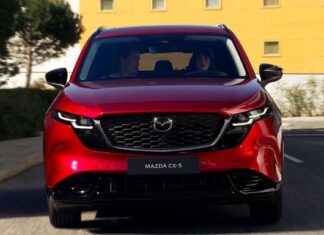
Why the Mazda RX-8 Isn’t As Fast As It Looks
People see the RX-8 and assume instant glory. The 2+2 layout is funky. The bodywork is sporty. The engine is a naturally aspirated, high-revving 1.3-liter Wankel rotor. An evolution of the twin-turbo RX-7 powertrain.
Expectations were high. Reality was… rotational.
The RX-8 landed with 183bhp. Torque? Only 162lb-ft. That’s the rotary curse. No turbos meant no low-end punch. 0-62mph took 7.5 seconds. A quarter-mile clocked in around 17 seconds. Respectable, yes. But not the speed demon the badge implied.
The Toyota GT86’s Automatic Trap
It arrived in 2012. Critics praised the GT86. Lightweight. Rear-wheel drive. A 50:50 weight distribution that promised pure driving joy.
The aesthetics matched the praise. Aggressive front LEDs. Ground-hugging stance. A swooping roofline that said “bona fide sports car.”
Under the hood sat a 2.0-liter Boxer engine. It made 197bhp and 151lb-ft of torque. It had to move only 1,239kg (2,731 lbs). Physics suggests speed. The numbers agreed: 0-62mph in 77.7 seconds. Top speed of 137mph.
But wait.
If you bought the automatic version, you were screwed. Pedestrian is the right word. That 0-62 time stretched to 8.2 seconds. The styling screamed performance. The gearbox whispered apology.
Did The Fisker Karma Live Up To Its Stunning Design?
Henrik Fisker designed the BMW Z8. He designed the Aston Martin Vantage. Naturally, the Fisker Karma (2011) looked like a million bucks.
The bonnet was long. It was wider than a Ferrari 36. The bodywork mimicked the Aston Martin Rapide. It looked like it wanted to break the sound barrier.
Underneath the makeup? A hybrid powertrain.
A 260bhp 2-liter gas engine paired with two 201bhp electric motor on the rear wheels. On battery power alone—the “quiet” mode you might use in a city center—it scuttled to 62mph in a lazy 8.0 seconds.
Beautiful. Yes. Fast? Not really.
The Ferrari Mondial’s Slow Start
The 1980s gave us the Testarossa. They gave us the F40. Legends.
Then they gave us the Mondial.
Launched in Geneva in 198, it had the Ferrari face. The iconic sloped nose. The vents for the mid-mounted V8. The supercar presence was undeniable. You felt cool standing next to it.
The performance told a different story.
The initial 3.0-liter V8 produced just 21bhp (20bhp in the US). It slugged to 62mph in 82.2 seconds. Some claims say closer to 10. Eventually, yes. If you gave it enough highway, it would hit 14mph. Eventually.
The DeLorean DMC-12’s Engine Struggles
The DMC-12 was supposed to be different. Lighter. More powerful.
The problem was finding an engine.
The prototype used a Ford Cologne V6. Promising. Then they swapped it. They went with a four-cylinder Citroën engine. Turbocharged, theoretically.
The production car ended up heavier than planned. The engine wasn’t the powerhouse they envisioned. It’s a reminder that looking like a time machine doesn’t make you one.
So. Do you buy for the look or the stat sheet?
Sometimes you have to settle for both being wrong.