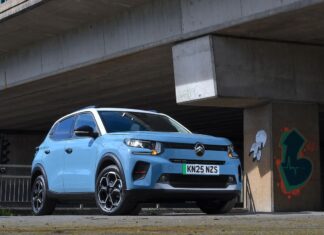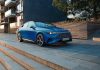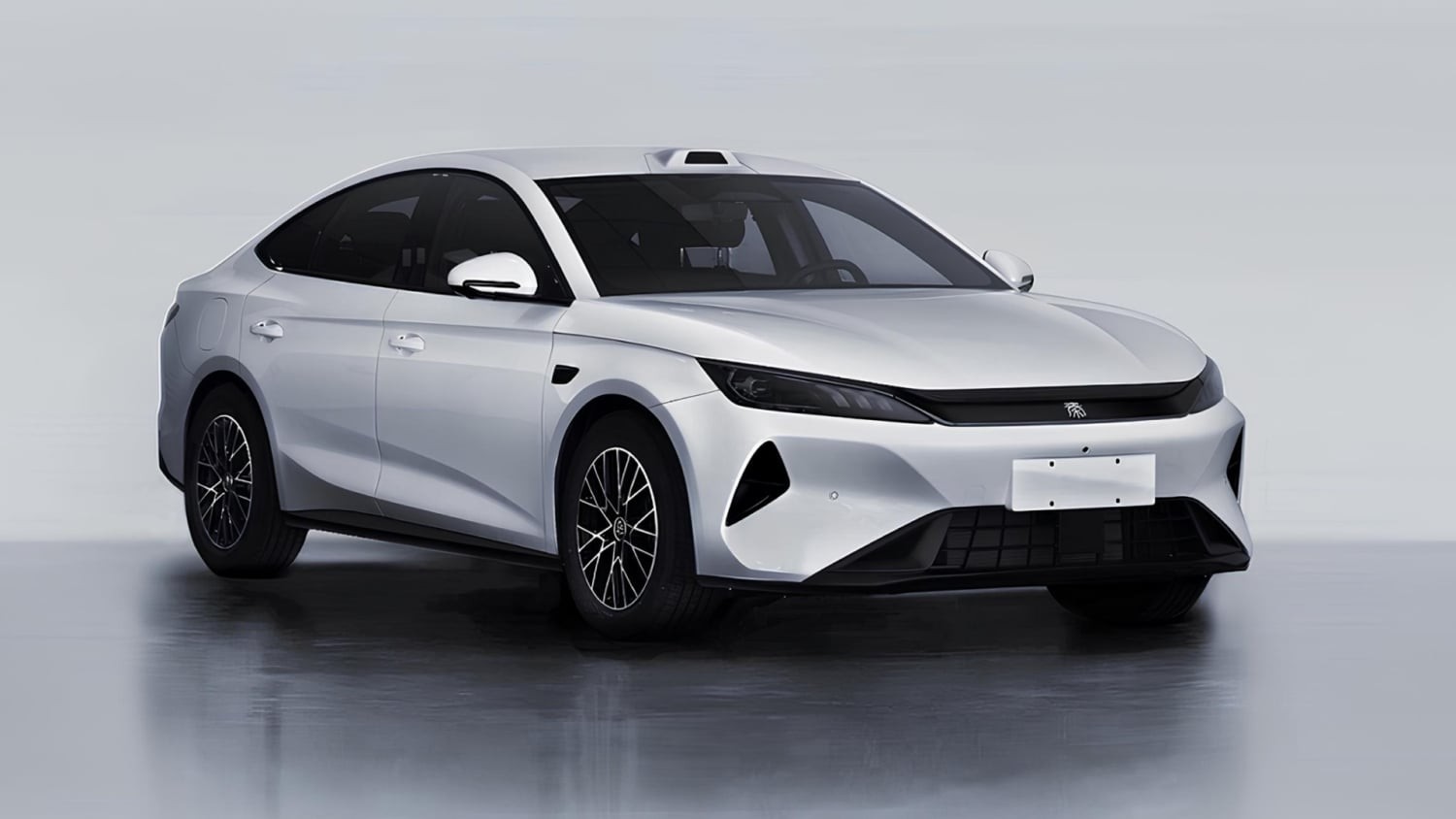
Here it is. The BYD Qin Plus, now with LiDAR, staring back at you from the Chinese homologation papers. It’s not just a refresh. It’s a signal. They’re taking high-end tech and shoving it into the mass market like it’s free.
Bigger, But Still Cheap
The Ministry of Industry and Information Technology leaked the details while sorting out the license plates. The plan? Assemble this thing in six different BYD factories at once. Makes sense. The old Qin Plus is a sales monster, churning out nearly half a million units last year. Why break a sweat? Just pump them out faster.
This isn’t just an update; it’s a saturation strategy.
Visually, it’s a twin to the larger Qin L sedan. You can tell them apart, barely, but BYD wants you to blur the lines. It’s wearing the standard Loong Face grille. Closed up tight. Chrome strip, sharp headlights, big intake. Real door handles? Yes. Single taillight? Check. It looks serious. Maybe too serious for its price bracket.
Size-wise, it got bigger.
Length: 4,840 mm. Width: 1,900 mm. Height: 1,498 mm.
That’s 60 mm longer and 82 mm wider around the hips than the current model. The wheelbase stretched by 82 millimeters, too. It rides on 16 or 17-inch rubber. The numbers get granular here if you care that much, but the gist is it feels substantial. Curb weight hit 1,610 kgs. It sits lower, wider. Less road presence? No. More presence. Just different.
Powering the Brains
Under the hood lies a 1.5L naturally aspirated engine, the BYD472QC, pushing a modest 74 kW. That’s nothing. It’s there for the battery mostly. The electric motor does the heavy lifting with 120 kW of output. Top speed caps at 180 km/h which feels about right for a sedan trying not to kill itself.
You get a choice of LFP batteries.
- 16.2 kWh : gives you 107 km electric range.
- 24.3 kWh : pushes that to 160 km.
When the battery is dead and you’re burning fuel alone? Sip at 3.6 to 3.7 liters every 100 koms. It’s efficient. Brutally so.
But here’s the kicker.
LiDAR on the roof.
Not just a sensor. DiPilot 300, or “God’s Eye B,” as they call it. It doesn’t just follow lines. It handles urban streets. Navigate on Autopilot? Sure. It will drive from address to address while you just… watch. You have to stay awake. Hands on the wheel. Mind in the game. But the car is steering itself.
The Price Game
Current models go for around 79,000 to 100,001 yuan. Roughly 11,800 USD on the low end. This one?
It costs more. It has to. More steel. More tech. A lidar dome that looks like it costs as much as the rest of the dashboard.
They didn’t confirm the price. Probably because it’ll scare you if you think it’s staying at $14k. But if BYD keeps the gap tight? It’s going to ruin every other sedan under 25 grand. They are dumping premium autonomous features into cars you used to buy with cash from under your mattress.
Will you trust the LiDAR? Maybe. Will you pay extra for the privilege of doing nothing while it drives you through downtown Shenzhen?
The market will decide. Or the regulators might. We’ll see how many factories need to run overtime before it lands on your street.